

Streaming platforms continue to rely on proven formulas, and Amazon Prime’s latest offering, Campus Drivers, is a textbook example. Based on C.S. Quill’s novel Fast Lane, the series arrives hot on the heels of Off Campus, another popular adaptation that found success with the same playbook. The premise is familiar: a group of attractive college friends launches a ride-sharing app that quickly becomes less about transportation and more about flirtation. While the show rarely surprises, it manages to deliver a light, binge-worthy experience that suits viewers looking for comfort viewing rather than groundbreaking drama.
Synopsis
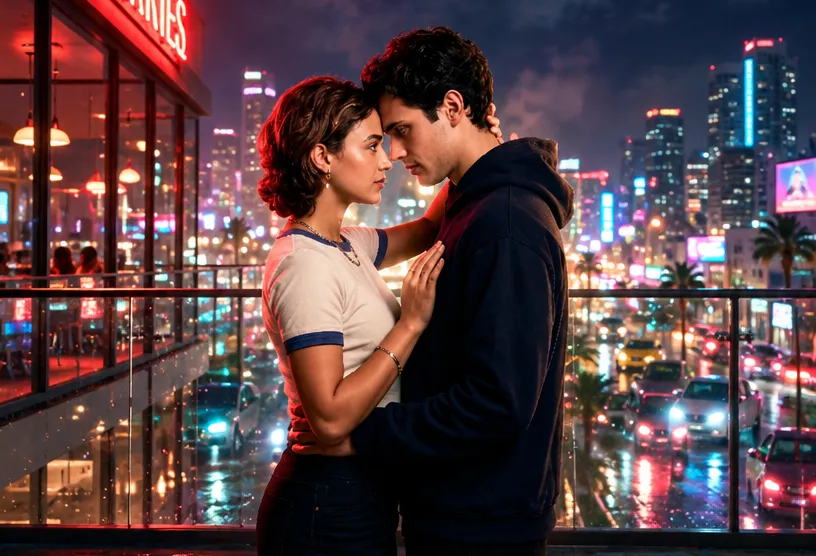
Lois arrives at Belrose University from a small mountain town, feeling out of place and leaning heavily on her longtime boyfriend, Max. When Max suddenly asks for a break, Lois loses her housing and finds herself stranded with a dead phone. A chance encounter with Lane, a charming but commitment-phobic student, leaves her crashing on his sofa temporarily. As the two navigate university life, parties, and their own insecurities, an unlikely friendship begins to blur into something more, all while Lois tries to figure out who she is outside of her relationship.
Performances
The heart of the series lies in the pairing of Lois and Lane. Carmen Kassovitz brings a grounded vulnerability to Lois, making her emotional confusion and gradual self-discovery feel genuine. Baptiste Masseline plays Lane as the classic college flirt, yet he manages to hint at deeper insecurities beneath the surface. Their chemistry is the strongest asset, transforming a well-worn opposites-attract setup into something watchable. The supporting players, including Lois’s friends Becca and Carrie, offer solid work, though they remain largely in the background. The ensemble works best when it focuses on the central duo, whose slow-burn dynamic gives the show its most convincing emotional arc.
Behind the Lens
From a production standpoint, Campus Drivers follows the OTT formula almost to the letter. Nearly every episode features a campus party designed to stir up conflict, and the ride-sharing app that gives the series its name contributes very little to the actual plot. The storytelling relies heavily on familiar tropes: the vulnerable small-town girl, the playboy with hidden depths, and the best-friends-to-lovers trajectory. Some dramatic beats feel forced, especially when the show attempts to give Lane complexity without fully earning it. That said, the Christmas episode stands out as a cozy, well-paced highlight, and the gradual development of the central relationship avoids feeling rushed. The direction is polished but safe, prioritizing accessibility over risk.
Final Verdict
Campus Drivers is not trying to reinvent the romantic comedy wheel, and it does not need to. It is a feel-good, formulaic series designed for easy consumption, and on those terms, it succeeds. The romance between Lois and Lane works because the leads sell the slow build, even if the surrounding drama occasionally feels excessive. Viewers who enjoyed Off Campus will find plenty to like here, even if the story beats are easy to predict. If you are in the mood for a predictable, lighthearted college romance that you can binge in a weekend, Campus Drivers is worth your time. Those seeking depth or originality, however, may want to look elsewhere.