

When a director’s visual world becomes as recognizable as a fingerprint, every frame feels like a carefully constructed diorama. That same meticulous attention to detail translates beautifully to the stage, as proved by the three‑night run of “Music From the Films of Wes Anderson” at the famed Hollywood Bowl. The final evening offered a spectacular showcase of the composer‑driven and song‑driven soundscapes that have defined Anderson’s cinema for more than two decades.
The Star‑Studded Lineup and Performers
The production required a small army of musicians. The full Hollywood Bowl Orchestra, conducted by Thomas Wilkins, anchored the bulk of the program, while Beck’s seasoned band—featuring Joey Waronker, Gus Seyffert, Jason Faulkner, Roger Joseph Manning Jr. and musical director Justin Meldal‑Johnsen—provided a rhythm section that could shift from intimate to electrifying on a dime. Guest soloists and choirs popped in as needed, and Bill Murray and Jason Schwartzman delivered brief, witty segues between songs.
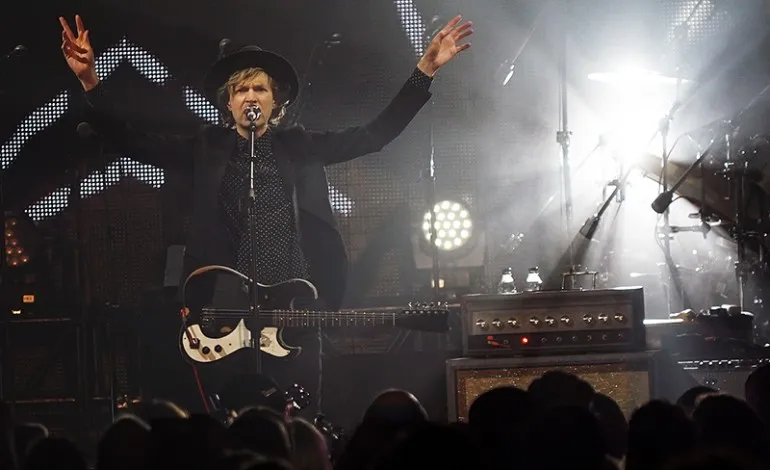
Though Beck was billed as the headline act, he functioned more as the night’s spiritual leader, stepping forward as lead vocalist on only two selections and sharing the microphone with other performers for the remainder. This collaborative spirit mirrored Anderson’s ensemble‑centric filmmaking.
Musical Highlights and Guest Appearances
The concert opened with a DEVO‑led segment. Mark Mothersbaugh took the podium for “Attack on Ping Island” and “Ned’s Theme Take 1”, and Bill Murray introduced the full DEVO lineup for the energetic “Gut Feeling (Slap Your Mammy)”. The crowd’s enthusiasm set the tone for a night that balanced playful irony with genuine musical depth.
Beck’s vocal contributions were striking. He delivered the haunting refrain of Love’s “Alone Again Or” and later provided a chilling rendition of Elliott Smith’s “Needle in the Hay”, a track that haunts the climax of “The Royal Tenenbaums”.
Jenny Lewis and Karen Elson added sweet covers: Lewis tackled the skiffle classic “Freight Train”, while Elson offered a shimmering take on Françoise Hardy’s “Le Temps De L’Amour”. The Ukrainian Mosaic Orchestra, introduced by Murray, delivered one of the evening’s standout moments with “Canto at Gabelmeister’s Peak” from “The Grand Budapest Hotel”.
Jim James brought a lush cover of The Kinks’ “Strangers”, while Brazilian artist Rogê joined forces with Murray, Schwartzman, Beck, Lewis and China Forbes for a lively rendition of Oliver Onions’ “Zorro is Back”.
The Setlist: From “Attack on Ping Island” to “Ooh La La”
After a brief intermission, the stage turned cinematic. Jean Yves Thibaudet performed the solo piano piece “Moses Rosenthaler” from “The French Dispatch”, followed by Jeff Goldblum’s humorous introduction of “Blinuet” (a portmanteau of blues and minuet) and a solid jazz reading of a Zoot Sims piece originally featured in “Rushmore”.
Jim James then offered a dreamy cover of Cat Stevens’ “The Wind”. Jackson Browne, channeling the melancholy of Nico, sang “The Fairest of Seasons” and “These Days” with a fragile grace that resonated across the bowl. China Forbes and Rufus Wainwright teamed up for “Rue Saint‑Vincent”, and Wainwright led the band on a vibrant take of Peter Sarstedt’s “Where Did You Go To (My Lovely)”.
The energy peaked when Beck, Jenny Lewis, Jim James, Bill Murray and Jason Schwartzman united for a joyous cover of The Bobby Fuller Four’s “Let Her Dance” (from “The Fantastic Mr. Fox”), prompting the crowd to finally rise and dance. Britt Daniel of Spoon made a brief but powerful appearance, delivering The Creation’s “Making Time” – the song that powers the iconic opening montage of “Rushmore”.
The finale was a communal celebration: nearly every artist returned for a giant sing‑along of The Faces’ “Ooh La La”, a track that closes “Rushmore” with nostalgic brilliance. The entire Hollywood Bowl sang along, turning the moment into a heartfelt tribute to Anderson’s enduring legacy.
The Atmosphere and Audience Reaction
While the concert was awash in musical talent, some attendees noted the limited use of film footage. Most songs were accompanied only by title cards, leaving the audience to rely on familiarity with the movies. Whether this was due to licensing constraints or a desire to keep the focus on the performers, it was the only minor criticism of an otherwise electrifying evening.
The crowd, a mix of die‑hard Anderson devotees and casual music lovers, responded with roaring applause after each number. The blend of indie‑rock, orchestral pop, and classic‑pop created a tapestry that felt both intimate and grand, much like the director’s own cinematic style.
Wes Anderson’s Film Music Comes Alive
From start to finish, “Music From the Films of Wes Anderson” proved that the breadth of Anderson’s soundtrack catalogue is vast enough to fill a three‑night stand—and then some. The arranging prowess of Justin Meldal‑Johnsen and the plethora of guest performers turned what could have been a logistical nightmare into a seamless, toe‑tapping celebration. If you’ve ever been captivated by the meticulous world of Wes Anderson, this concert was a rare chance to see (and hear) that world come alive on stage.