

Aaron Sorkin’s latest courtroom drama, The Social Reckoning, lands in theaters on October 9, 2026, distributed by Columbia Pictures. Positioned as a stand‑alone follow‑up to The Social Network, the film intertwines a legal thriller with a behind‑the‑scenes look at how Facebook’s inner circle prepares for public scrutiny. Whistle‑blower Frances Haugen teams up with Wall Street Journal reporter Jeff Horwitz to pull back the curtain on the platform’s most guarded secrets, while Mark Zuckerberg’s advisors scramble to teach him how to appear sincere before Congress. The result is a sharp, often humorous examination of power, evasion, and the human cost of corporate accountability.
Synopsis
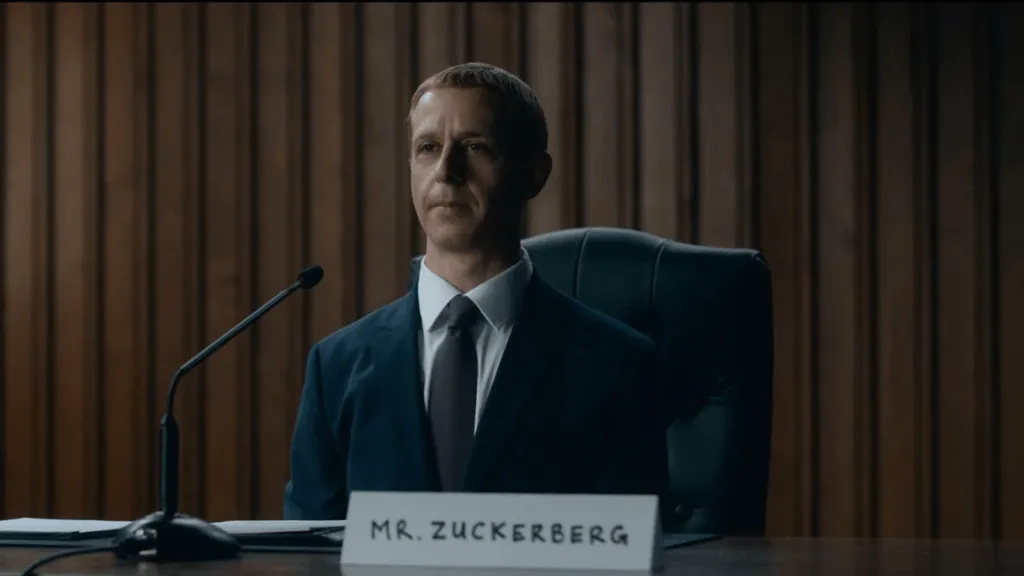
The narrative follows two parallel tracks. On one side, Haugen (Mikey Madison) and Horwitz (Jeremy Allen White) methodically gather evidence that could expose Facebook’s role in amplifying harmful content. On the other, Zuckerberg (Jeremy Strong) undergoes intensive coaching from crisis manager Raya (Wunmi Mosaku) and faces pointed challenges from commentator Charlie (Bill Burr) as he learns to project empathy during a mock congressional hearing. As the investigation deepens, the film alternates between the reporters’ fact‑finding mission and the executive’s rehearsal room, highlighting how information is shaped for different audiences—publication versus damage control. The story builds toward a climactic cross‑cut that juxtaposes Haugen’s Senate testimony with recreated footage from a pivotal national event, forcing viewers to consider the real‑world impact of corporate decisions.
Performances
Jeremy Strong delivers a restrained portrayal of Zuckerberg, his measured speech and limited physicality turning the tech titan into an almost awkward figure rather than a glamorized villain. This choice underscores the film’s theme that immense power can feel socially clumsy. Wunmi Mosaku’s Raya brings a warm, persistent presence, attempting to inject humanity into a leader who struggles to summon it on his own. Bill Burr’s Charlie injects levity with his pointed objections, serving as a comedic foil that also highlights the absurdity of corporate coaching sessions.
Mikey Madison captures Frances Haugen’s internal conflict—her initial belief in Facebook’s mission, the gradual erosion of trust, and the quiet courage required to go public. Her performance balances conviction with apprehension, making her whistle‑blower journey feel genuine rather than heroic caricature. Jeremy Allen White’s Jeff Horwitz provides a steady, patient counterpart; his understated style allows the investigative process to feel methodical and credible. The chemistry between Madison and White drives the film’s investigative core, while the exchanges between Strong and Mosaku reveal the tension between image‑crafting and authentic accountability.
Behind the Lens
Sorkin’s signature dialogue fuels the film’s rapid‑fire exchanges, yet he also employs visual storytelling to clarify technical concepts. The distinction between Facebook’s recommendation algorithms and simple content storage is illustrated through clear graphics and concise exposition, allowing audiences to grasp why the platform prioritizes certain posts over others. Alexandre Desplat’s score underscores the evidence‑gathering sequences, lending a heroic tone that occasionally risks pre‑emptively resolving the emotional weight of the investigation before its full impact is revealed.
Cinematographer’s use of cross‑cutting during the climax effectively links Haugen’s Senate testimony with historical footage, creating a cause‑and‑effect rhythm that heightens stakes. However, the decision to leave the political figure unnamed, while preserving recognizability, slightly blurs the specificity of the event, a choice that may leave some viewers wanting a sharper contextual anchor. Production design faithfully recreates the sterile boardrooms and modest press offices, contrasting the glossy veneer of Silicon Valley with the gritty reality of investigative journalism.
Final Verdict
The Social Reckoning succeeds in transforming dense corporate mechanics into an accessible, engaging narrative. The film’s strength lies in its dual focus: the relentless pursuit of truth by Haugen and Horwitz, and the often comical, yet telling, attempts to coach Zuckerberg into displaying empathy. Strong’s impassive performance, while intentionally limiting dramatic fluctuation, reinforces the idea that accountability can be a learned behavior rather than an innate trait.
The movie’s occasional reliance on polished, Sorkin‑esque dialogue sometimes blurs individual voices, and the uplifting musical cues occasionally settle the story’s emotional tone before the narrative has fully earned it. Nevertheless, the blend of courtroom tension, investigative rigor, and character‑driven moments makes for a compelling watch.
For viewers interested in the intersection of technology, media, and moral responsibility, The Social Reckoning offers a thought‑provoking, well‑crafted examination of what happens when corporate power meets public accountability. It is a worthy addition to Sorkin’s filmography and a timely reminder that even the most influential figures may need a smile coach to face the world.