

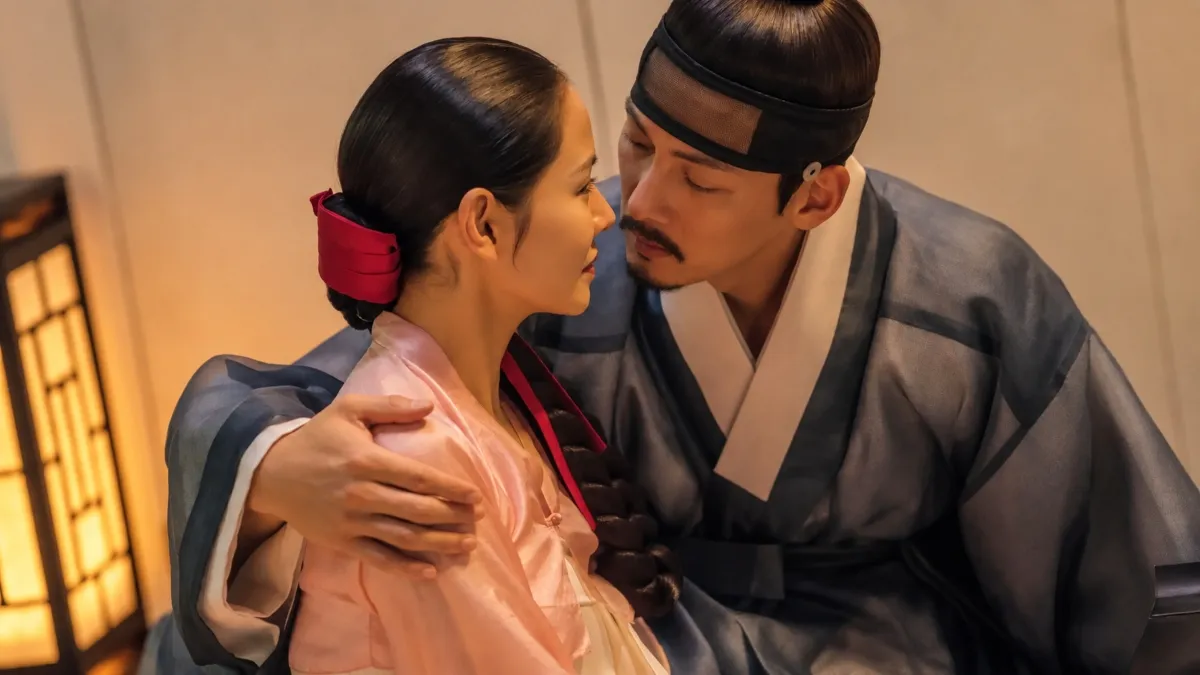
The landscape of historical television is often crowded with predictable tropes, yet Netflix’s latest offering, The Scandal, slices through the noise with surgical precision. Directed by Jung Ji-woo, this eight-episode series reimagines the classic French tale of calculated seduction through the lens of the Joseon era. It is a haunting, beautifully shot exploration of how power, when stripped of honesty, inevitably curdles into something far more dangerous.
Synopsis
Set against the rigid social constraints of the Joseon dynasty, the narrative follows Lady Cho Yun and her cousin, Cho Won. Their bond is as long-standing as it is volatile, rooted in suppressed childhood affections. Following a personal humiliation involving her husband’s new concubine, Lady Cho Yun presents her cousin with a provocative proposition: seduce An Hui-yeon, a widow celebrated for her virtuous and pious life. What begins as a cynical wager designed to satisfy their own twisted desires soon spirals into a precarious game where emotions are the most volatile currency. As the lines between the hunt and the heart blur, the characters find themselves ensnared in a web of their own making.
Performances
The strength of The Scandal rests firmly on the shoulders of its lead trio. Son Ye-jin delivers a masterclass in restraint as Lady Cho Yun. She portrays a woman who is both the architect of her own misery and a victim of a stifling patriarchal society. Her silence speaks volumes; she is possessive, vulnerable, and terrifyingly sharp.
Opposite her, Ji Chang-wook brings a layered vulnerability to the role of Cho Won. Initially projecting an air of arrogant detachment, his transformation as he finds himself genuinely captivated by his target is handled with remarkable nuance. Nana, portraying An Hui-yeon, serves as the essential foil to their machinations. She avoids the trap of playing a mere “victim,” instead imbuing her character with a sincerity that forces both the audience and her captors to confront their own moral failings. The chemistry between these three performers is electric, grounding high-stakes drama in human reality.
Behind the Lens
Director Jung Ji-woo masterfully utilizes the historical setting not just as a backdrop, but as a silent antagonist. In an era where expressing one’s true desires could lead to absolute ruin, secrets become the only form of currency worth holding. The cinematography emphasizes the claustrophobia of the era, highlighting how the characters’ internal prisons are just as restrictive as the physical ones surrounding them. The adaptation of the source material is respectful yet daring, ensuring the narrative beats feel fresh for audiences familiar with the original literary classic.
Final Verdict
The Scandal is not your typical historical romance. It is an uncomfortable, intellectually stimulating journey into the darker corners of the human psyche. While the pacing occasionally invites a slower viewing experience, the payoff—a deep, harrowing look at the cost of manipulation—is well worth it. It is a rare drama that dares to leave its protagonists in a state of moral ambiguity, trusting the audience to navigate the gray areas. If you crave a series that challenges your allegiances and keeps you guessing until the final frame, this is an essential watch.
Also Read:
Son Ye-jin Makes Thrilling Return to Historical Drama in Netflix’s Romantic Thriller “The Scandal”