

Netflix’s Polish period drama The Doll arrives as a fresh take on Bolesław Prus’s classic novel, directed by Paweł Maślona. Spanning six hour‑long episodes, the series plunges viewers into Warsaw of 1879, where ambition, love, and rigid social hierarchies collide. With a talented cast led by Sandra Drzymalska and Tomasz Schuchardt, the show attempts to balance a sweeping romance with a subtle mystery. This review unpacks what works, where it stumbles, and why the series still manages to resonate despite its uneven focus.
Synopsis
Stanisław Wokulski, a self‑made millionaire, returns to Warsaw after years abroad, determined to win the hand of Izabela Łęcka—a proud aristocrat whose family is crumbling under debt. Both characters are driven by contradictory desires: Wokulski believes wealth can breach the closed doors of high society, while Izabela clings to her status yet yearns for a world where women are not confined by rigid expectations. Their courtship unfolds amid intrigue, societal judgment, and a secondary arson investigation that intermittently pulls attention away from the central love story. Supporting figures—such as the compassionate Kazimiera Wąsowska, the scientifically inclined Julian Ochocki, and the resourceful Marianna—add depth to the era’s gender and class tensions.
Performances
Sandra Drzymalska delivers a razor‑sharp Izabela, swinging from curiosity to contempt in a heartbeat, making the heroine’s unpredictability palpable. Tomasz Schuchardt captures Wokulski’s restless yearning; his discomfort whenever Izabela nears him feels less like shyness and more like an aching desire for something money cannot purchase. Magdalena Cielecka’s Kazimiera offers a warm counterpoint, grounding Izabela’s turbulent world, while Małgorzata Hajewska‑Krzysztofik’s Prezesowa Zasławska embodies the old‑guard aristocracy. Jacek Braciak, Mateusz Król, and Juliusz Chrzastowski provide solid support, each reinforcing the series’ exploration of ambition and constraint. The ensemble’s chemistry, especially between Drzymalska and Schuchardt, fuels the show’s most compelling moments.
Behind the Lens
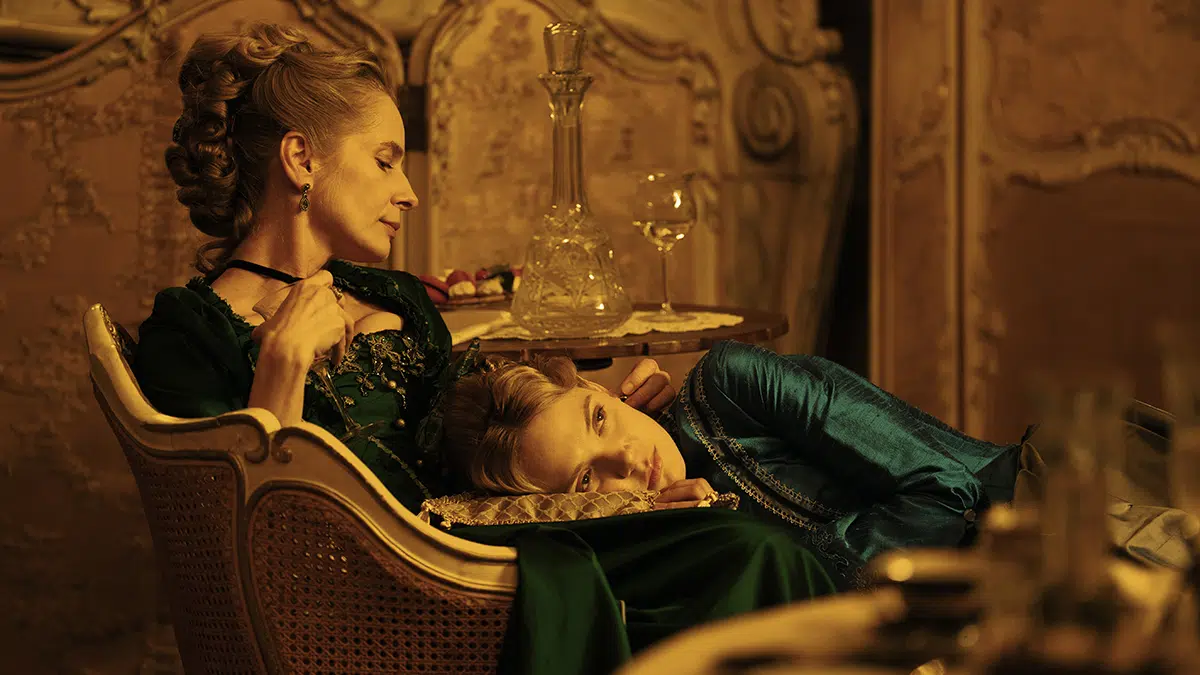
Director Paweł Maślona balances lavish period detail with a restrained visual language, allowing the costume and set design to whisper the era’s opulence without overwhelming the narrative. Cinematographer‑led scenes linger on Warsaw’s cobblestones and dimly lit salons, underscoring the tension between public propriety and private yearning. The adaptation wisely trims Prus’s expansive prose to fit a six‑episode format, focusing on the interpersonal dynamics that drive the story forward. While the secondary arson plot adds a layer of mystery, its execution occasionally feels tacked on, diverting energy from the richer social commentary. The score, subtle yet evocative, mirrors the characters’ internal conflicts, swelling during moments of revelation and receding during quieter exchanges.
Final Verdict
The Doll shines brightest when it lingers on the fraught dance between Wokulski and Izabela—two individuals who want something from each other yet constantly misread the other’s needs. Their awkward, genuine affection offers an unexpected take on the classic romance formula, refusing to cast either as a pure victim or hero. The series stumbles when it splits focus with the investigative thread, and some thematic discussions feel overly explicit rather than emerging organically from character behavior. Nonetheless, the production’s lavish period feel, standout performances, and thoughtful exploration of class, gender, and ambition make it a worthwhile watch. For viewers who appreciate layered relationships wrapped in historical grandeur, The Doll delivers an engaging, if imperfect, journey.