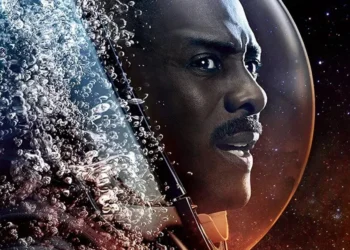



Netflix’s Colombian thriller Medusa returns for a second chapter, tightening the screws on the Hidalgo dynasty while probing the limits of family loyalty. Created by Claudia Sánchez Morales and Said Chamie and directed by Liliana Bocanegra, the season expands the original premise with fresh betrayals, shifting alliances, and a relentless quest for truth. Lead actress Juana Acosta reprises Bárbara Hidalgo, now entrenched deeper in the corporate war that threatens to consume both her bloodline and her conscience. This review unpacks the season’s narrative core, evaluates the cast’s contributions, glances behind the camera, and delivers a final verdict on whether the sequel lives up to its promise.
Synopsis
When Bárbara Hidalgo is thrust back into a lethal power struggle, an unseen assailant linked to the Hidalgo clan seeks her demise. Detective Danger Carmelo (Manolo Cardona) leads the investigation, balancing professional duty with a growing personal attachment to his prime suspect. As Bárbara fights to steer the Medusa conglomerate through treacherous waters, she must also navigate a tangled web of relatives whose ambitions clash with the family’s legacy. A budding connection with Maya adds emotional texture, while Bárbara’s fixation on corporate security blurs the line between protector and predator. Throughout twelve 40‑minute episodes, the series interlaces assassination plots, corporate intrigue, and familial drama, constantly questioning who can be trusted when every decision ripples across empire and heart alike.
Performances
Juana Acosta commands the screen as Bárbara, delivering a nuanced portrayal that oscillates between steely resolve and vulnerable doubt. Her ability to convey internal conflict—especially during moments where Bárbara questions her own moral compass—adds depth to a character that could easily become a mere pawn in the Hidalgo machinations.
Manolo Cardona’s Detective Danger Carmelo offers a grounded counterpoint. He captures the detective’s relentless pursuit of truth while subtly revealing the turmoil of falling for someone under threat. The chemistry between Acosta and Cardona fuels the series’ central tension, making their scenes together both compelling and uneasy.
Supporting turns from Sebastián Martínez (Esteban Arco), Carlos Torres (Cristián), Adriana Arango (Jackie), and Mabel Moreno (Úrsula) enrich the ensemble, each providing distinct shades of loyalty, ambition, and secrecy. Laura Archbold, Jacqueline Arenal, Luis Fernando Hoyos, Juanita Molina, Mariana Mozo, Angela Rodríguez, and Diego Trujillo round out the cast, ensuring that even minor characters leave a palpable imprint on the unfolding drama.
Behind the Lens
Liliana Bocanegra’s direction maintains the series’ gritty visual language, employing tight frames and muted palettes to echo the suffocating atmosphere of the Hidalgo world. The cinematography shifts fluidly between the sterile corridors of Medusa headquarters and the shadowy alleyways where danger lurks, reinforcing the duality of corporate and personal threats.
The writing team, led by Sánchez Morales and Chamie, attempts to deepen the mythos by layering new secrets atop existing ones. While this approach fuels intrigue, it occasionally tips into excess, resulting in subplots that feel more decorative than essential—most notably a hallucinogen‑laden thread that distracts from the central menace rather than amplifying it.
Editing sustains a brisk pace; each 40‑minute episode moves swiftly from revelation to confrontation, keeping viewers eager for the next twist. However, the relentless addition of surprise elements sometimes sacrifices coherence, leaving certain narrative threads feeling under‑developed despite their initial promise.
Final Verdict
Medusa Season 2 succeeds in escalating the stakes for the Hidalgo clan, delivering a potent mix of mystery, betrayal, and familial drama that will keep binge‑watchers glued to their screens. Juana Acosta’s formidable performance anchors the season, while Manolo Cardona provides a compelling emotional counterbalance. The series excels when it focuses on the corrosive influence of power within a tight‑knit family, and the interplay between corporate intrigue and personal vendettas remains its strongest suit.
Where the show falters is in its propensity to equate complexity with depth. The continual rollout of new revelations and occasional melodramatic detours—such as the hallucinogen subplot—undermine the tension that the core assassination plot builds. Consequently, the season feels both exhilarating and uneven; it offers plenty of suspense but occasionally sacrifices narrative clarity for the sake of surprise.
Overall, Medusa Season 2 is an acceptable sequel that thrives on its performances and central conflict, yet it stumbles when ambition outstrips execution. Fans of the first installment will find enough to enjoy, though they may wish for a tighter leash on the show’s proclivity for excess.