

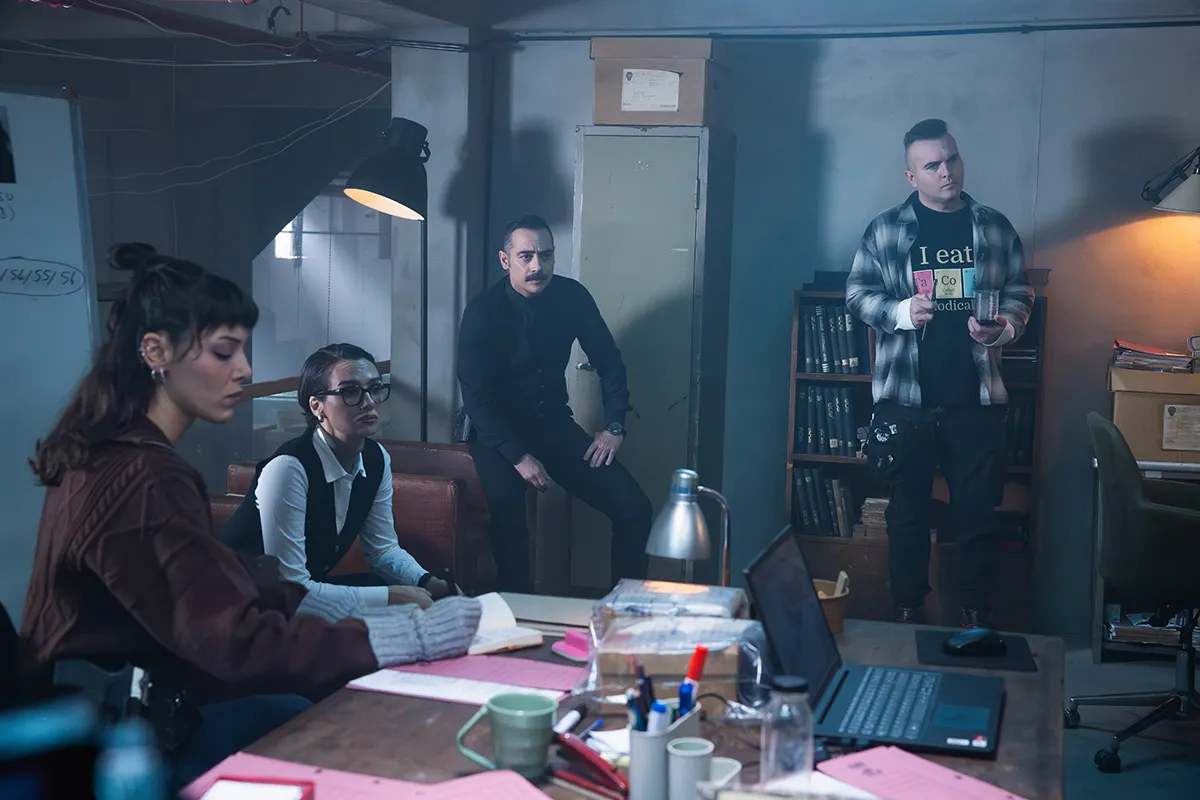
The third installment of Netflix’s Turkish thriller Graveyard (original title Mezarlık) returns with a sharper edge, plunging its investigative unit into a web of cruelty that stretches far beyond isolated murders. Directed by Abdullah Oğuz and Ömer Baykul, the season expands its scope to examine how online toxicity, gender‑based violence, and systemic exploitation manifest in contemporary society. With eight 45‑ to 50‑minute episodes, the series balances procedural tension with character‑driven drama, asking viewers to consider the real‑world implications lurking behind each clue.
Synopsis
Season 3 opens with the Graveyard team reeling from recent trauma: lead detective Önem Özülkü (Birce Akalay) is trying to reconnect with her daughter Sude, while forensic expert Hasan Duru (Şehsuvar Aktaş) wrestles with guilt over a past case. Their brief hiatus is cut short when a disturbing pattern emerges—mysterious boxes delivered to women, each containing unsettling items that hint at a larger, coordinated threat.
As Önem returns to the fold, the investigation uncovers a series of interconnected crimes ranging from cyber‑harassment and influencer manipulation to human trafficking and surrogacy scams. The narrative weaves together personal stakes—Önem’s maternal fears and Hasan’s quest for redemption—with a broader commentary on how misogyny festers both online and offline. Throughout, the show avoids simple villains, instead presenting a mosaic of motives that challenge the team’s ethics and resolve.
Performances
Birce Akalay anchors the season with a restrained yet emotionally resonant portrayal of Önem. Her ability to convey quiet determination while simultaneously revealing vulnerability—especially when her daughter becomes a target—adds depth to the procedural core. Olgun Toker as Serdar Ata provides a steady counterbalance, embodying loyalty and the growing realization that the unit’s strength hinges on Önem’s leadership. Şehsuvar Aktaş delivers a nuanced turn as Hasan, whose internal conflict feels authentic rather than plot‑convenient.
The supporting cast—Hakan Meriçliler, Sezgin Uzunbekiroğlu, Cem Sürgit, and newcomers such as Baran Güler and Elif Sevinç—each contribute layered performances that enrich the ensemble dynamic. Notably, the actors handling the online‑harassment subplot capture the chilling casualness of digital abuse, making the threat feel immediate and pervasive.
Behind the Lens
Directors Abdullah Oğuz and Ömer Baykul maintain the series’ gritty aesthetic while experimenting with visual motifs that underscore the theme of concealment. The recurring use of colored bows on the mysterious boxes serves as a visual cipher, inviting viewers to decode meaning alongside the characters.
Cinematography alternates between claustrophobic interiors—reflecting the protagonists’ inner turmoil—and expansive, sterile digital spaces that mirror the invasive reach of social media. The score, subtle yet insistent, heightens tension during investigative sequences without overwhelming the dialogue. Production design deserves mention for its realistic portrayal of both police precincts and the glossy, curated worlds of influencers, creating a stark contrast that reinforces the show’s social critique. The writing team skillfully balances procedural detail with thematic exposition, though occasional dialogue tends to spell out messages that the narrative already illustrates—a minor flaw in an otherwise tightly crafted season.
Final Verdict
Graveyard Season 3 succeeds as a compelling crime drama that transcends the typical whodunit by anchoring its mysteries in pressing societal issues. The series excels when it lets the investigation reveal the underlying currents of misogyny, harassment, and exploitation, delivering moments of genuine urgency and emotional resonance.
While the ambitious scope occasionally leads to overcrowded plotlines—particularly when multiple cases vie for attention—the strong central performances, especially Birce Akalay’s nuanced lead, keep the narrative cohesive. Fans of thoughtful, character‑driven thrillers will find much to admire, and newcomers will appreciate the show’s willingness to confront uncomfortable truths head‑on. Overall, this season earns a solid recommendation for anyone seeking a procedural that feels both entertaining and socially relevant.