

In the crowded field of science-fiction anime, Fool Night rises as a thoughtfully crafted meditation on humanity under pressure. Directed by Atsuyuki Yukawa and adapted from Kasumi Yasuda’s manga, this 12-episode Japanese series unfolds with a compact runtime of roughly 25 minutes per installment, a pacing choice that keeps the tension taut without sacrificing emotional depth.
A collaborative product of Sunrise and Shaft, the show centers on a near-future world where the sun has faded, and oxygen is scarce. The premise hinges on a controversial technique known as Transfloration, which permits people to become Spiritflora by embedding seeds within their bodies. These transformed individuals function as living oxygen generators, a solution that simultaneously preserves life and erodes what it means to be human.
Synopsis
The series builds its premise around a society that has reconciled itself to a planet where daylight has vanished and breathable air is a scarce commodity. Transfloration creates Spiritflora from once-human bodies, allowing the new entities to exhale life-giving oxygen as they blend with the environment. Yet the process is anything but sanitized or simple. It forces a fundamental renegotiation of selfhood, and the show treats this transformation as an unsettling, ongoing process rather than a one-time event. Toshiro’s arc begins with a downward spiral—poverty, disenfranchisement, and a desperate bid for a second chance—culminating in his choice to become Spiritflora. What makes this premise resonate is not the spectacle of plant-human hybrids but the way their existence unsettles the audience’s sense of normalcy. These aren’t faceless background figures; they are people who had lives, relationships, and regrets before their bodies became part of the ecosystem.
As the narrative unfolds, Toshiro discovers an unsettling ability: he can communicate with the Spiritflora that inhabit his world. This unusual auditory gift thrusts him into investigations surrounding a spate of murders and other anomalies connected to the life-support system that sustains human civilization. The show refuses to treat Spiritflora as a mere plot device. Instead, it uses the presence of these plant-human beings to probe themes of memory, loss, and the fragility of social contracts in a world where life itself is redistributed from human to vegetal form. The mood of Fool Night leans toward a cerebral bleakness, where the beauty of the visuals and the elegance of the concept sit in stark contrast to the horror of what it means to lose one’s humanity.
What elevates the storytelling is its restraint. The series does not rely on obvious action set-pieces or melodramatic twists to maintain momentum. Rather, it threads personal histories—childhood friendships, family bonds, and unresolved pasts—through the central mystery, letting the supernatural apparatus do the heavy lifting of atmosphere while human emotions supply the core tension. The result is a show that feels morally complex rather than morally simple: a meditation on survival that refuses to sanitize the human cost embedded in every seed planted.
Characters
Toshiro Kamiya serves as the emotional axis of Fool Night. He is not cast as a crusader or a virtuoso genius; instead, he is a marginal figure whose misfortunes render him the most reliable witness to the series’ ethics and ambiguities. His decision to undergo Transfloration is not heroic in the traditional sense. It is a practical, almost accidental move that binds his fate to the fate of the Spiritflora, shaping his perception of what it means to live—and to be heard. Yet Toshiro’s heard voice—literally hearing what others cannot—transforms into a burden that compels him to act with responsibility toward those society tends to overlook. The show uses his vulnerability to foreground a broader, more humane inquiry into social marginalization and the overlooked costs of technological progress.
Yomiko Horai, a medical professional who shares Toshiro’s past, introduces a counterweight to the central arc. Her perspective is invaluable precisely because she exists within the system she helps sustain. She sees Transfloration as a lifeline, yet she cannot escape the personal toll when someone close becomes entangled with the process. Their reconnection is not one of easy nostalgia but a careful negotiation of professional duty and intimate loyalty. The tension between safeguarding lives and facing ethical conflicts lends gravity to their dynamic and deepens the emotional stakes of the series.
Jin Hiragashi, with his disciplined, almost austere presence, adds another layer of complexity to the investigative framework. His severity and methodical rigidity bring a sense of procedural gravity to the show’s mysteries, and his interactions with Toshiro illuminate the friction between institutional authority and the intimate, messy truth of human experience. The supporting cast—composed of colleagues, patients, and family members—contributes a steady hum of mystery that never devolves into melodrama. Their individual stories intersect with the central premise to reveal how an extraordinary system reverberates through ordinary lives.
The interconnectedness of these characters underlines the show’s core message: the mystery surrounding Spiritflora and the system that sustains human life is inseparable from the lived experiences of people who have to navigate its consequences every day. The balance between a tightly wound thriller and a character-driven drama is one of Fool Night’s greatest strengths, and it keeps the narrative intimate even as it expands toward larger, more existential questions.
Behind the Scenes
Visually, Fool Night is a showcase of the distinctive fingerprints of its production teams, combining the meticulous craft of Sunrise with the idiosyncratic stylistic sensibilities of Shaft. The result is a world that feels both expansive and intimate, a juxtaposition achieved through careful composition, environmental design, and character-scale animation. The environments—industrial silhouettes, deserted avenues, dim interiors, and flora-dominated landscapes—establish a mood of quiet desolation that is as much about what is missing as what remains. The artwork consistently communicates the sense that the world is not merely post-apocalyptic but emotionally depleted, a place where the absence of sunlight translates into a broader spiritual deprivation.
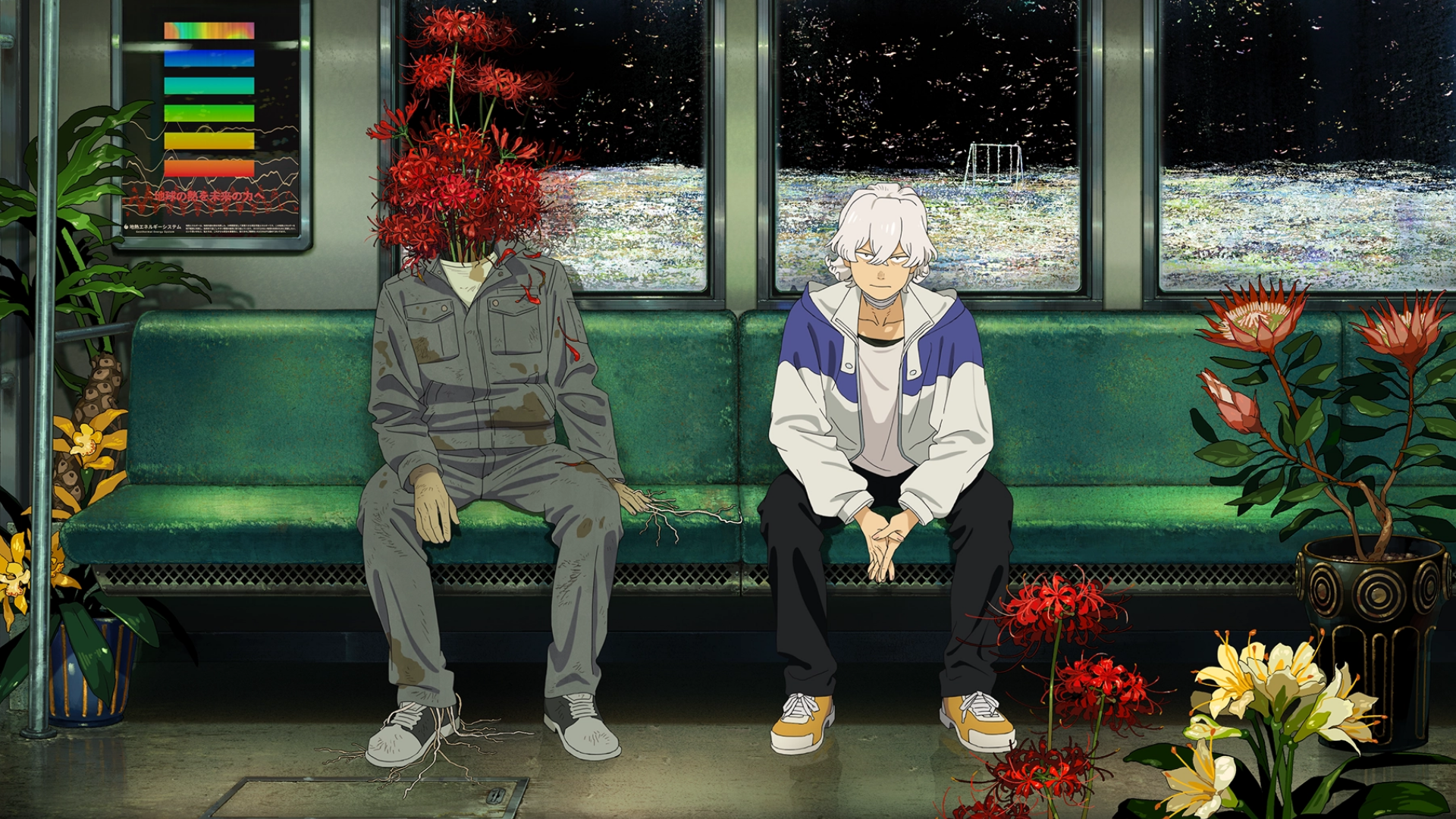
Spiritflora designs occupy a particularly disturbing but undeniably compelling niche within the visual language of the show. While they carry an aesthetic beauty, the concealment of human bodies beneath floral coverings introduces a jarring, unsettling undercurrent. This visual strategy is not gratuitous; it reinforces the core theme that survival via Transfloration entails a profound redefinition of personhood. The transformation is not just skin-deep; it is a metamorphosis that repositions the human body within the natural order, challenging viewers to reconsider the line between life and artifice.
The series’ music deserves special mention. Composed by Tatsuya Kato, the score blends piano and violin passages with a restrained, melancholic sweep that underscores the emotional resonance of pivotal moments. The music never overwhelms the storytelling; instead, it amplifies the sense of sorrow and contemplation that threads through the narrative. The soundtrack’s restraint is itself a stylistic statement, mirroring the show’s preference for quiet, inward drama over bombastic spectacle. The overall sonic landscape—sound design, ambience, and score—collaborates with the visuals to heighten the stakes of each revelation, making the emotional impact linger long after the screen fades to black.
Behind the scenes decisions, from pacing to tone, reveal a deliberate attempt to balance speculative concept with empathic storytelling. The writers eschew grandiose declarations about the fate of humanity in favor of intimate portraits of the people who inhabit this world. This approach yields a narrative that is as intellectually engaging as it is emotionally humane, a rarity in a genre often tempted by grandiosity. In sum, the production succeeds on multiple fronts—artistic, thematic, and emotional—cementing Fool Night as a standout example of modern anime that respects its audience’s capacity for nuance.
Final Verdict
Fool Night stands out for its audacious blend of a high-concept premise with grounded human storytelling. It crafts a universe where survival is not simply a matter of technology but a moral negotiation that probes memory, identity, and the enduring bonds of community. The notion of converting dying people into plants could risk sliding into reductionist science fiction, but the series resists that trap by insisting on the human stories contained within every seed and every breath.
What resonates most is the show’s commitment to complexity. Toshiro’s experience is not a linear ascent toward heroism; it’s a realistic, often painful journey through vulnerability, responsibility, and the consequences of a life transformed. The psychological weight of hearing voices in one’s head, the ethical debates surrounding medical intervention, and the social calculus of who gets access to life-saving technology—all of these elements are handled with care and sophistication. The result is a narrative that feels ethically credible even as it unfurls with mystery and suspense.
The characters anchor the series in emotional truth. The cast delivers tight, economical performances that convey inner life with economy and precision. The chemistry between Toshiro and Yomiko adds a poignant layer to the friendship-reunification arc, while Jin Hiragashi’s austere presence keeps the investigative storyline anchored in realism. The ensemble work contributes to a sense of lived world-building, where every choice reverberates beyond the immediate frame.
Visually and sonically, Fool Night transcends standard genre conventions. Its aesthetic sensibility—character-scale focus set against a vast, decaying world—creates an atmosphere that lingers. The Spiritflora concept, despite its unsettling undertones, is presented with a poetic intensity that invites contemplation about what it means to be alive in a world where life itself has a price tag and a trade wind of oxygen.
For viewers seeking a thought-provoking anime that marries speculative science with intimate, human storytelling, Fool Night offers a richly rewarding experience. It is not simply a tale of survival but a meditation on how memory, loyalty, and hope persist when the light disappears and the world redefines what it means to belong.