


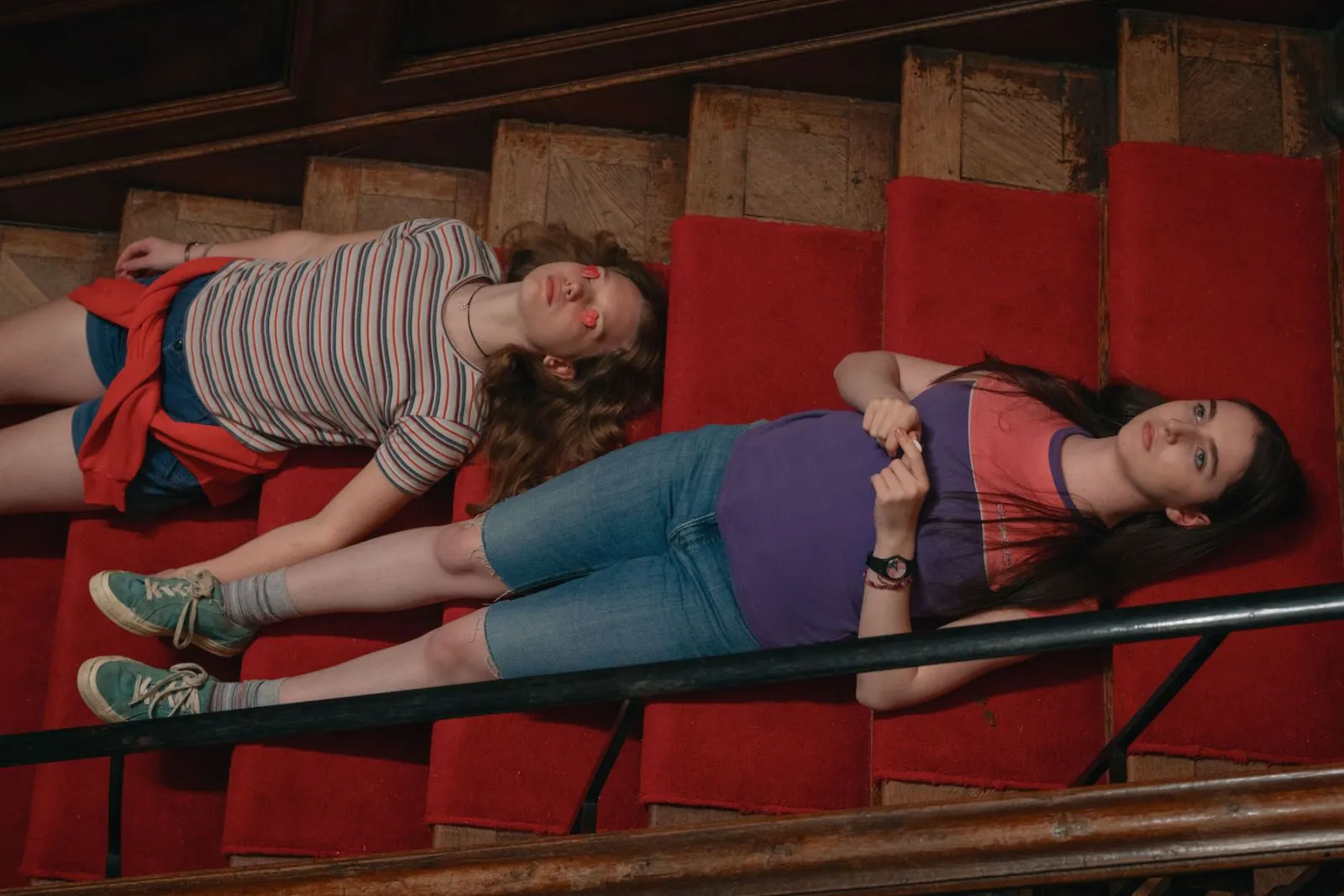
Molly Manners’ latest feature, Extra Geography, arrives as a witty, emotionally resonant coming‑of‑age story that balances humor with the tender uncertainties of teenage life. Set inside an all‑girls boarding school, the film follows two bright students whose shared dream of Oxbridge admission fuels a mischievous summer project: to fall in love with their charismatic Geography teacher. Manners, whose previous work on the beloved series One Day showcased her deft handling of youthful longing, brings the same perceptive eye to this adaptation of Rose Tremain’s short story. The result is a polished, visually vibrant piece that feels both nostalgic and freshly contemporary.
Synopsis
Flic (Marni Duggan) and Minna (Galaxie Clear) are inseparable roommates whose contrasting backgrounds—scholarship‑driven ambition versus privileged comfort—have never hindered their bond. As they navigate the pressures of academic excellence and the looming university application process, the pair devise a playful experiment: to experience romantic affection for their teacher, Miss Delavigne (Alice Englert). The project becomes a catalyst for exploring friendship, rivalry, and the fluctuating nature of desire, all while a school production of A Midsummer Night’s Dream and occasional encounters with boys from a neighboring institution add layers of comedy and introspection. Throughout, the film captures the delicate push‑and‑pull of growing up, where laughter and yearning sit side by side.
Performances
Duggan and Clear deliver performances that feel simultaneously natural and heightened, embodying the film’s stylized tone without losing authenticity. Duggan’s Flic crackles with restless intellect and a quick‑witted humor that masks deeper insecurities, while Clear’s Minna exudes a steadier, almost maternal confidence that gradually reveals her own vulnerabilities. Their verbal sparring is the heart of the movie—sharp, rhythmic, and revealing the intricate dance of loyalty and competition that defines many adolescent friendships. Alice Englert’s Miss Delavigne serves as the enigmatic focal point; she balances poise with a subtle wistfulness that makes the girls’ fascination both understandable and endearing. Supporting turns from the cast of the school play and the visiting boys provide comic relief and broaden the social canvas without detracting from the central duo’s journey.
Behind the Lens
Manners’ direction is assured and visually thoughtful. The cinematography bathes the boarding school in warm, natural light during daytime scenes, shifting to cooler, more intimate tones for moments of introspection—mirroring the film’s thematic emphasis on illuminating the “darker corners of the teenage soul.” The editing rhythm matches the snappy dialogue, allowing jokes to land while giving space for emotional beats to linger. Production design carefully distinguishes the worlds of scholarship and privilege through subtle details in dormitory décor and uniform styling, reinforcing the class‑blurred friendship at the story’s core.
The adaptation of Tremain’s short story expands the original’s intimacy into a fully realized visual narrative, retaining the source’s emotional nuance while adding cinematic layers such as the Midsummer Night’s Dream rehearsal sequences, which serve as a metaphorical backdrop for the characters’ own unfolding fantasies.
Final Verdict
Extra Geography succeeds as a smart, heartfelt exploration of teenage ambition, friendship, and the bewildering geography of first feelings. Manners captures the paradox of adolescent desire—its simultaneity of bravado and fragility—through a script that is both funny and poignant, bolstered by standout performances from Duggan, Clear, and Englert.
The film’s polished aesthetic and thoughtful pacing make it an engaging watch for anyone who remembers the intensity of school‑year dreams and the bittersweet process of growing up. For lovers of character‑driven dramas that blend wit with genuine emotional insight, Extra Geography is a worthy addition to the coming‑of‑age canon.