


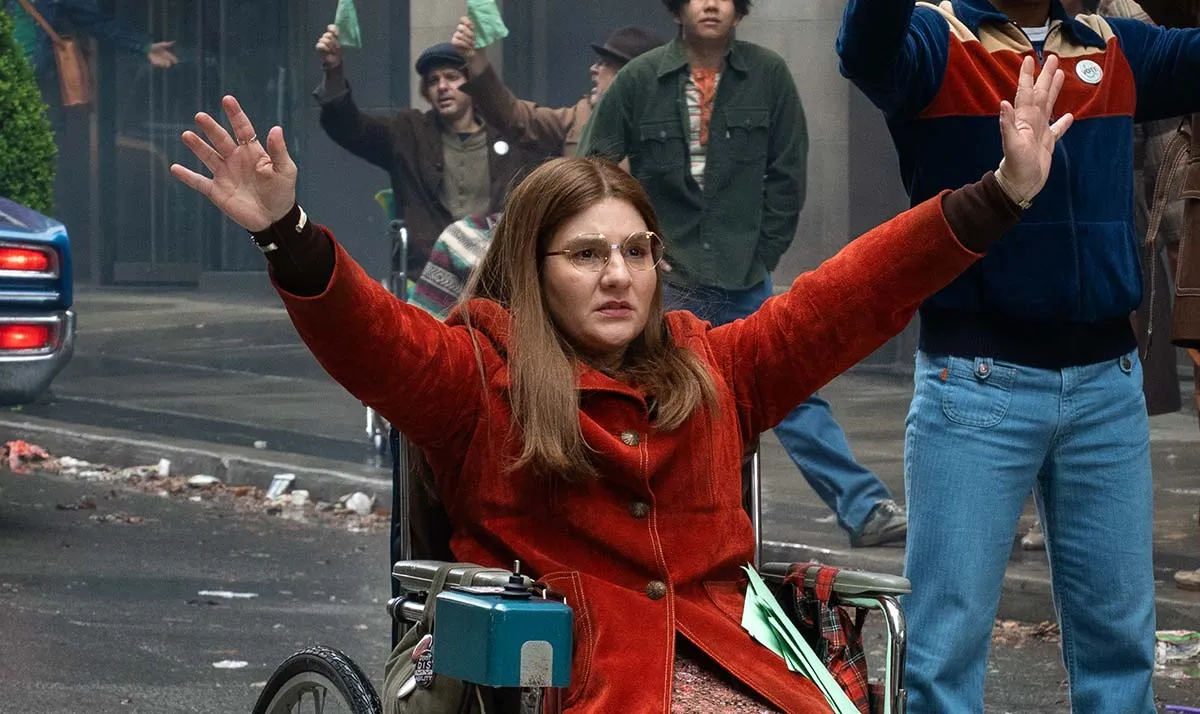
Being Heumann is a 2026 biographical drama that streams on Apple TV, directed by Sian Heder, who continues to mine the terrain of disability advocacy after the remarkable success of CODA. Rooted in real historical events, the film chronicles Judith Heumann’s relentless push for recognition and access, culminating in a dramatic stand at a San Francisco federal building. While it may not deliver the emotional punch of Heder’s prior triumphs, the film remains a compelling, inspirational chronicle of space-making and political courage in the face of bureaucratic indifference.
A 1970s Roadmap to Recognition
The narrative opens in 1972 as Judith “Judy” Heumann, navigating the city in her wheelchair, makes her way toward a government edifice to meet allies and press for action. The backdrop is set against a moment when Congress, poised to pass the Rehabilitation Act, quietly contemplates adding language that would guarantee disability rights to roughly three million Americans. Judy’s coalition arrives at the steps of the federal building with a blunt, uncompromising demand: implement the new provisions of Section 504 so that people with disabilities can live with dignity and equal opportunity.
In these early moments, the film frames a movement that is less about charity and more about civil equality. The protesters, who are frequently dehumanized by society as objects of pity, push back with a resolute insistence on their civil rights. They block traffic, they raise their voices, and they make a straightforward case for urgent inclusion. The action is not mere theatrics; it is a calculated assertion that the status quo is unacceptable and that the state bears responsibility for removing structural barriers.
The Rise of a Movement, the Challenge of Strategy
From San Francisco to the broader national stage, Judy’s activism catalyzes a broader disability-rights movement. The film follows her evolution from a local protest leader to a pivotal organizer who recruits new allies and expands the coalition. Yet the movement’s central tension remains: how to achieve change without surrendering the core principles of non-violence and democratic process. Ed Roberts—an enduring presence in the movement and a UC Berkeley graduate who was the first wheelchair-accepted student there—advocates for a disciplined, nonviolent approach. He worries about provoking police crackdowns or provoking a backlash that could derail their aims.
Despite these strategic reservations, Judy’s persistent engagement with policymakers—especially the Office of Joseph Califano Jr., the Secretary of Health, Education and Welfare (HEW)—highlights the slow, cumbersome machinery of government. The film presents a nuanced portrait: the bill’s passage is not the same as its enforcement, and the delay becomes a test of endurance and public pressure.
A Bold Rally and a Calculated Storming of the HEW Office
When repeated solicitations fail to elicit action, Judy’s group escalates to a high-stakes demonstration. They stage a rally in front of the HEW office in San Francisco, delivering speeches, singing, and presenting a visceral, lived reality of disability. Yet Judy’s departure from the ordinary flow of protest plans reveals a crucial pivot: she envisions a more dramatic, sustained act of occupation to force political attention.
The plan, though seemingly impulsive, is not devoid of forethought. Judy had quietly prepared for the possibility of a prolonged stand, even packing a toothbrush in anticipation of a potential stay away from home. The siege is not simply about a moment of defiance; it is about a long-haul strategy to compel the authorities to acknowledge Section 504 and thereby reframe public life for millions of citizens.
The Sit-In: A Multi-Day Test of Resolve
The occupation transforms into a multi-day sit-in that requires improvisation and coalition-building. The protesters must secure supplies, maintain medical needs, and navigate a building designed without universal access in mind. The film details how basic necessities—food, medicine, sanitation—become practical battlegrounds in a broader fight for rights. Since many in the group rely on wheelchairs and other assistive devices, the challenges are amplified: broken toilet stalls, limited ramps, and makeshift accommodations become the new normal under siege.
As the sit-in extends, external allies step forward. The Black Panther Party enters the story through Brad Lomax, a fellow advocate with MS who uses a wheelchair. Lomax’s involvement signals a surprising alliance across civil rights movements and underscores how intersectionality—racial and disability rights—shapes the strategy and resources available to protesters. The arrival of additional support, including food provisions and medical supplies, helps sustain the occupation, turning it into a more durable, visible challenge to bureaucratic inertia.
The Media and Public Sympathy: Evan White’s Ground-Level Coverage
Journalist Evan White emerges as a crucial bridge between the protesters and the outside world. By joining the sit-in and broadcasting from inside the building, White translates the unfolding drama into evocative, on-the-ground reporting. His presence helps shift public perception, keeping the nation’s eye on the demand for Section 504 and the moral imperative to protect the civil rights of disabled people. The film uses White’s reporting as a narrative device to demonstrate how media attention can elevate a localized protest into a national conversation.
The Practical Realities of a Public Space Without Accessibility
Set in an era when federal buildings lacked universal access, the film anchors its drama in tangible, logistical hurdles. Wheelchairs contend with narrow doors and non-existent ramps, while portable accommodations become semi-permanent fixtures of the protest. The occupants improvise: fans and venting locations manage temperature control, replenishment of essentials becomes a shared responsibility, and improvised solutions bridge the gap between vulnerability and agency.
Even as resources arrive from allies, the protagonists confront a second-order challenge—the government’s willingness to concede. The narrative suggests that authorities refrain from overt confrontation, choosing instead to exert pressure through indirect measures, such as isolating supply lines, restricting communications, and manipulating the physical environment to erode participants’ stamina. The result is a tense, sustained pressure campaign that tests the protesters’ endurance and commitment.
Harassment, Tactics, and the Moral Balance
The film does not shy away from depicting the moral ambiguity and emotional strain of protest under constant scrutiny. There are moments when authorities deploy tactics meant to frighten participants and erode morale: staged emergencies, police presence at odd hours, and the deliberate fraying of daily routines. While these actions reveal the system’s discomfort with public accountability, they also illuminate the protesters’ resolve. Judy’s leadership remains unyielding, even as some allies contemplate retreat.
A particularly stark sequence involves a late-night police entry intended to instill fear rather than to impose immediate harm. Such scenes underscore the psychological warfare central to long-duration protests. The tension is not merely about securing policy change; it is about preserving the activists’ sense of purpose and their belief that the fight is just, even when the environment seems designed to break them down.
The Slow Unfolding of Victory: What Becomes of Section 504
The central question of ending is not about a single dramatic moment but about the cumulative impact of sustained pressure. The film traces how a series of public demonstrations, media coverage, and cross-movement solidarity gradually shift the political landscape. Although the movie frames the eventual signing of Section 504 as a milestone, it emphasizes the broader, lasting transformation of civic life: accessibility becomes the baseline expectation, not a charitable concession.
In the end, Judy Heumann’s leadership testifies to a larger truth about social change: real progress emerges when marginalized voices organize, persist, and insist on inclusion within the machinery of the state. The film closes with a recognition that the struggle for disability rights is ongoing, even as legislative victories materialize and the atmosphere shifts toward greater inclusion.
Why This Story Matters Today
Being Heumann operates as more than a historical recounting; it speaks to ongoing debates about accessibility, civil rights, and the responsibilities of government to its citizens. In contemporary contexts, the film’s themes resonate with current struggles over funding for disability services, architectural accommodations, and inclusive policies across education, employment, and public life. The narrative’s emphasis on non-violent, democratic engagement offers a blueprint for advocacy that remains relevant to activists, policymakers, and audiences seeking to understand how social change happens.
A Portrait of Courage and Strategic Vision
Though the film’s emotional cadence may differ from Sian Heder’s earlier work, Being Heumann ultimately provides a rigorous, insightful portrait of a pivotal moment in disability rights history. Judy Heumann’s present-tense leadership—steady, strategic, and deeply human—remains a testament to how tenacity, solidarity, and intelligent political maneuvering can compel a reluctant system to respond. The ending is less a fireworks finale than a reflective acknowledgment that the struggle for full equality is an ongoing process that transcends a single legislative victory.
The Turning Point in Disability Rights Advocacy
Despite repeated attempts by authorities to disrupt the protest, Judy Heumann and her allies remained steadfast in their commitment to achieving meaningful social change. Early on, Judy draws inspiration from Mahatma Gandhi’s nonviolent campaign for India’s independence and even embarks on a hunger strike. Yet she soon recognizes that more strategic routes could yield greater impact.
With that realization, the demonstrators halt their sit-in at the San Francisco office and pivot toward a bold, direct appeal: travel to Washington, D.C., to confront the Secretary of Health, Education, and Welfare, Joseph Califano. The logistics are daunting. Airports and planes are not prepared to accommodate travelers in wheelchairs, and upon arrival, the group must traverse the city from the airport inside the cargo bay of a truck. Their bold objective is Califano’s residence, aiming to apply sustained pressure on the policymaker. In a moment of vulnerability, Califano slips away through the back door, injuring himself in the retreat.
Judy’s Enduring Mission
In the film’s telling, Judy Heumann’s victory is not a momentary triumph but a launching pad for a broader campaign. Rather than returning to San Francisco, she remains in Washington, D.C., to propel further reforms benefiting people with disabilities. Her close associate and caregiver, Joni Breves, joins her in this continuing mission. The final scenes capture Judy and Joni at the Capitol, marveling at the absence of accessible ramps amid the sea of stairs. The stark realization underscores the magnitude of the challenge ahead, but it does not deter them.
Judy’s influence extended beyond a single protest. In 1990, inspired by her work, disabled activists crawled up the steps of the U.S. Capitol in a symbolic act of protest. Judy’s advocacy persisted across decades, guiding collaboration with successive federal administrations. Her efforts spanned the Clinton and Obama eras, driving policy and public awareness alike.
Judy Heumann’s remarkable career culminated in 2023, when she passed away at the age of 75 due to natural causes. Her legacy endures in the ongoing pursuit of disability rights, shaping legislation, accessibility standards, and the social conscience surrounding inclusion.
If you are drawn to stories of courageous organizers who reconcile moral clarity with practical savvy, this film offers a compelling lens into one woman’s determined push to reframe the public landscape for millions of Americans. It invites viewers to examine not only what changed, but how change happens when communities insist on belonging, dignity, and equal access.