

The BBC’s newest comedy, Ann Droid, debuted on BBC One and iPlayer on 17 July 2026, offering a fresh take on the classic “odd couple” formula. Set in a recognisable near‑future suburb, the series pairs a grieving widow with a second‑hand humanoid care robot, turning everyday domestic routines into a playground for social satire and heartfelt humour. With a sharp script, a cast that balances warmth and wit, and production design that treats futuristic tech as ordinary household hardware, the show asks a simple yet resonant question: can a machine ever truly fill the gaps left by human loss?
Synopsis
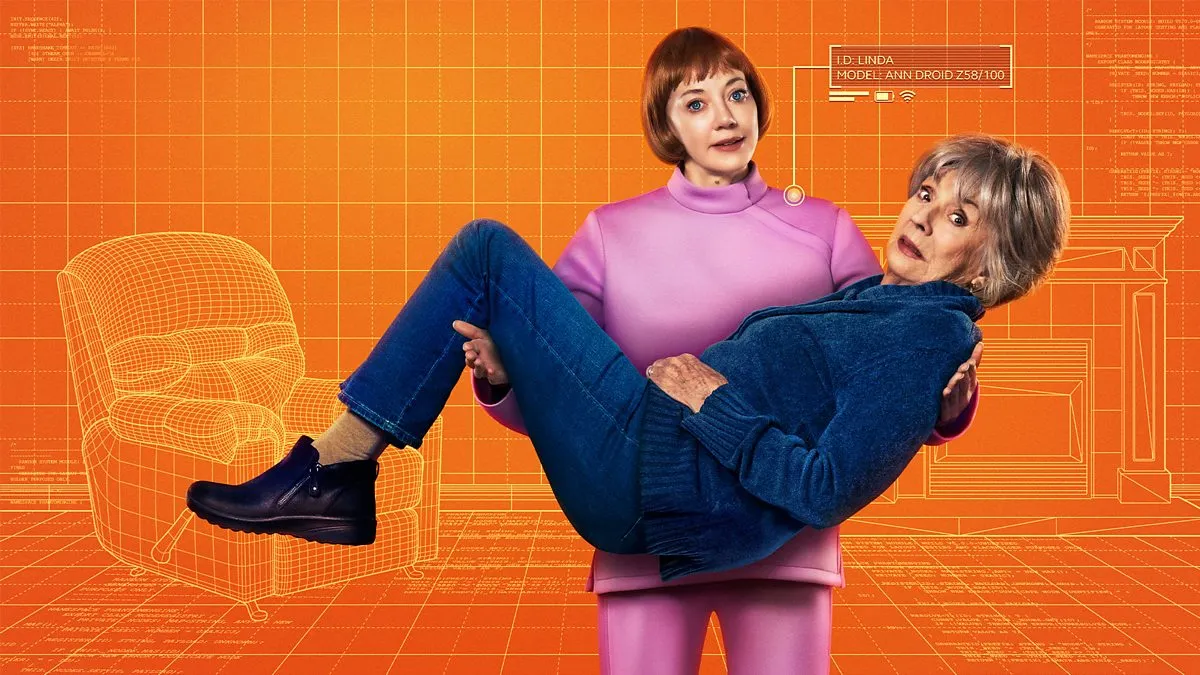
Widow Sue (Sue Johnston) reluctantly welcomes a pre‑owned care robot called Linda, purchased by her son Michael (Paul Ready) after she collapses at home. Linda arrives via delivery driver Cass, plugs into a charging dock, and immediately begins managing medication reminders, safety checks, and internet‑linked tasks. As Sue navigates the uneasy overlap of surveillance and convenience, the robot’s rigid programming clashes with her emotional needs, sparking a series of comic mishaps and unexpected moments of connection. The episode arc follows Sue’s tentative plan to return Linda within the 48‑hour trial, the growing bond that defies the contract, and the subtle ways both characters reshape each other’s lives.
Performances
Sue Johnston delivers a nuanced portrait of a woman whose identity has long been defined by marriage and motherhood. Her understated delivery—voice trembling one moment, steadier the next—captures the quiet dignity of grief without slipping into sentimentality. The scene where Sue confesses she “has no idea how to fill her days” is a masterclass in restrained acting, allowing the audience to feel the weight of her loss while still laughing at the absurdities around her.
Paul Ready plays Michael with a blend of self‑interest and reluctant affection. His motivation to buy Linda is as much about easing his own responsibilities as it is about caring for his mother, a tension that fuels both the comedy and the occasional awkwardness of his subplot. Ready’s ability to shift from smugness to genuine embarrassment—especially during the disastrous open‑mic performance—keeps his character engaging, even when the writing leans heavily on his misfortunes.
Diane Morgan embodies Linda, the robot, with a deadpan precision that becomes the series’ comedic engine. Her performance is defined by minimal facial movement, fixed shoulders, and a monotone delivery that mirrors a well‑programmed AI. This restriction forces the humor to arise from timing and juxtaposition rather than physicality. Morgan’s moments of “searching for suitable words”—pausing as if consulting an internal database—are both hilarious and oddly touching, highlighting the gap between algorithmic logic and human emotion.
Sarah Kendall appears in supporting roles that help ground the futuristic premise in everyday life. Her interactions with the other robots, Roxy and Keith, showcase a world where polite, loyal machines coexist with chaotic human families, adding layers of both comfort and subtle unease.
Overall, the ensemble chemistry elevates the script, with Johnston’s grounded pathos balancing Morgan’s mechanical rigidity, while Ready and Kendall provide the necessary friction that keeps the narrative moving.
Behind the Lens
Ann Droid’s writers treat advanced robotics as a mundane utility—no more exotic than a smart speaker or broadband connection. This deliberate normalisation is reinforced by production designer Emma Clarke, whose set dressing places charging stations beside family photos, and director Tom Hughes, whose camera work often frames Linda in static, almost documentary‑style shots, emphasizing her unchanging presence.
The decision to have Cass, the delivery driver, hold a PhD in Chaucer adds a whimsical layer to the world‑building, reminding viewers that while technology evolves, employment patterns remain stubbornly familiar. Composer Maya Patel’s understated synth‑ambient score subtly underscores the tension between the cold efficiency of machines and the warmth of human relationships.
A notable technical achievement is the seamless integration of practical effects for Linda’s “laser‑eye” moments. Rather than rely on heavy CGI, the crew used discreet LED rigs and clever lighting, giving the robot’s interventions a tactile, almost comedic realism that aligns with the show’s tone.
Final Verdict
Ann Droid succeeds where many sci‑fi comedies stumble: it does not need to imagine a distant, dystopian future. Instead, it presents a plausible tomorrow where care robots sit on kitchen counters, and families negotiate the ethics of outsourcing compassion. The series shines brightest when Sue and Linda find a rhythm beyond the contractual trial, allowing the comedy to flow from genuine affection rather than forced gag setups.
While Michael’s subplot occasionally drags—his drug trial and personal dramas feel like filler—the core buddy‑dynamic between Johnston and Morgan carries the show. The humor derived from Linda’s literal interpretations, combined with the poignant moments that acknowledge loneliness in an aging society, makes Ann Droid both entertaining and thought‑provoking.
In short, the series offers a fresh, witty commentary on the intersection of technology and ageing, anchored by strong performances and clever production choices. It invites viewers to laugh at the absurdity of a robot learning to care, while quietly reminding us that human connection remains irreplaceable.