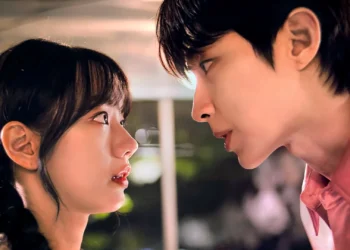


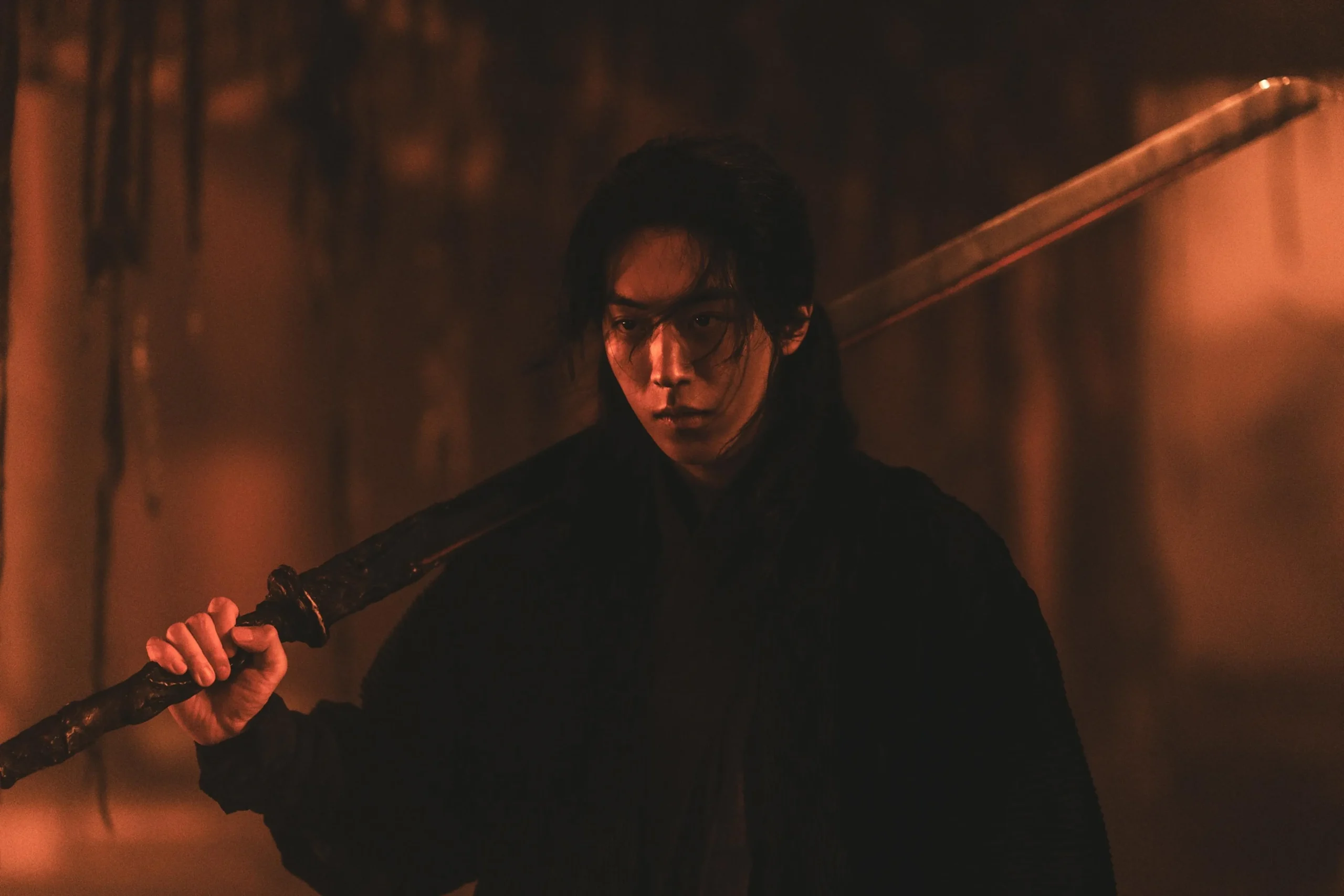
Netflix’s latest offering, The East Palace, arrives as an eight‑episode historical fantasy thriller that blends court intrigue, supernatural lore, and political maneuvering. Directed by Choi Jung‑kyu and penned by Seo Jae‑won and Kwon So‑ra, the series stars Nam Joo‑hyuk as the enigmatic spirit‑walker Gu‑cheon, Roh Yoon‑seo as the perceptive court lady Saeng‑gang, and a seasoned supporting cast led by Cho Seung‑woo and Jang Young‑nam. With each episode clocking in at roughly fifty minutes, the show promises a dense, atmospheric experience that rewards viewers who enjoy unraveling layered mysteries while being immersed in richly detailed period aesthetics.
Synopsis
The narrative opens with a chilling series of unexplained deaths among the royal princes. Whispers spread through the palace corridors of a vengeful pond spirit seeking retribution against the bloodline. Skeptical at first, the king’s urgency mounts when the last remaining heir falls gravely ill. Desperate for answers, he summons Gu‑cheon, a man gifted with the ability to traverse the spirit realm. Gu‑cheon teams up with Saeng‑gang, whose own gift lets her converse with the dead. Together they probe the palace’s hidden history, confronting both ethereal threats and the all‑too‑human machinations of those sworn to protect the throne. As each clue uncovered spawns new questions, the duo finds themselves drawn deeper into a web where the true danger may lie not beyond the veil, but within the stone walls of the court itself.
Performances
Nam Joo‑hyuk delivers a nuanced portrayal of Gu‑cheon, balancing aloof sarcasm with a gradual reveal of vulnerability. His restrained use of supernatural abilities makes the character feel emotionally distant at first, yet the unfolding backstory transforms him into a compelling figure whose every foray into the spirit world exacts a tangible toll. Roh Yoon‑seo’s Saeng‑gang serves as the perfect counterpoint—her empathy and determination ground the mystical elements in human resolve.
Cho Seung‑woo as King Ju‑sung and Jang Young‑nam as the Queen Dowager elevate the political tension. Neither ruler is painted as a caricature of evil; instead, their obsessive guarding of palace secrets drives them to morally ambiguous decisions that heighten the stakes. The supporting ensemble—Tae In‑ho, Hwang Young‑hee, Hong Seo‑joon, Lee Hong‑nae, and others—adds texture, ensuring that every court intrigue feels personal and consequential.
Behind the Lens
Visually, The East Palace is a feast. The production design reconstructs a sprawling palace that feels alive with whispered histories; its corridors and chambers become silent witnesses to the unfolding drama. Costume designers blend traditional hanbok with subtle fantastical touches, reinforcing the series’ bridge between history and myth.
Cinematography shifts palpably when characters enter the spirit world—color palettes desaturate, lighting turns ethereal, and the camera lingers on lingering shadows, reinforcing the sense that each journey exacts a psychological price. Sword‑play sequences are choreographed with precision, delivering kinetic energy without overshadowing the slower, tension‑building moments.
Special effects are generally strong; the occasional CGI‑heavy scene leans toward spectacle, yet the overall aesthetic remains cohesive enough that these moments do not distract from the core narrative. The sound design deserves mention: ambient noises, distant echoes, and a restrained score work together to keep viewers on edge, even during scenes bereft of overt action.
Final Verdict
The East Palace succeeds as a multifaceted thriller that refuses to be pigeonholed. Its core mystery is engaging, constantly reshaping itself with each revelation, while the folklore elements add depth rather than cheap scares. The political subplot—where the desire to preserve lineage leads to moral decay—provides a sobering counterbalance to the supernatural, reminding viewers that the most haunting forces often wear human faces.
Performances across the board are strong, with Nam Joo‑hyuk and Roh Yoon‑seo anchoring the emotional core, and the veteran leads delivering layered portrayals of power and paranoia. Visually, the series impresses with lavish sets, meticulous costumes, and atmospheric shifts that make the spirit realm feel both wondrous and perilous.
While the dense mythology can occasionally feel overwhelming, the show’s strength lies in its ability to keep the audience guessing, blending horror, intrigue, and character study into a satisfying whole. For anyone craving a K‑drama that offers more than jump scares—a tale where every whisper in the palace hall carries weight—The East Palace is a worthy addition to the watchlist.
Also Read:
Everything You Need to Know About “The East Palace”: Netflix’s Upcoming Fantasy Thriller