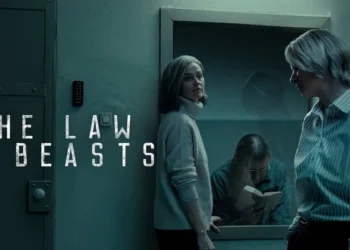


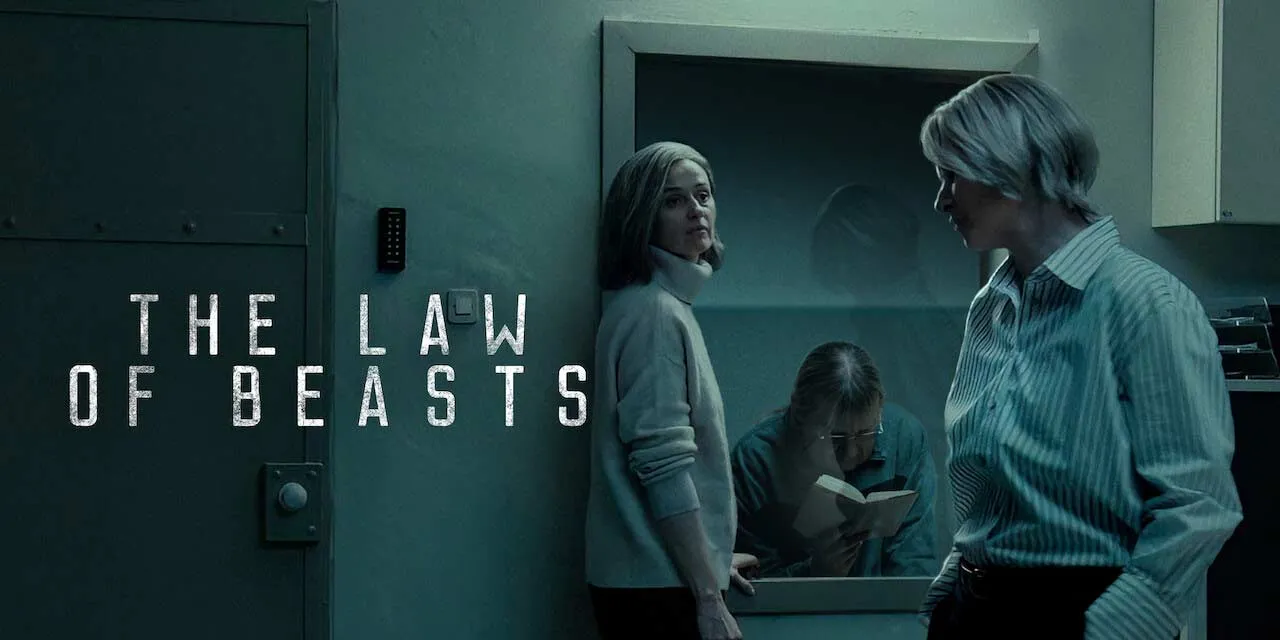
Few things are more unsettling than realizing that a noble intention can still produce a terrible outcome. The Law of Beasts, the Polish crime drama now streaming on Netflix, builds its entire premise around that uncomfortable truth. Directed by Kasper Bajon and structured across four episodes of roughly forty to fifty minutes each, the series takes inspiration from an actual criminal case in Poland and the legislation that followed. It does not offer viewers a tidy resolution or a clear moral compass. Instead, it plunges into the gray territory where justice and revenge look nearly identical, leaving the audience to sit with questions that have no easy answers.
Synopsis
The story begins in 1988, when three children disappear and Major Anna Bersz takes command of the investigation. Her work uncovers a horrifying reality: four children have been murdered by a man named Mariusz Trynkiewicz. While Anna pushes to see him imprisoned, psychiatrist Agnieszka Grabska must carry out a professional evaluation to determine whether he is mentally fit to stand trial. Decades later, as the end of his sentence approaches and release becomes inevitable, both women are forced to reckon with decisions made long ago. The narrative tracks how their personal bond and professional duties collide when the line between protecting society and exacting retribution disappears.
Performances
Agnieszka Grochowska anchors the series as Major Anna Bersz, delivering a portrayal defined by quiet determination and simmering frustration. Her Anna is driven by a protective instinct that becomes increasingly difficult to separate from personal obsession. Agnieszka Żulewska matches her as Agnieszka Grabska, bringing vulnerability and conflict to the role of a psychiatrist struggling to remain objective while evaluating a dangerous individual.
Michał Pawlik is striking as Mariusz Trynkiewicz, conveying menace without relying on graphic exposition; the writing ensures his crimes are never minimized, even as his psychological state is examined. Supporting turns by Kamilla Baar, Adam Nawojczyk, Michalina Łabacz, Aleksander Talkowski, Jakub Sasak, and Jan Jankowski fill out the institutional and personal pressures surrounding the central case.
Behind the Lens
What distinguishes The Law of Beasts from standard true crime fare is its refusal to center the killer. Mariusz Trynkiewicz’s crimes are established early, but the real drama lies in how two women with the same goal choose radically different paths to achieve it.
Kasper Bajon splits the timeline between 1988 and the present, showing how youthful idealism hardens under institutional pressure and career ambition. The addition of a mandatory psychiatric assessment raises difficult questions about public safety: if the law allows a dangerous person to walk free, what responsibility do those in power bear? The series avoids simple answers, favoring a dark, disturbing atmosphere that lingers well after the final credits.
Final Verdict
The Law of Beasts is more than a disturbing case study of murder. It is a thoughtful examination of how personal beliefs, workplace obligations, and concerns for public safety can clash with devastating consequences. The show challenges viewers to question not only the criminal’s actions but also the choices made by those trying to stop him. It is bleak and sometimes difficult to watch, yet precisely that discomfort makes it essential viewing. For anyone drawn to crime dramas that prioritize moral complexity over cheap thrills, this four-episode limited series is worth the investment.