

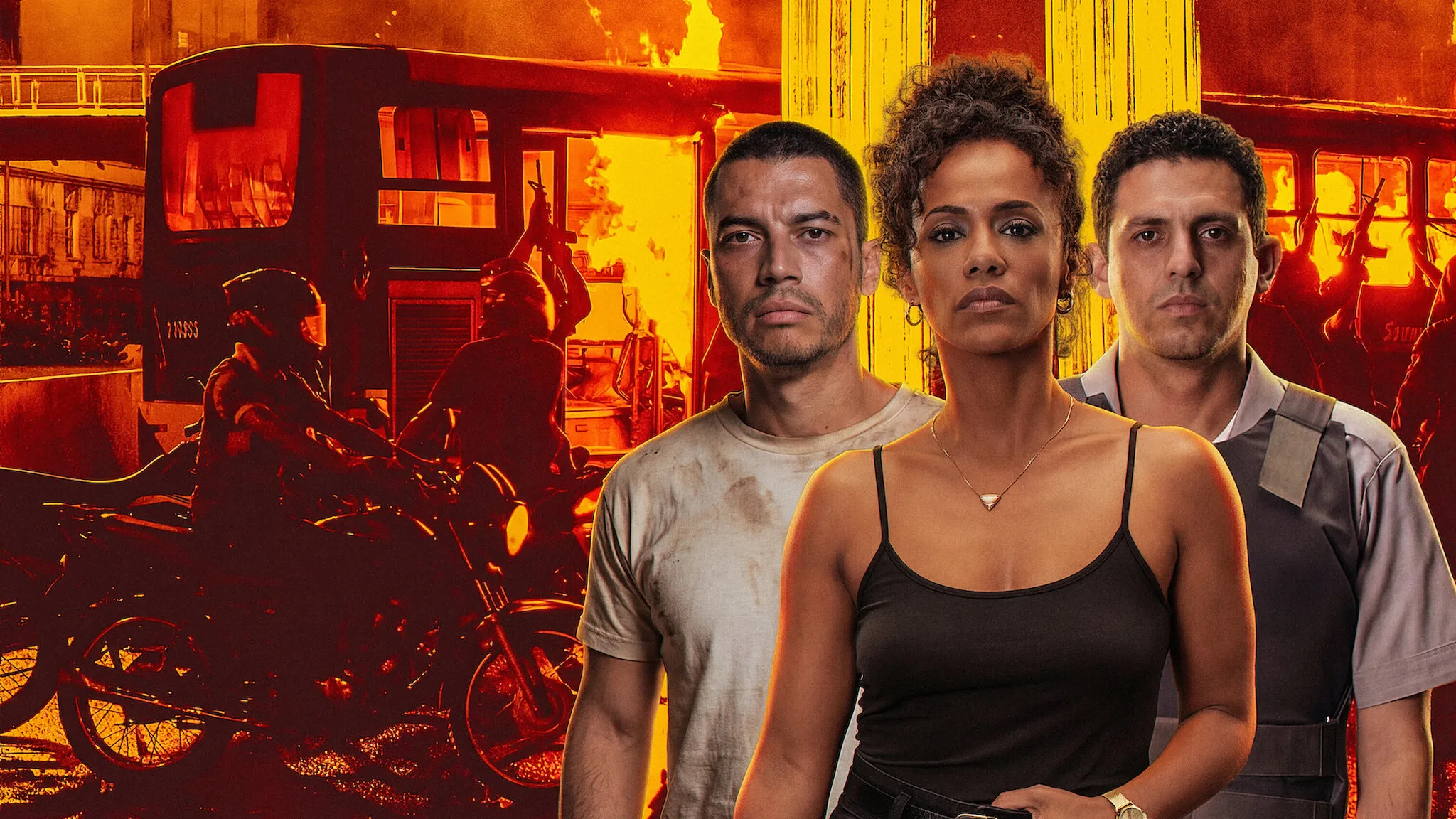
Netflix’s State of Fear plunges viewers into a visually striking and sonically immersive Brazilian crime thriller. Directed by Pedro Morelli and co-written with Julia Furrer, this film attempts to expand a gritty criminal universe into a sprawling, city-wide crisis. While it masterfully crafts a world brimming with tension and moral ambiguity, its challenging narrative structure and occasional pacing issues may leave some viewers searching for a clearer path through its intense landscape.
Story
The film throws us into the chaotic heart of São Paulo, where the lines between justice and vengeance are constantly blurred. At its core lies the fractured relationship between Artur, a weary individual grappling with impossible choices, and his daughter, Lia (brought to life by newcomer Mariana Nunes in a powerful breakout performance). Their strained reunion forms the emotional anchor, navigating a treacherous environment of constant violence, systemic corruption, and brutal encounters. Braga’s screenplay, co-written with Ana Luiza Azevedo, resists easy action tropes, ensuring every burst of violence feels purposeful, carrying significant emotional weight rather than serving as mere spectacle. However, the narrative occasionally stumbles, particularly in its middle act, where repetitive confrontations can hinder propulsion, asking the audience to simmer in discomfort a little too long.
Performances
Mariana Nunes stands out as Lia, portraying a character who is vulnerable yet resilient, tough yet intelligent, elevating the story beyond a typical revenge flick. While other cast members undoubtedly commit to their roles, the script’s inherent restrictiveness sometimes limits their ability to fully flesh out complex characters. There are glimpses of deeper potential, but the film doesn’t always seize the opportunity to develop these supporting arcs beyond surface-level relatability, potentially diminishing the overall emotional impact for a standalone feature.
Behind the Lens
State of Fear truly shines in its technical execution. Director Pedro Morelli, working from Braga’s vision, paints São Paulo not merely as a backdrop but as a complex, bruised character. Rafael Pacheco’s cinematography immerses us in a grim palette, contrasting neon-lit avenues with claustrophobic, flickering interiors, making the city feel lived-in and deeply scarred.
The sound design by Lucas Vidal is equally remarkable; his ominous, melancholic score, blending electronic pulses with orchestral flourishes, acts as another character, amplifying the film’s thematic tension. Crucially, the film earns praise for its unglamorous portrayal of violence and socio-economic disparity, framing brutality as a symptom of deeper systemic rot rather than glorifying it.
Final Verdict
State of Fear is a bold, uncompromising entry into the thriller genre, exploring grief, redemption, and the fragile boundaries between justice and vengeance. It’s a film of grit and nuance, anchored by compelling visuals and sound design. However, its stark realism and unapologetically bleak worldview won’t appeal to all. For viewers seeking light entertainment or a straightforward narrative continuation, the film’s demanding pace and potentially confusing ties to a larger franchise might leave them feeling unfulfilled. Yet, for those willing to engage with its intensity and moral complexity, State of Fear delivers a cinematic experience that lingers long after the credits roll.