


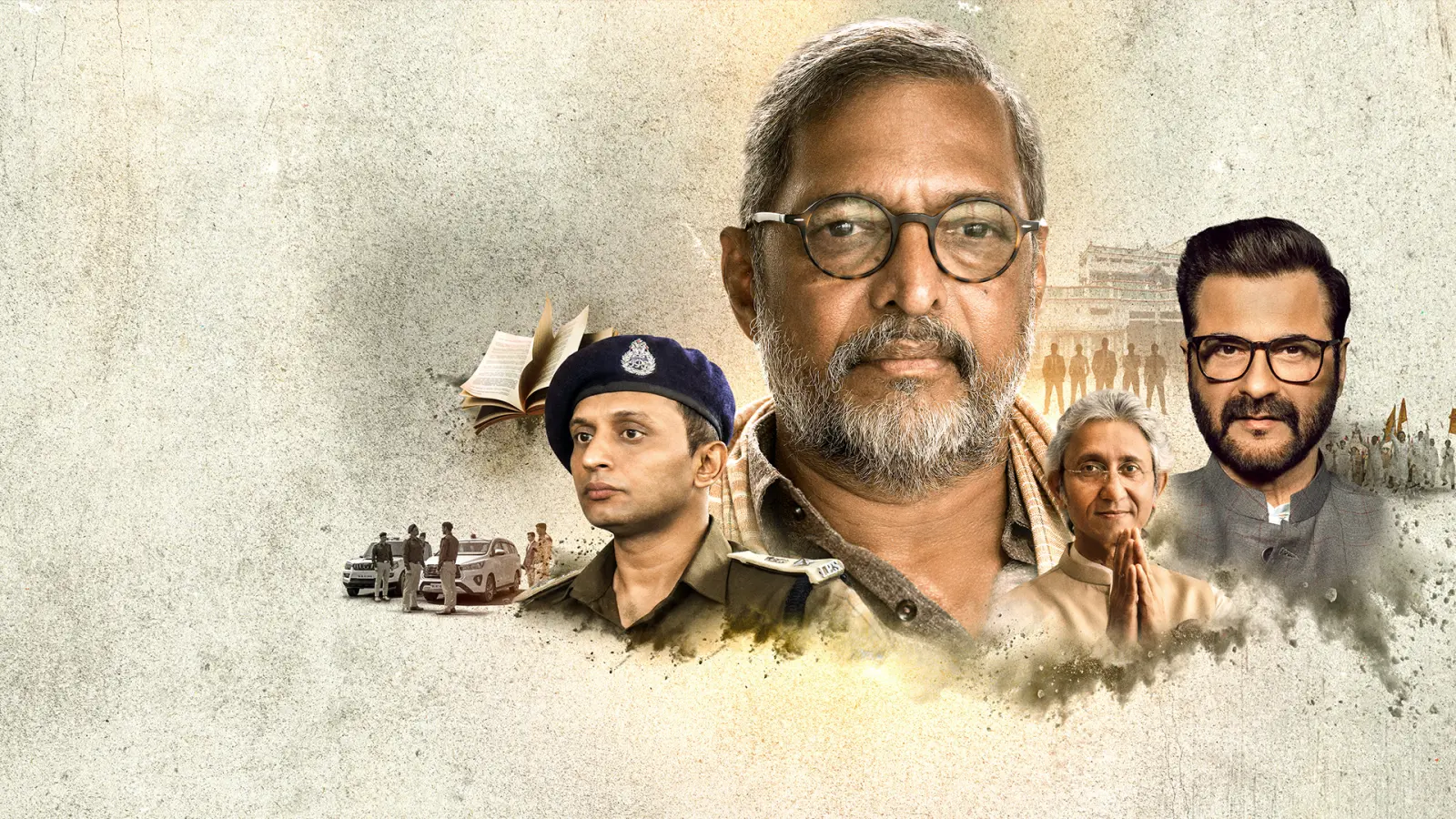
Veteran actor Nana Patekar steps into the digital streaming arena with Sankalp, Prakash Jha’s latest political offering now available on Amazon MX Player. Released on March 11, this ten-episode saga marks a significant reunion between the performer and director after a fifteen-year hiatus. While Jha revisits familiar territory of power politics and ethical ambiguity, the series derives its primary strength from Patekar’s commanding screen presence. Despite ambitions of delivering nuanced commentary on mentorship and statecraft, Sankalp ultimately emerges as a moderately engaging thriller that prioritizes momentum over meaningful introspection.
Story
At the narrative’s center stands Kanhaiya Lal, an erudite schoolteacher operating a modest gurukul in Patna while simultaneously running a prestigious UPSC coaching center in Delhi. His influence extends far beyond classroom walls—numerous former pupils now occupy crucial positions within the administrative, police, and revenue services, maintaining fierce allegiance to their Master Sahab. The equilibrium fractures when investigative vlogger Jayanti confronts Delhi Chief Minister Prashant Singh at a public function, triggering a chain reaction that exposes hidden networks of patronage. The tension escalates dramatically when IPS officer Aditya discharges his firearm during Kanhaiya’s birthday celebration, transforming personal loyalties into political warfare.
Performances
Patekar delivers a masterclass in restraint, portraying his character as a chess master of human relationships—calm, calculating, and perpetually three moves ahead of his adversaries. His subtle shifts in expression convey volumes without resorting to theatricality. Sanjay Kapoor embodies political privilege with adequate menace, while Neeraj Kabi brings gravitas to his role as the party president navigating treacherous alliances. Mohammed Zeeshan Ayyub infuses his conflicted police officer with palpable tension, though Meghna Malik and Kranti Prakash Jha deserve more substantial material. The ensemble creates a believable ecosystem of ambition and anxiety, even when the script falters.
Behind the Lens
Jha’s directorial vision draws explicit inspiration from the Chanakya-Chandragupta dynamic, exploring the dangerous intersection where guidance metastasizes into control. Chandan Kumar’s dialogues sparkle with philosophical sharpness, elevating otherwise conventional scenes. Cinematographically, the series employs a muted color palette that reinforces its grounded aesthetic, complemented by an understated background score. However, the pacing proves problematic—episodes nearing sixty minutes feel unnecessarily bloated, particularly in the mid-season stretch where tighter editing could have maintained narrative urgency. Flashback sequences effectively illuminate character motivations, yet several plot conveniences undermine the story’s logical foundation.
Final Verdict
Sankalp succeeds as a vehicle for Nana Patekar’s digital debut but stumbles as a profound political exposé. The series offers sufficient intrigue for viewers seeking fast-paced drama, though it sacrifices depth for velocity. While the mentorship-versus-manipulation theme resonates, the narrative relies too heavily on implausible conveniences and underdeveloped twists. Worth watching for Patekar’s nuanced portrayal and the occasional philosophical insight, yet it falls short of the revolutionary political cinema Jha has previously delivered.