


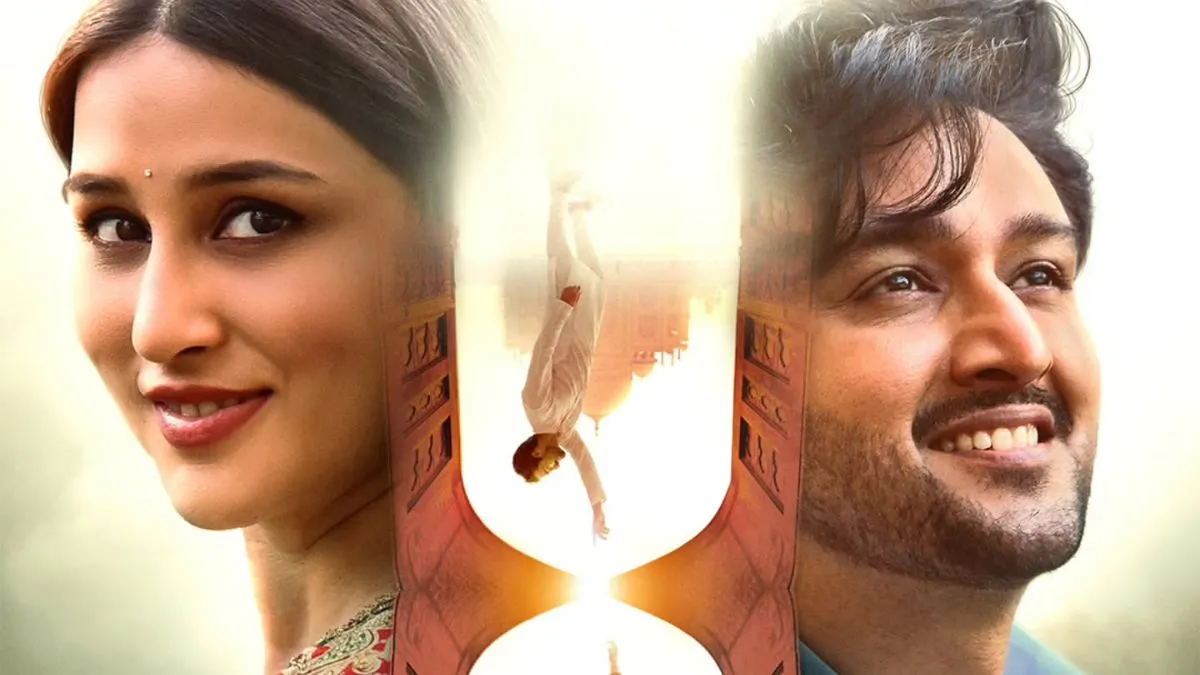
Sangamarmar, the latest Hotstar Special from Rajshri Productions and Jio Studios, attempts to carve a niche in the crowded space of multi-generational family dramas. Directed by Vikram Ghai and headlined by Sourabh Raaj Jain and Sheen Savita Dass, this nostalgic saga set in 1998 Agra promises emotional depth but delivers a curiously hollow experience. Despite its visual opulence and traditional values, the series struggles to justify its existence in an era where audiences crave substance over spectacle. With nine episodes currently streaming and weekly drops scheduled, the show risks losing momentum precisely when it needs to build emotional investment.
Story
The narrative centers on Amrita (Sheen Das), who transforms from a carefree young woman into her family’s sole anchor following her parents’ tragic demise. Burdened by crushing debt and legal turmoil, she systematically withdraws from her neighbor and love interest Aditya (Saurabh Raaj Jain) to salvage her father’s collapsing business empire.
Framed through present-day flashbacks where Amrita appears as a hardened real estate baron, the mystery of why this passionate romance never culminated in marriage drives the plot forward. While the premise brims with potential—exploring sacrifice, resilience, and intergenerational trauma—the execution stretches painfully thin across episodes, prioritizing elaborate festive montages and extended musical sequences over genuine narrative progression.
Performances
The chemistry between Jain and Das provides the series’ most authentic moments, offering glimpses of what might have been. Jain brings steady, understated warmth to Aditya, crafting a believable “perfect partner” archetype that grounds even the most melodramatic confrontations. Das, however, delivers an inconsistent portrayal; she excels in romantic sequences filled with palpable vulnerability but falters when embodying Amrita’s later transformation into a figure of corporate authority and emotional resilience. The internal evolution from grief-stricken daughter to formidable businesswoman feels jarringly underdeveloped.
Veterans including Smita Bansal and Khalid Siddiqui remain tragically underutilized, their characters sketched too thinly to register beyond peripheral family wallpaper.
Behind the Lens
Visually, Sangamarmar upholds Rajshri Productions’ reputation for grandeur. Dinesh Singh’s cinematography bathes Agra’s sprawling havelis in golden, nostalgic light, though the city rarely transcends postcard aesthetics beyond the obligatory Taj Mahal shots. The production design and period costumes authentically capture late-90s upper-middle-class affluence, but this technical polish cannot mask fundamental storytelling deficiencies.
Tyson Paul’s original compositions, while pleasantly melodious, fade from memory quickly, while the intrusive background score often drowns out moments of genuine emotional subtlety. Soap-opera editing techniques and the ill-suited weekly release format further dilute dramatic tension, making this OTT venture feel unfortunately antiquated rather than refreshingly vintage.
Final Verdict
Sangamarmar occupies uncomfortable middle ground—neither progressive enough to challenge the problematic “sacrificial woman” trope nor brazen enough to fully embrace melodramatic spectacle unapologetically. It asks viewers to celebrate Amrita’s self-denial as feminine virtue without ever questioning why female strength must necessarily equal suffering and silence.
For those seeking comfort in nostalgic romance and uncompromising traditional family values, this marble monument offers surface-level beauty and familiar rhythms. For audiences demanding emotional authenticity, psychological depth, and contemporary relevance, the structural cracks run too deep to ignore.
Also Read:
Sooraj Barjatya’s “Sangamarmar”: A Tale of Love, Patience, and Redemption