

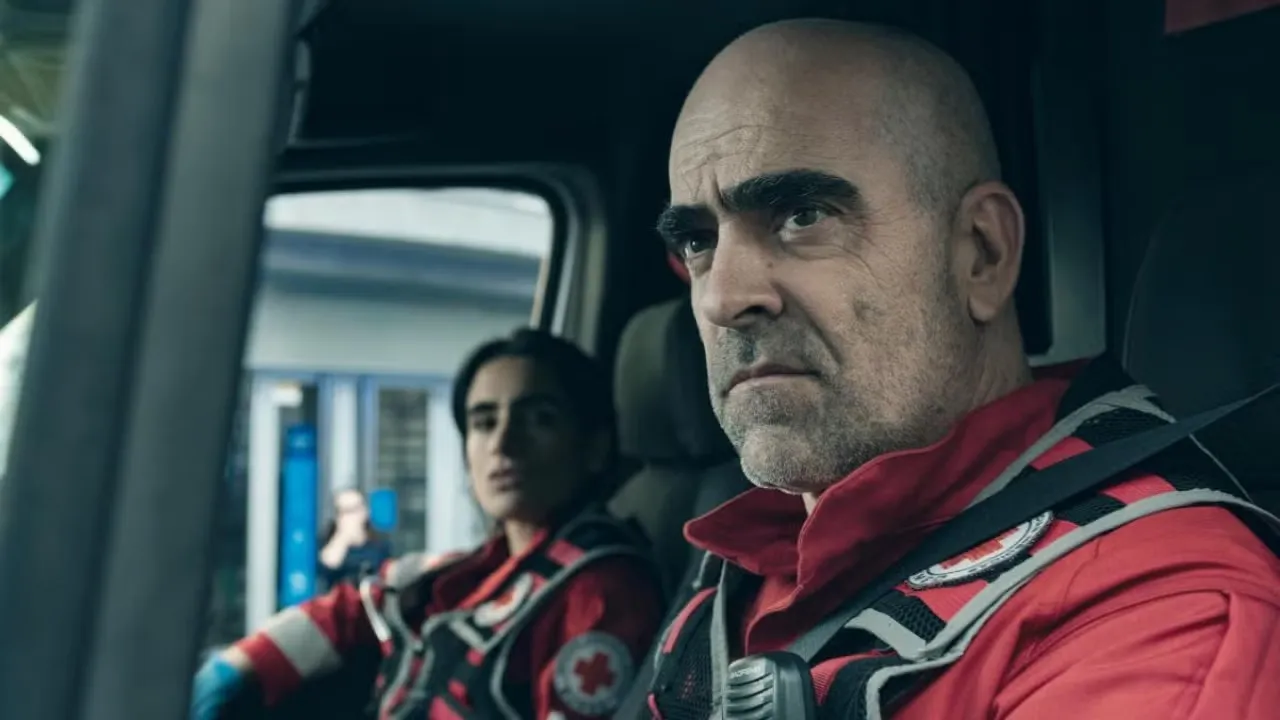
In an era where political polarization has sharpened into cultural warfare, Salvador arrives as a timely and unsettling reflection of contemporary Europe’s growing far-right movements. Far from just another crime thriller, this Netflix original series (streaming now) crafted by Aitor Gabilondo and directed by Daniel Calparsoro dissects the societal conditions fueling the resurgence of neo-Nazism and incel ideology. Once dismissed as fringe elements, these extremist networks are now deeply embedded in public consciousness — and Salvador doesn’t flinch from showing how economic despair, political negligence, and personal trauma converge to radicalize the vulnerable.
At a time when debates over “wokeness” often overshadow real systemic failures, the series challenges viewers to look beyond surface-level political slogans. Rather than romanticizing extremism, it reveals how disenfranchised individuals are manipulated by powerful elites who exploit hatred as a distraction from deeper injustices. With its urgent narrative and striking visuals, Salvador forces us to ask: Are we diagnosing the right problems?
Story
Salvador centers on its eponymous protagonist — a recovering alcoholic and ambulance driver portrayed by Luis Tosar — who’s already grappling with the loss of his wife and a fractured relationship with his daughter, Milena. Their rare reunion occurs on the day of a high-stakes football match between Real Madrid and Olympique de Marseille, only for tragedy to strike moments later.
During a mission to transport Marseille fans, Salvador’s team becomes caught in a violent ambush led by a far-right Madrid supporter group known as the White Souls. The attack escalates into chaos, culminating in a brutal confrontation at a pub secretly owned by the extremists. Shockingly, Salvador discovers that Milena not only works there but is fully indoctrinated into the white supremacist punk movement. Before he can intervene, she’s drawn into a riot — and murdered.
What follows is a harrowing journey of vengeance, as Salvador navigates a web of corruption, hate, and political complicity. But his quest isn’t just personal — it becomes a symbolic reckoning with the very ideologies that consumed his daughter. The series masterfully illustrates how fascism doesn’t emerge overnight; it’s nurtured through unemployment, deteriorating public services, and deliberate political neglect that redirects public anger toward scapegoats like immigrants.
Performances
Luis Tosar delivers a restrained performance as Salvador, embodying quiet despair and simmering rage. However, despite the character’s traumatic arc, Tosar’s emotional range occasionally feels underdeveloped — leaving audiences yearning for a deeper psychological connection. In contrast, Claudia Salas shines as Milena, bringing intensity, complexity, and tragic vulnerability to her role. Her presence dominates the narrative, making one wonder if the series might have benefited from a dual or even Milena-centric structure.
Leonor Watling, as a high-ranking ideologue, has the opportunity to expose the misogyny embedded within far-right movements — but her character lacks depth, missing a crucial chance to challenge gender dynamics in extremist circles. Patricia Vico is solid in support, while Candela Arestegui, in limited screen time, makes a lasting impression. Fariba Sheikhan and Guillermo Lasheras stand out in their supporting roles, adding nuance to the ensemble. The rest of the cast performs competently, though some characters verge on archetypal — a choice that may resonate with broader audiences seeking clear moral contrasts.
Behind the Scenes
Daniel Calparsoro’s direction is bold and stylistically sharp. From the opening shot to the final frame, the series employs gritty cinematography, stark production design, and deliberate costume choices to underscore the economic and ideological chasm between the neo-Nazi foot soldiers and their affluent enablers. The visual contrast — between the disheveled, tattooed punks and the polished corporate elites — speaks volumes about manipulation and class exploitation.
The soundtrack and editing amplify tension, especially during protest and riot sequences, immersing viewers in the chaos. Yet, the pacing struggles at times, with the eight-episode arc feeling stretched in the middle. The rushed finale, despite its emotional weight, fails to fully capitalize on the buildup, leaving key resolutions underexplored.
Still, the show’s ambition is undeniable. In a media landscape where stories on online radicalization are often shelved for being “too real,” Salvador’s existence is a bold statement — much like the scrapped Savant series starring Jessica Chastain.
Final Verdict
Salvador isn’t flawless. Its pacing drags, its emotional core feels slightly detached, and its conclusion lacks the impact it promises. Yet, as a piece of socially conscious storytelling, it stands tall. The series doesn’t offer easy answers, but it forces uncomfortable conversations about systemic neglect, manufactured hatred, and the human cost of extremism.
For viewers seeking more than just entertainment — those ready to confront the uncomfortable truths of our times — Salvador is absolutely worth a watch. It’s not just a thriller. It’s a wake-up call.