

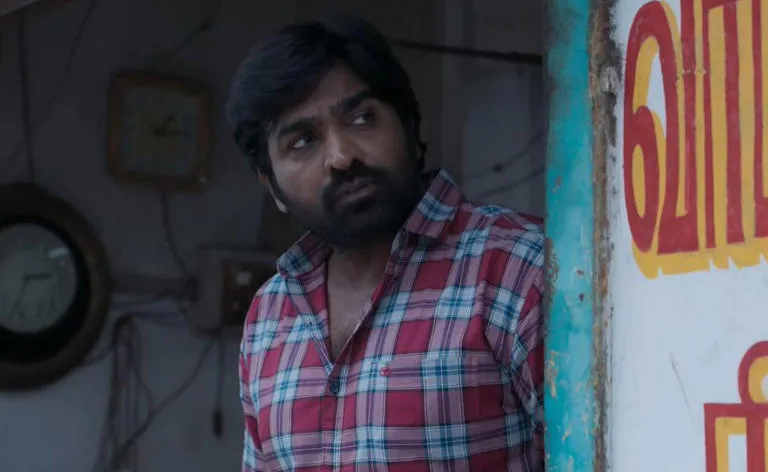
When Muthu Engira Kaattaan premiered on March 27 (JioHotstar), it marked the return of one of Tamil cinema’s most compelling actor-director partnerships. Vijay Sethupathi reunites with M. Manikandan following their acclaimed collaborations on Aandavan Kattalai and Kadaisi Vivasayi, while editor B. Ajithkumar makes his directorial debut alongside Manikandan.
The series opens with imagery steeped in mythological weight—a severed head discovered alongside scattered currency. In folklore, such a grisly trophy symbolizes retained power and eternal identity, even in death. This unsettling visual sets the tone for an investigation that probes deeper than standard police procedurals, examining how truth fragments when memory becomes unreliable.
Story
The narrative launches with a macabre discovery: a decapitated head found in isolation, the corpse’s torso missing, surrounded by unexplained cash. Police identification reveals the victim as Muthu, sending investigators down a labyrinthine path where every witness offers contradictory testimony. As officers canvas Tamil Nadu and Kerala, they uncover a chameleon-like existence—Muthu worked variously as a nightclub bouncer, elephant mahout, horologist in Kerala, and compassionate orphanage caretaker. Each profession reveals disparate facets of his psyche, forcing the question of whether anyone truly knew the real Muthu.
The series constructs its tension through these dueling perspectives, challenging viewers to assemble a coherent portrait from conflicting fragments while the central mysteries—Muthu’s authentic identity and his killer’s motive—linger ominously.
Performances
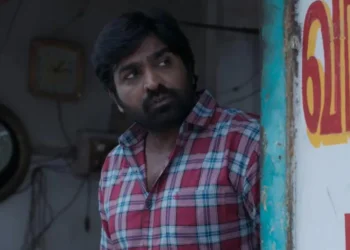
Despite limited physical scope—appearing primarily as the decapitated victim—Vijay Sethupathi delivers a masterclass in restrained intensity. Through flashbacks and testimonial recollections, he imbues Muthu with enigmatic charisma, suggesting volumes through subtle facial expressions and deliberate silence. His portrayal suggests a man deliberately obscuring his true nature, creating magnetic ambiguity.
The supporting ensemble provides essential ballast, with Parvathy bringing nuanced authenticity to her role, while Vadivel Murugan contributes grounded realism that anchors the investigative sequences. Together, they create a tapestry of rural Tamil Nadu that feels lived-in and authentic, even as the plot ventures into increasingly surreal territory.
Behind the Lens
Technically, the series demonstrates sophisticated visual storytelling. The cinematography elegantly captures the verdant landscapes of rural Tamil Nadu transitioning to Kerala’s backwaters, using geography as narrative metaphor. Particularly effective is the sound design—eschewing bombastic scoring for strategic silence that amplifies tension and mirrors the investigation’s methodical pace. However, the editing proves contentious; several subplots involving the investigating officer’s domestic troubles provide tonal respites but inadvertently stall momentum.
The narrative fat could have been trimmed to eight tighter episodes rather than the current meandering structure. Additionally, the CGI rendering of the severed head disappointingly lacks verisimilitude, failing to convincingly replicate Sethupathi’s features. Yet when the directors focus on atmospheric world-building and philosophical musings on human duality, the technical craftsmanship shines, prioritizing emotional resonance over sensationalism.
Final Verdict
Muthu Engira Kaattaan demands viewer patience, offering a character study disguised as a crime thriller. While its deliberate pacing and unnecessary narrative detours frustrate impatient audiences, those embracing the slow-burn structure will find a richly textured meditation on identity and perception.
The series sacrifices kinetic energy for psychological depth—a trade not everyone will appreciate. Ultimately, this Vijay Sethupathi vehicle succeeds as an atmospheric mystery, provided you approach it as rural folklore rather than conventional police procedural.