

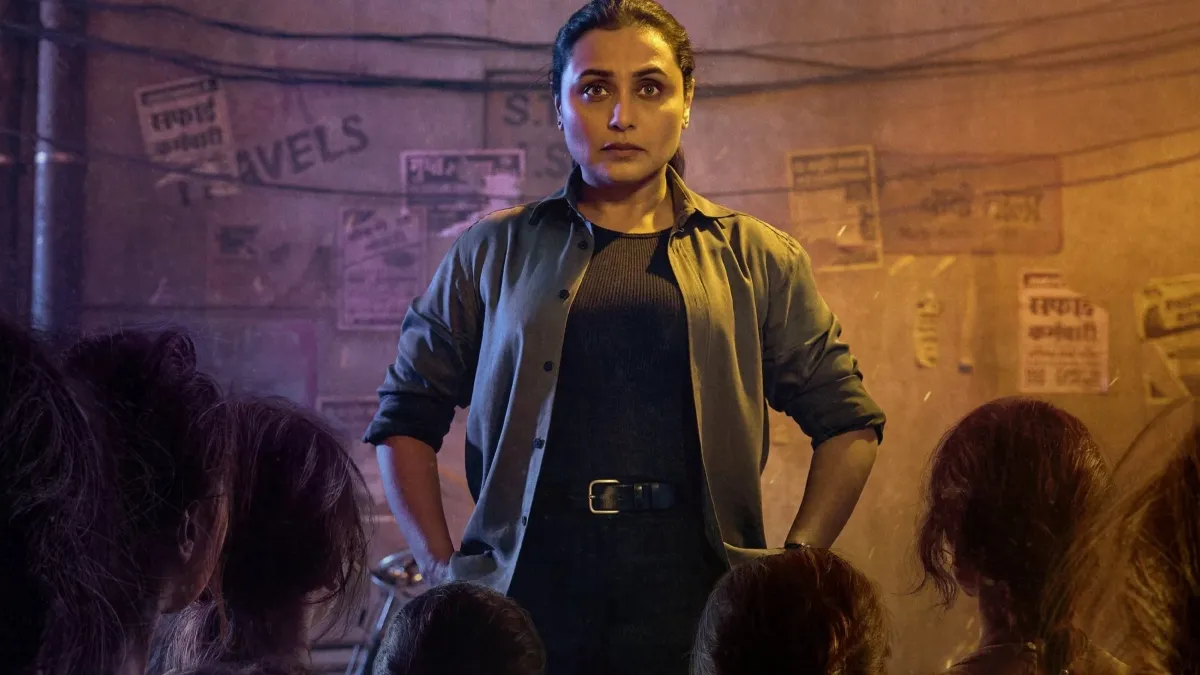
When Mardaani first stormed screens in 2014, it wasn’t just a film — it was a movement. Rani Mukerji’s portrayal of DCP Shivani Shivaji Roy became synonymous with strength, resilience, and uncompromising justice. Five years later, Mardaani 2 amplified the intensity with a dark, socially charged narrative. Now, in 2026, Mardaani 3 crashes into theaters with the weight of legacy and sky-high expectations.
Directed by Abhiraj Minawala in his feature debut, the film reunites the powerhouse actress with a story that’s both terrifying and timely. As Shivani steps into the National Investigation Agency (NIA), she’s thrust into a web of child abductions that go far beyond what meets the eye. But does the third chapter deliver the impact of its predecessors? Let’s dive deep.
Story
Mardaani 3 kicks off with a visceral opening sequence that immediately sets the tone — this is no ordinary crime drama. Shivani, now elevated to Senior Superintendent, is assigned to locate the missing daughter of an IFS officer. What begins as a high-profile kidnapping case quickly spirals into something far more sinister.
Enter Amma (Mallika Prasad), the chilling matriarch of a beggar mafia. Unlike the covert predators of earlier installments, Amma confronts Shivani head-on, turning their battle into a psychological showdown. The film reveals a pattern: young girls, aged 8 to 11, are being kidnapped — but not for begging. Their fate? A twist so bold and disturbing, it reframes the entire narrative.
Performances
Rani Mukerji owns every frame she’s in. As Shivani Shivaji Roy, she balances steely determination with profound empathy. Her physicality, dialogues, and emotional depth remind us why she’s one of Bollywood’s most respected performers. She doesn’t just play the role — she embodies it.
Mallika Prasad is the film’s dark heart. As Amma, she radiates menace with every glance. Her transformation — aided by stellar hair and makeup — is terrifyingly believable. She’s not a caricatured villain; she’s a calculated force, making her all the more frightening.
Prajesh Kashyap is the breakout star. In a role that could’ve been forgettable, he delivers a performance that lingers. Janki Bodiwala (Shaitaan) impresses with a strong supporting turn, especially in the film’s emotionally charged second half.
Behind the Scenes
John Stewart Eduri’s background score is nothing short of phenomenal. It’s not just accompaniment — it’s a character. The score elevates tension, underscores emotion, and adds gravitas to every pivotal moment. Tracks like Babbar Sherni become anthems of resistance, echoing Shivani’s warrior spirit.
Cinematography and production design maintain a gritty, grounded aesthetic. The film avoids glamorization, choosing realism over spectacle — a hallmark of the Mardaani franchise.
Final Verdict
The first half is edge-of-the-seat gripping. From the haunting abduction scenes to the powerful interval cliffhanger, the tension is relentless. However, the second half shifts gears, opting for a subtler, more introspective approach. While the twists keep coming, many feel predictable. The grand revelation about the girls’ fate — though shocking — could’ve benefited from clearer exposition for general audiences.
Influences from the YRF Spy Universe subtly seep in, especially during action sequences and layered conspiracies — perhaps not surprising, given Minawala’s prior work on Tiger 3 and War 2. Still, the film’s emotional core remains rooted in its social message: why do young girls remain society’s most vulnerable targets?
Mardaani 3 isn’t perfect. The second half loses some momentum, and narrative clarity takes a backseat at crucial junctures. But what it lacks in execution, it makes up for in intent and impact.
With powerhouse performances, an unforgettable score, and a climax that reignites the fire of justice, Mardaani 3 is a worthy — if uneven — addition to the series. It may not surpass the original, but it stands tall as a socially conscious thriller that dares to ask hard questions.
Rating: 3/5 — A solid, thought-provoking watch. Don’t miss it on the big screen.