

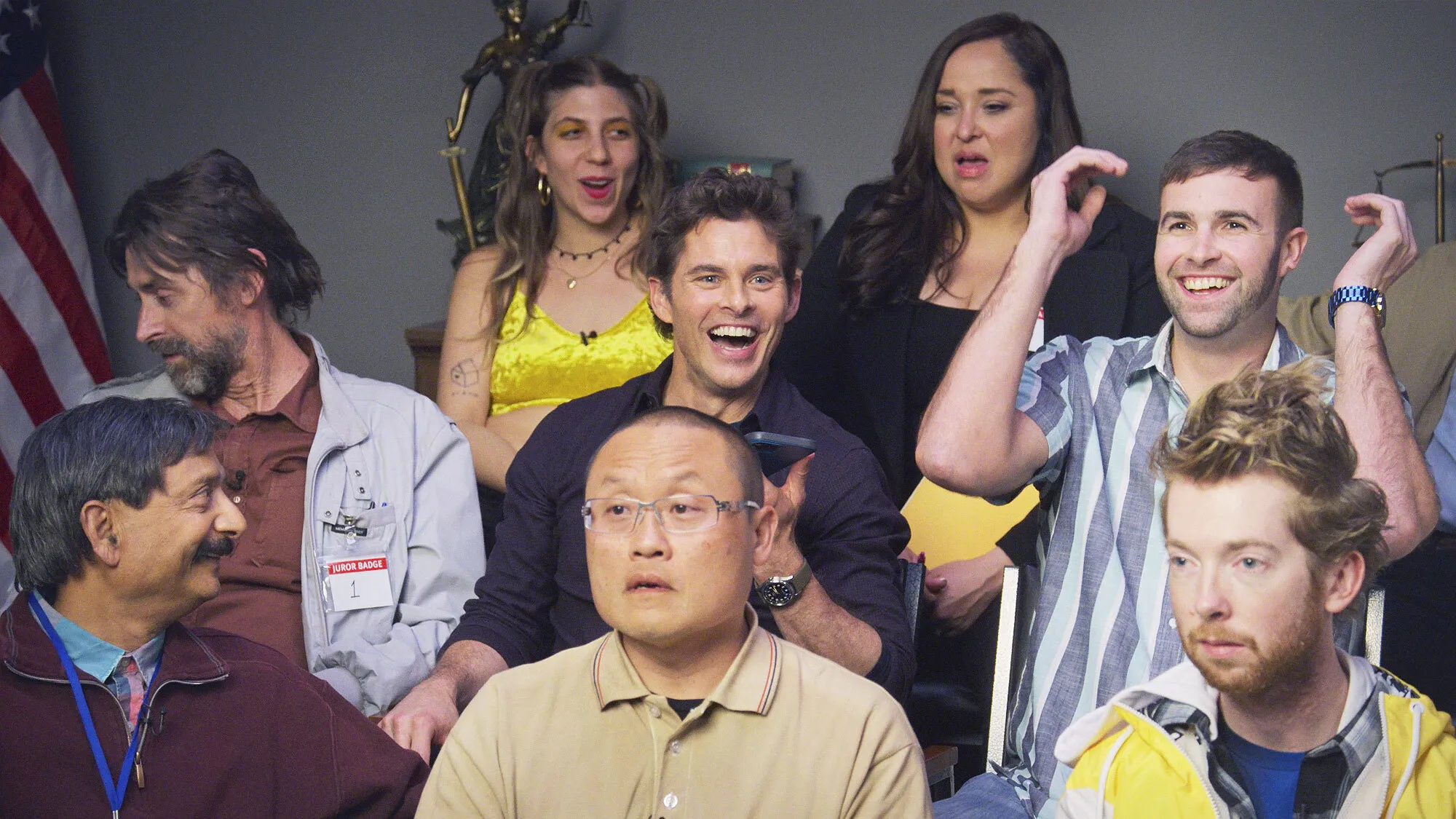
When Jury Duty premiered, it redefined the boundaries of reality-adjacent comedy. By blending scripted absurdity with a real, unsuspecting participant, the series delivered a fresh dose of unpredictability that captivated audiences. Three years later, creators Lee Eisenberg and Gene Stupnitsky return with Jury Duty Season 2: Company Retreat, shifting focus from the courtroom to a Southern California ranch. This time, the unwitting hero, Anthony, joins Rockin’ Grandma’s Hot Sauce as a temp just before their annual team-building retreat. While the framework remains familiar—only Anthony doesn’t know it’s all staged—the magic feels diluted. The thrill of discovery has faded, replaced by an overly sanitized, relentlessly upbeat tone that saps the season of its edge.
Story
The original season thrived on tension—lingering questions about whether Ronald Gladden would crack under pressure, question the absurdity around him, or clash with the uncanny presence of James Marsden. That uncertainty was the show’s heartbeat. In Company Retreat, however, the narrative arc collapses under the weight of its own niceness. Anthony is so genuinely kind, so eager to help, that any potential conflict fizzles before it ignites. When HR manager Kevin confides in him about a pending proposal, Anthony’s joyful reaction—celebrating strangers’ love with foot-stomping glee—cements his role not as a flawed, evolving protagonist, but as a paragon of virtue.
The removal of the jury setting was a smart pivot, avoiding repetition and offering fresh comedic terrain. Yet, the new plot leans too heavily on a mid-season twist: the threat of a corporate buyout. While intended to raise stakes, the villain—a faceless conglomerate—feels tonally jarring, especially on Amazon Prime, the very platform that benefits from such monopolistic narratives. The irony is hard to ignore, turning what should be a narrative climax into an awkward meta-commentary.
Performances
Anthony, the real-life temp at the center of the ruse, brings warmth and authenticity. His innate decency makes him endearing—but also limits dramatic range. The ensemble cast, including Ryan Perez as Kevin, Emily Pendergast as Amy, and Alex Bonifer as the delightfully out-of-touch Dougie, delivers committed, comedic performances. Yet, their characters rarely clash. Disagreements dissolve in seconds, with lines like “My bad” and “It’s OK” replacing real friction. This lack of interpersonal tension turns compelling actors into polite caricatures, robbing the season of emotional depth.
Behind the Lens
Eisenberg and Stupnitsky prove once again they’re masters of subversive comedy with intricate production design and seamless casting. The ranch setting offers visual charm, and the scripting around corporate clichés—team-building exercises, awkward dinners, forced bonding—is clever. But innovation falters when the show avoids discomfort. True comedy often lives in awkwardness, in moral dilemmas, in human missteps. By shielding Anthony (and viewers) from these moments, Company Retreat sacrifices spontaneity for safety.
Final Verdict
Jury Duty Season 2 is a well-intentioned, polished effort that loses what made the original so special: unpredictability. Company Retreat is too harmonious, too warm, too eager to make us feel good—ultimately at the expense of narrative tension. It’s funny in moments, touching in others, but never surprising. For a show built on deception, that’s the greatest twist of all.
Also Read:
“Jury Duty” Season 2 Guide: Plot, Cast, and Secrets of the New Prime Video Series