

Every few years, a filmmaker attempts the impossible: to capture the totality of human existence in a single narrative. From The Tree of Life to Everything Everywhere All at Once, the ambition is noble. Now, Andrew Stanton—best known for animated triumphs like Finding Nemo—steps into live-action with In the Blink of an Eye, a film that aims to be a sweeping, spiritual meditation on time, connection, and survival. But rather than illuminating the human condition, it feels like a soulless seminar disguised as cinema.
Story
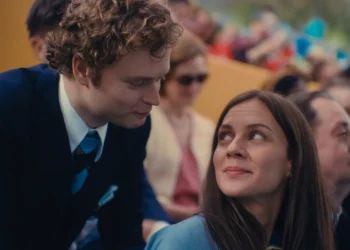
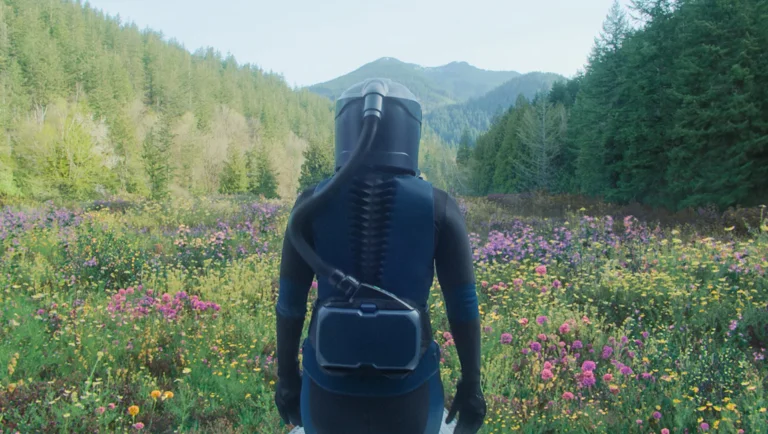
Structured across three timelines—45,000 BCE, present-day Princeton, and 2417 CE—the film follows loosely parallel journeys: a prehistoric family discovering fire and empathy, an emotionally detached archaeologist (Rashida Jones), and a lone astronaut (Kate McKinnon) ferrying artificial humans through space. Stanton threads them together with platitudes about impermanence and connection, quoting Sylvia Plath and invoking grand themes like love, death, and technological evolution. Yet the narrative lacks urgency. What should feel epic feels undercooked. Transitions—like a love scene dissolving into a vibrator’s hum—are more cringeworthy than profound, echoing Kubrick’s genius in 2001 only to fall flat. The core message? Humanity’s arc bends not toward compassion, but isolation—worshiping machines over each other.
Performances
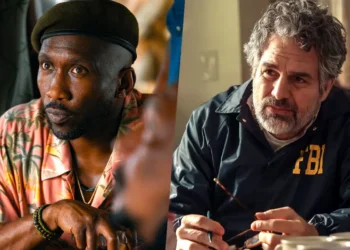
The cast is game, even when the script isn’t. Jones brings quiet melancholy to her emotionally stunted academic, while Diggs adds subtle warmth as her would-be partner. McKinnon, often typecast for comedy, delivers surprising restraint as the astronaut. Yet their performances are starved of depth by dialogue that favors bumper-sticker philosophy over authenticity. The real “star” may be the ship’s A.I., which sacrifices itself for lab-grown babies—a moment meant to inspire awe but instead feels like a tech bro fantasy of ethics without humans.
Behind the Lens
Stanton’s animation roots show—mostly in what’s missing. His humans feel less real than his robots from WALL•E. Visually, the film is polished but sterile. The editing glides without momentum, and the score swells without resonance. It’s all surface, a glossy presentation where thematic ambition crashes into emotional detachment. The film avoids confronting its own implications, retreating into forced optimism: innovation will save us, even if we lose our souls.
Final Verdict
In the Blink of an Eye, streaming now on Hulu and JioHotstar in India, isn’t just underwhelming—it’s dangerous in its uncritical embrace of technological salvation. At 92 minutes, it’s short but hollow, a spiritually vacant attempt to say everything and mean nothing.