

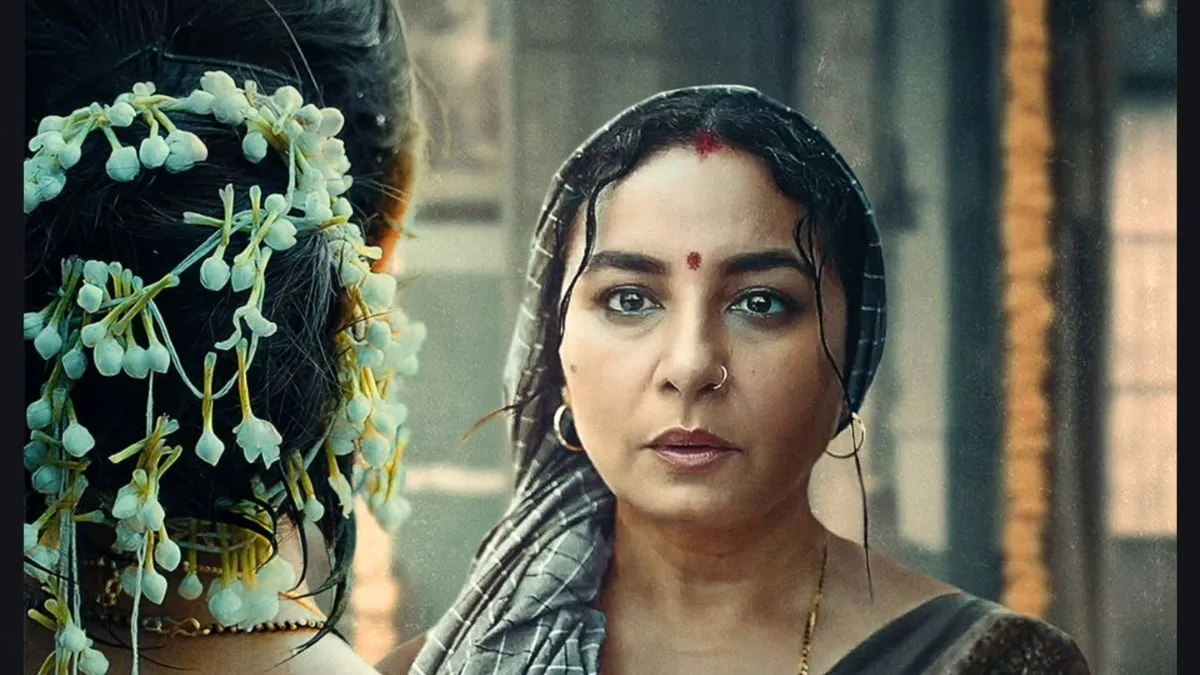
Streaming on JioHotstar, Chiraiya arrives as a stark reminder that the most terrifying horrors often hide behind closed doors and performed smiles. This hard-hitting drama, led by the formidable Divya Dutta and rising talent Prasanna Bisht, dares to ask a question that Indian society has long buried under layers of tradition: does marriage automatically guarantee consent? The series crafts a narrative that begins with the familiar warmth of wedding festivities before slowly suffocating that comfort with a reality many women recognize but few articulate. It is a story of survival, silence, and the slow, painful awakening of solidarity across generations—one that prioritizes emotional truth over viewer comfort.
Story
The narrative architecture of Chiraiya relies on devastating contrast. We enter through Pooja’s wedding—a kaleidoscope of rituals, music, and performed joy that lulls viewers into complacency. But the series quickly pivots from celebration to psychological claustrophobia. When Pooja finds herself alone on a terrace, tears streaming silently while the festivities continue below, the show establishes its visual language: isolation within intimacy, trauma disguised as domesticity.
At its core, the series examines marital entitlement without resorting to graphic sensationalism. Arun, Pooja’s husband, embodies a particularly insidious villainy—not through dramatic cruelty, but through the terrifying normalcy of his assumptions. The writing excels in depicting how patriarchy operates not just through overt oppression, but through the mundane brushing-aside of violation as “private matters” or “adjustments.” The intergenerational dynamic between Pooja and her mother-in-law Kamlesh forms the emotional spine, tracing how women often become unwitting enforcers of their own captivity, and how recognition of shared pain can become revolutionary.
Performances
Divya Dutta delivers a masterclass in restrained complexity as Kamlesh. Her portrayal captures the specific tragedy of women who have internalized their oppression so completely that they mistake chains for ornaments. Watch for the micro-expressions—the slight tightening around her eyes when she witnesses Pooja’s distress, the hesitation before defending her, the physical language of a body learning to unclench after decades of rigidity.
Prasanna Bisht matches her scene for scene with a performance built largely on presence rather than dialogue. Her Pooja communicates volumes through held breaths, averted gazes, and the gradual hardening of resolve. Sanjay Mishra brings unsettling depth to the family patriarch, a poet-scholar whose progressive vocabulary crumbles when confronted with actual injustice, revealing how intellectual enlightenment often fails to penetrate emotional empathy. Siddharth Shaw’s Arun is chilling precisely because he never plays to the gallery; his entitlement is casual, making it infinitely more disturbing.
Behind the Lens
The series’ technical craft amplifies its emotional weight through deliberate aesthetic choices. Cinematography juxtaposes the warm, golden hues of traditional wedding sequences against the cold, blue-tinged isolation of nighttime confrontations, creating a visual metaphor for public versus private realities. The direction trusts silence in an era of exposition-heavy storytelling, allowing uncomfortable pauses to stretch until they become almost unbearable—a formal choice that mirrors the protagonist’s suffocation. The pacing adopts a slow-burn approach that some viewers might find challenging, but this rhythm serves the narrative’s realism, rejecting melodramatic twists in favor of the grinding, daily reality of systemic oppression.
Final Verdict
Chiraiya is not flawless—occasional pacing lags and familiar narrative beats surface in later episodes—but its imperfections pale against its courage. This is essential, fearless storytelling that prioritizes emotional truth over comfort. By refusing to offer easy redemption arcs or simplistic villains, the series forces audiences to sit with discomfort long after the final frame. For Dutta’s performance alone, which ranks among her finest, and for its unflinching examination of consent within India’s marital landscape, Chiraiya demands viewing. It is a mirror, a warning, and perhaps, a beginning.