

15 Years On: Why Another Earth Still Matters
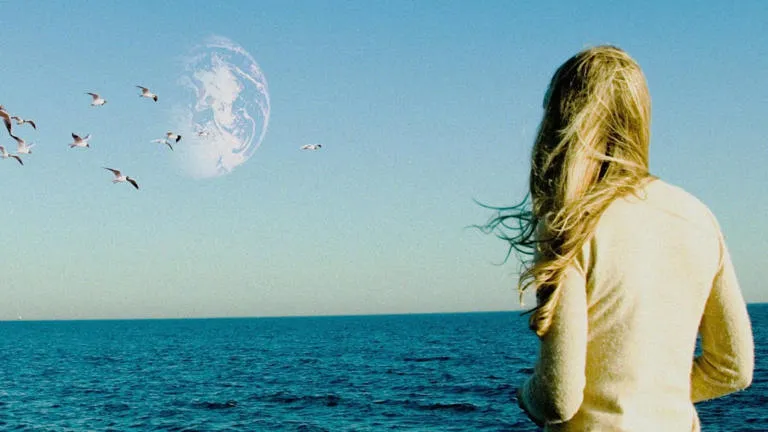
The fascination with extraterrestrial life stretches back to humanity’s first stargazing nights, and cinema has long used alien contact as a catalyst for drama—whether the visitors are hostile invaders, benevolent guides, or desperate refugees. Another Earth, released exactly fifteen years ago, sidesteps the usual spectacle. Instead of a fleet of spacecraft, the film introduces a second Earth that suddenly appears in the sky, mirroring our own world down to the last individual. This premise transforms a familiar sci‑fi hook into a contemplative study of personal responsibility and the impossible allure of “what if.”
Plot in Brief
The story follows 17‑year‑old Rhoda Williams, a bright but reckless MIT hopeful whose celebration spirals into tragedy when she drives drunk and kills a mother and her child. After serving four years in prison, Rhoda learns that the newly discovered twin planet—referred to simply as Earth 2—hosts exact duplicates of everyone on our world. The revelation is treated more as a backdrop than a plot engine; the real tension comes from Rhoda’s internal battle and her attempts to win a spot on a private space venture destined for the duplicate world.
While she works as a janitor at her former high school, Rhoda enters an essay contest promising a seat on the mission. She also befriends John Burroughs, a former classmate who awakens from a coma and spends his days drinking. Their uneasy alliance offers a window into how ordinary lives react when a cosmic anomaly threatens to rewrite destiny.
Subverting the Alien‑Arrival Trope
Another Earth does not rely on alien beings to challenge humanity. The “other” is a planetary mirror, forcing characters to confront a literal version of themselves. This approach strips away the usual external threat and replaces it with an introspective mirror. The film asks: if every decision you made were replayed elsewhere, would you recognize yourself?
The narrative further undermines the trope by treating the existence of Earth 2 as a quiet, almost bureaucratic fact. Scientists on both planets exchange data, but the average person continues to grapple with everyday concerns—guilt, love, ambition—suggesting that even world‑shattering discoveries may not disrupt personal priorities. This subtle commentary aligns Another Earth with the likes of Solaris and Sliding Doors, where the extraordinary serves as a catalyst for ordinary human drama.
Production Choices: Big Ideas on a Tiny Budget
Shot for roughly $100,000, the film’s visual representation of the looming duplicate world relies on simple yet effective techniques—a composite of stock footage and careful lighting that evokes awe without the need for costly CGI. The restraint adds an unsettling realism; the second Earth feels both plausible and ominous, reinforcing the narrative’s theme of quiet dread.
Performances: A Study in Understated Emotion
Brit Marling delivers a performance that balances shock, remorse, and tentative hope. Her narration—delivered in a voice‑over that opens the essay contest entry—evolves from teenage self‑pity to mature reflection, mirroring Rhoda’s own growth. William Mapother, as John Burroughs, provides a counterpoint: his drunken indifference masks a deeper yearning for redemption. The chemistry between the two anchors the film, turning what could have been a high‑concept spectacle into an intimate character study.
Relevance in 2026
In an era saturated with blockbuster alien invasions and multiverse spectacles, Another Earth offers a reminder that speculative fiction can thrive on restraint. The film’s central question—whether we would make better choices if we could observe a parallel version of ourselves—resonates with today’s social media culture of curated lives and “what‑if” scenarios. Moreover, the subplot involving a conspiracy theorist who claims our world is an illusion created by its twin feels eerily prescient amid contemporary debates over reality and simulation.
Where to Watch
Another Earth is currently streaming on Prime Video, making it easily accessible for both new viewers and those revisiting the film on its 15‑year anniversary.
The Lasting Impact of Another Earth
Fifteen years after its debut, Another Earth remains a quietly potent exploration of regret, identity, and the human tendency to seek escape in imagined alternatives. Its modest budget, thoughtful performances, and subversive take on a familiar sci‑fi premise prove that even the most ambitious ideas can be grounded in personal storytelling. Whether you are a fan of indie cinema, a student of genre conventions, or simply curious about a film that treats a duplicate planet as a mirror for the soul, Another Earth deserves a fresh look.