

Netflix’s latest Korean disaster drama, The Great Flood, combines catastrophic tension with futuristic undertones. Directed by Kim Byung-woo and starring Kim Da-mi, Park Hae-soo, and an ensemble cast, the film promises high-stakes survival in a city submerged by relentless floodwaters. While the premise is gripping, the execution struggles to keep its balance, making for a watch that is both exhilarating and frustrating.
Story
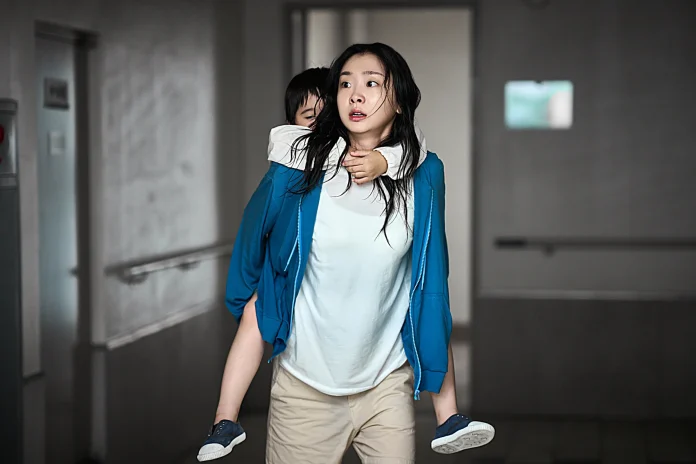
Set in a near-future Seoul, The Great Flood opens with An Na (Kim Da-mi) tending to her restless young son, Ja In, in the comfort of their high-rise apartment. The calm shatters quickly when a planet-wide flood sweeps through, submerging their home in minutes. Amid the chaos, An Na receives a cryptic call that hints at a mission tied to her survival — and possibly the fate of humanity.
As the water level rises, the film propels viewers into a series of tense, breathless moments. Tidal waves crash through apartment walls, corridors become death traps, and oxygen becomes a precious commodity. The urgency is palpable, but the narrative is periodically interrupted by speculative sci-fi elements that detract from the raw disaster tension.
Performances
Kim Da-mi delivers a heartfelt portrayal of a mother torn between protecting her child and fulfilling a larger, world-saving responsibility. Known for her charismatic, sharp-edged roles, she shifts into a more vulnerable, emotionally charged performance here, making An Na relatable and sympathetic.
Park Hae-soo’s Hee Jo adds grit and gravitas to the story. Tasked with guiding An Na and Ja In to safety, his stoic, mission-driven demeanor creates a compelling contrast to An Na’s emotional vulnerability. Their dynamic serves as the film’s emotional anchor, even when the plot veers into overly complex territory.
Behind the Scenes
Technically, The Great Flood impresses. The CGI rendering of submerged buildings, torrential currents, and claustrophobic interiors is convincing and immersive. The musical score heightens the tension, blending adrenaline-pumping crescendos with somber undertones during quieter moments.
However, the screenplay falters when attempting to merge disaster survival with philosophical sci-fi concepts. These narrative detours feel padded and slow the pacing, leaving viewers wishing for a more streamlined, pulse-pounding experience.
Final Verdict
The Great Flood is at its best when it focuses on survival and emotional stakes. The mother-son bond and the sheer spectacle of its disaster sequences make for compelling viewing. Unfortunately, the unnecessary conceptual layers dilute the core tension and may leave audiences feeling overwhelmed rather than exhilarated.
For fans of Korean cinema, it’s worth a watch for the performances and visual execution — but those seeking a pure disaster thriller may find themselves wishing for fewer tangents and more tidal wave action.
Netflix Unleashes “The Great Flood” — Korea’s Next Big Apocalyptic Thriller