

Director Corin Hardy, known for crafting atmospheric and intense horror, returns with Whistle, a supernatural chiller that aims to tap into our primal fears surrounding mortality. Starring the captivating Dafne Keen, this film plunges audiences into a familiar but often viscerally graphic battle against an inescapable fate. While its narrative predictability might echo genre predecessors like Final Destination, Whistle compensates with relentless energy and strikingly gruesome practical effects, cementing its place as a compelling, albeit conventional, entry in the modern horror landscape.
Story
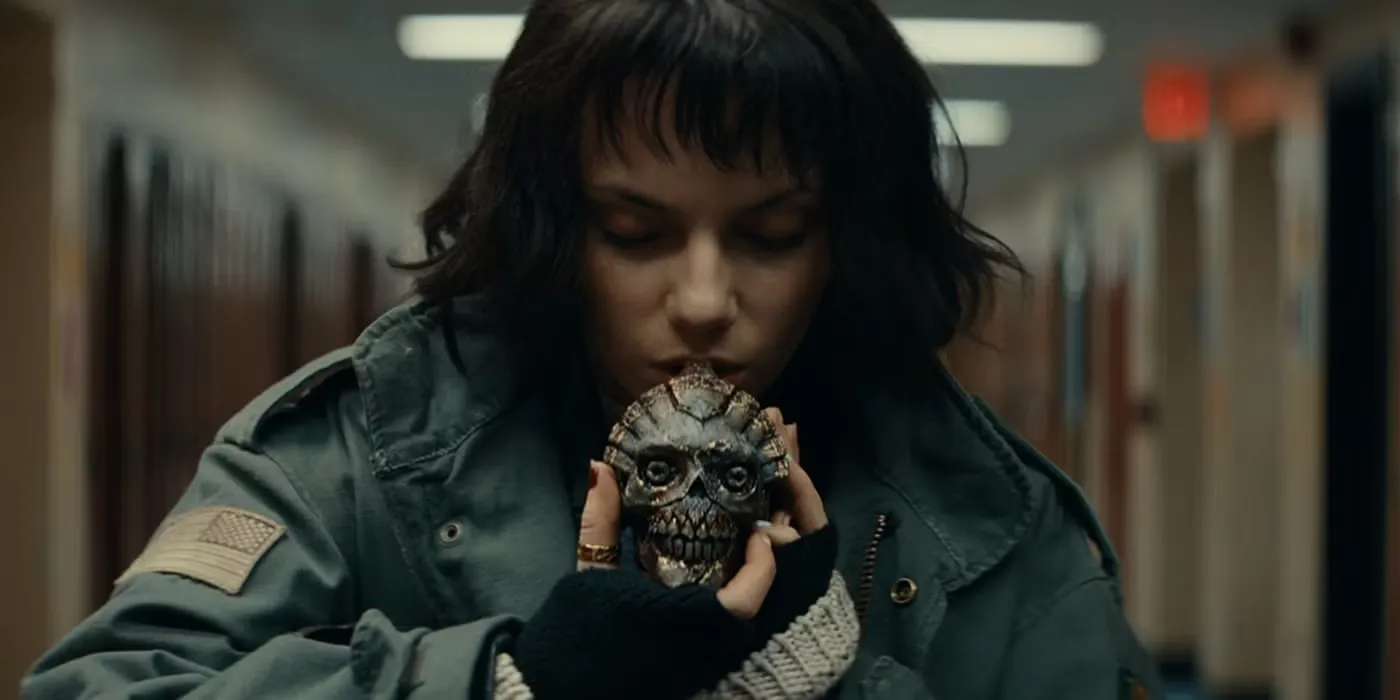
The premise of Whistle leans into a chillingly simple concept: a cursed artifact that summons death itself. We are introduced to the troubled teenager Chrysanthemum (Dafne Keen), who stumbles upon an ancient, malevolent whistle in her new school locker—a locker previously occupied by a student who met an untimely end. Ignoring the obvious warnings inherent in its ominous appearance, Chrysanthemum’s friend unwittingly blows the cursed object. This simple act unleashes a dark specter upon them, an entity that embodies the very manner in which each individual is pre-destined to die. The film posits a terrifying thought: imagine being pursued by a ghostly manifestation of your own demise, taking the form of you, perpetually re-enacting your fated end.
Much like its thematic cousins Final Destination and It Follows, Whistle explores the transition from death as an abstract concept to an immediate, terrifying reality. It delves into that universal moment when youthful invincibility shatters, replaced by the grim understanding of one’s own finite existence. However, the film’s execution of this compelling idea often stumbles.
Performances
In a film that often struggles with narrative coherence, Dafne Keen’s performance as Chrysanthemum shines as a pivotal anchor. Known for her powerful turn in Logan, Keen brings a compelling blend of vulnerability and defiance to her character. Chrysanthemum carries the weight of personal tragedy, her father having died during her own overdose, lending her an emotional depth that makes her plight relatable despite the extraordinary circumstances.
Keen masterfully portrays the anxieties of adolescence, from her character’s quirky habit of listening to vinyl records while meticulously arranging album covers around her, to her intensely passionate romance with fellow student, played by Sophie Nélisse.
The film deftly captures how adolescent love can become an all-consuming force, a desperate grasp for connection in the face of overwhelming fear, and the chemistry between Keen and Nélisse adds a layer of genuine emotion to the otherwise grim proceedings. Keen’s charismatic presence is undeniable, elevating the material and ensuring that the audience remains invested in her character’s desperate struggle for survival.
Behind the Scenes
While Whistle may not reinvent the supernatural horror genre, director Corin Hardy’s distinctive visual style and unrestrained approach to its most gruesome elements are undeniably its greatest strengths. Hardy imbues the film with a palpable atmosphere, a sense of encroaching dread that is both stylish and effective. The narrative is driven by a propulsive energy, pushing the characters—and the audience—through a series of increasingly tense encounters.
Where Whistle truly excels, however, is in its execution of the “kills.” True to the film’s premise, if a character is destined to die by, say, a brutal car crash, the spectral manifestation ensures that the demise is delivered with agonizing, visceral detail, often in the most public and humiliating ways imaginable. Hardy and his team demonstrate a remarkable creativity in depicting these pre-ordained fatalities, transforming what could be simple deaths into grotesquely intricate and memorable sequences.
The film relishes in its practical effects, presenting mutilations and grisly scenarios with an uncompromising intensity that will undoubtedly satisfy fans of extreme horror. It’s a testament to Hardy’s vision that even when the plot occasionally falters, the sheer audacity and imaginative brutality of the death sequences keep the audience thoroughly engaged, proving that even in a predictable narrative, execution can be everything.
Final Verdict
Whistle doesn’t aim to redefine the supernatural horror genre, nor does it present a groundbreaking narrative. Instead, it offers a well-crafted, albeit familiar, journey into terror, providing a comforting dose of well-executed genre fare. Director Corin Hardy’s stylistic flair and commitment to delivering genuinely “gnarly” death sequences make this film a satisfying watch for horror enthusiasts who appreciate practical effects and atmospheric tension.
Despite its occasionally flimsy plot mechanics and predictable structure, Whistle ultimately delivers on its promise of unsettling scares and visceral thrills. It’s the kind of movie that, much like a favorite comfort food, provides exactly what you expect, prepared with skill and a healthy dose of unbridled horror. If you’re in the mood for a film that wets your whistle with inventive gore and a strong lead performance, Whistle is certainly worth catching.
Catch Whistle in the theatres near you.