

A Masterpiece Silenced: India Blocks Oscar-Shortlisted Gaza Drama
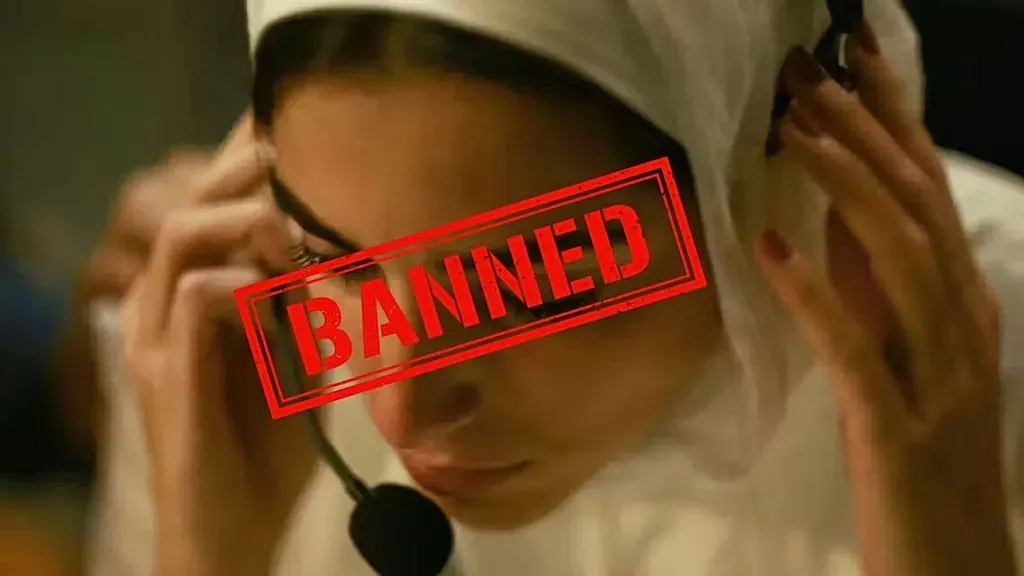
In a decision that has sparked national and international debate, India’s Central Board of Film Certification (CBFC) has refused certification for The Voice of Hind Rajab, the emotionally gripping and critically acclaimed drama by Tunisian director Kaouther Ben Hania. Despite its triumphant reception on the global stage — including a 23-minute standing ovation at the 2025 Venice Film Festival and a Silver Lion Grand Jury Prize — the film will not see a release in Indian theaters.
The ban has ignited fierce reactions, raising urgent questions about artistic freedom, political influence, and the role of cinema in documenting human rights tragedies.
From Venice to Delhi: A Journey Halted by Politics
The Voice of Hind Rajab made waves long before it faced Indian censorship. Premiering at one of the world’s most prestigious film festivals, the movie was hailed for its harrowing realism and emotional depth. It earned a Golden Globe nomination and advanced to the five-film shortlist for the Academy Award for Best International Feature Film — a rare honor for an Arab-language production.
Yet, in India, the film’s path was abruptly blocked. According to Mumbai-based distributor Manoj Nandwana of Jai Viratra Entertainment, the CBFC cited diplomatic concerns as the core reason for the denial. Officials reportedly warned that releasing the film could “break up” India-Israel relations — a claim Nandwana dismissed as both exaggerated and illogical.
“The India-Israel relationship is strategic, rooted in defense, technology, and counter-terrorism cooperation,” Nandwana argued. “To suggest a single film could destabilize decades of diplomacy is not just naive — it’s an insult to the maturity of international relations.”
He pointed out that The Voice of Hind Rajab has already premiered in the US, UK, Italy, and France — all key allies of Israel — without triggering diplomatic fallout.
The Story Behind the Screen: A Tragedy That Shook the World
At the heart of the film is the real-life story of five-year-old Hind Rajab, a Palestinian girl from Gaza who became a symbol of civilian suffering during the Israel-Gaza conflict. On January 29, 2024, after her family’s car was struck in an Israeli military operation, Hind was left alone among the bodies of her relatives, calling emergency services in a desperate bid for help.
Audio recordings released by the Palestine Red Crescent reveal the child’s trembling voice as volunteers tried to calm her. Despite their efforts, Israeli Defense Forces (IDF) fired over 355 bullets into the vehicle, killing Hind and two paramedics who were attempting to rescue her. The incident was later verified by independent investigations from The Washington Post and the Euro-Mediterranean Human Rights Monitor.
Ben Hania’s film reconstructs these final moments using AI-generated voice simulation, animation, and survivor testimonies, blending documentary and fiction to preserve the girl’s memory. Critics have praised the film not only for its technical innovation but for its moral urgency.
Censorship or Diplomatic Caution?
The CBFC’s decision has been widely criticized as political censorship disguised as foreign policy prudence. Free speech advocates argue that banning a film based on documented events sets a dangerous precedent. India, which has historically championed non-alignment and human rights advocacy, now faces accusations of prioritizing geopolitical alliances over truth and artistic expression.
Just last year, Sandhya Suri’s Santosh was delayed over concerns about its critical depiction of gender-based violence within India’s law enforcement. Yet, the current case signals something more than routine censorship—it points to a recalibration of India’s global diplomatic stance.
Historically aligned with the Palestinian cause, India has gradually shifted its foreign policy posture under Prime Minister Narendra Modi. The landmark 2017 visit by Modi to Israel—marking the first by an Indian Prime Minister since diplomatic ties were formalized—underscored a deepening strategic and political alliance with Tel Aviv. This evolving relationship appears to be influencing decisions beyond defense and trade, now extending into cultural and cinematic spheres.
Internationally, The Voice of Hind Rajab has found distribution and acclaim. Bolstered by an impressive lineup of executive producers—including Brad Pitt, Joaquin Phoenix, Rooney Mara, Alfonso Cuarón, and Jonathan Glazer—the film has garnered significant attention. Nevertheless, its politically charged narrative has given pause to some distributors, with several opting out, wary of potential backlash.
Social media erupted with outrage over the ban, with many labeling Prime Minister Narendra Modi’s government as an “Israeli puppet” — a controversial but telling reflection of public sentiment. Others noted the irony, given India’s own cinematic tradition of tackling war, trauma, and state violence.
Filmmakers and activists are now calling for transparency in the CBFC’s review process, demanding that artistic merit — not diplomatic convenience — guide certification decisions.
Conclusion: When Art Challenges Power
The Voice of Hind Rajab is more than a film — it’s a testament to a child’s final moments and a call for accountability. Its ban in India underscores a growing tension between global cinema and national censorship, especially in regions where politics and emotion collide.
An Oscar nominee which won many laurels, the film remains a powerful reminder: stories like Hind’s refuse to be silenced — even when governments try.
Also Read:
“The Voice of Hind Rajab” Review: An Unforgettable Testament to Human Resilience