


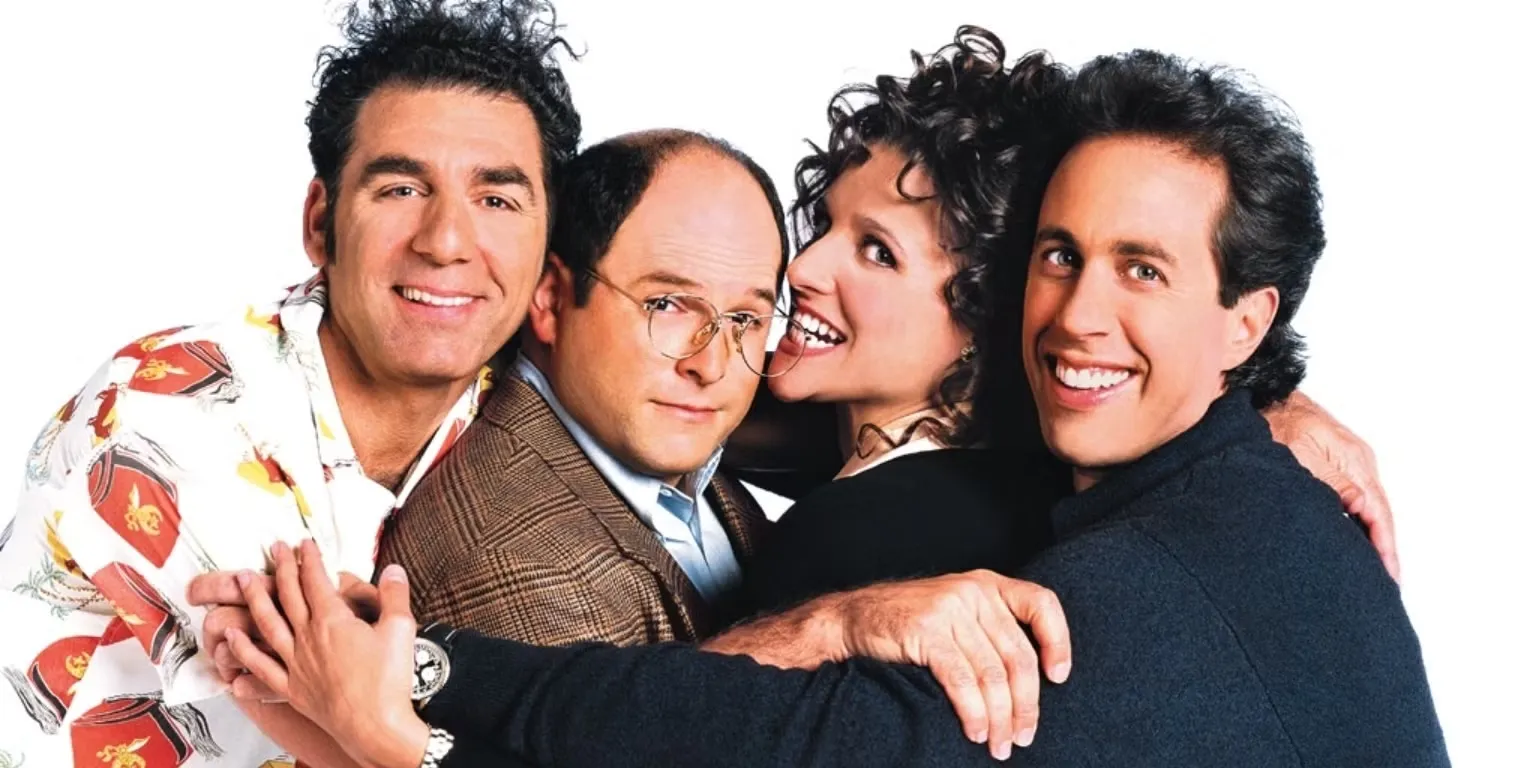
The television landscape is awash with comedies, yet few can genuinely stake a claim to the throne occupied by Seinfeld. This iconic nine-season series, readily available for binge-watching on Netflix, continues to defy the passage of time, maintaining its status as the undisputed heavyweight champion of the sitcom genre. Despite nearly three decades having passed since its polarizing and often misunderstood series finale, Seinfeld‘s influence remains omnipresent. Every situation comedy produced in its wake invariably exists under the immense shadow cast by Jerry, George, Elaine, and Kramer. Re-watching the show today, its enduring relevance and revolutionary impact become strikingly clear.
A Binge-Watching Blueprint from the Past
Long before the term “binge-watching” became commonplace, Seinfeld seemingly perfected the art. The series unfolds with a natural momentum that encourages continuous viewing, often outperforming many contemporary shows explicitly designed for marathon sessions. This inherent rewatchability is a testament to its meticulous construction and layered storytelling, making it a surprisingly perfect fit for the modern streaming era.
The Architecture of Laughter: Innovation in Comedy
Seinfeld was a trailblazer, pioneering a new level of comedic continuity and the strategic use of callbacks. This innovation established a critical precedent, laying the groundwork for the structural advancements seen in numerous successful sitcoms that followed. It challenged the episodic norms of its era, demanding a more engaged viewer and rewarding close attention with running gags and evolving character dynamics that built over time.
The Art of Contradiction: Mundane Meets Absurd
Embodying the spirit of its creators, Seinfeld is a paradox wrapped in a meticulously crafted comedy. Across its acclaimed nine-season run, the show masterfully reinvented itself while paradoxically retaining a remarkable consistency from one episode to the next. It deftly navigated the fine line between observing the trivialities of everyday existence and brilliantly exposing life’s inherent absurdities. Famously dubbed a “show about nothing,” it compelled viewers to anticipate the unexpected, as even the most mundane premise could spiral into comedic chaos. Its profound obsession with reality, coupled with an equally pronounced detachment from it, created a unique comedic voice unmatched by any other series.
A World Beyond the Set: Immersive Storytelling
Seinfeld crafted a perfectly realized, three-dimensional world that extended far beyond the familiar confines of Jerry’s apartment or Monk’s Cafe. Much like a compelling piece of science fiction, the series operated on its own distinct internal principles and proprietary logic. This intricate, self-contained universe is precisely what fosters such an immersive viewing experience and contributes to its boundless rewatchability. The characters’ motivations, the consequences of their actions, and the overarching comedic framework are all deeply rooted in this unique internal consistency.
Evolution from Concept to Cultural Phenomenon
The initial pitch for Seinfeld was deceptively simple: chronicle the daily life of a stand-up comedian as he gathered material for his routines. While a strong foundation, the series quickly transcended this original concept. By its second season, the narrative focus broadened to encompass the misadventures and ethical quandaries of Jerry, George, Elaine, and Kramer – a quartet of eccentric New Yorkers whose lives intertwined in hilariously dysfunctional ways. The show solidified its rapid-fire comedic pace early on, a crucial element contributing to its exceptional binge-worthiness. Each standard 22-minute episode is packed with so much dialogue, plot, and character interaction that viewers often feel they’ve consumed double the content, making it effortless to breeze through six or even nine episodes in a single sitting.
Density and Depth: A Sitcom Apart
The depth and density of Seinfeld episodes set it apart from its sitcom peers. Its narrative complexity and layered character interactions draw parallels not to other comedies, but to groundbreaking dramas like HBO’s The Sopranos and The Wire. This “lived-in” quality, a sense of an established world with its own rules and history, is a hallmark shared by only a select few iconic sitcoms, including MASH*, Cheers, and It’s Always Sunny in Philadelphia.
Self-Awareness and Pivotal Arcs
Seinfeld‘s signature self-referential humor and the recurring patterns of plotlines, dialogue, and situations across episodes truly blossomed during its second and third seasons. A monumental leap forward occurred in Season 4, which introduced a season-long meta-narrative arc that ingeniously parodied the show’s own origin story. This increased self-awareness further refined its episodic formula, allowing for more intricate and interconnected storytelling. This sophisticated approach directly paved the way for another legendary season-long arc: George Costanza’s ill-fated engagement to Susan Ross, culminating in her memorable and shocking demise in Season 7. Initially a recurring character from Season 4, Susan was revived as a romantic foil for George. However, when actress Heidi Swedberg’s dynamic with the main cast didn’t quite gel, then-showrunner Larry David famously conceived of her darkly comedic exit.
The Shifting Sands of the Later Era
Following Larry David’s departure, the final two seasons of Seinfeld embraced an increasingly absurd sensibility. Binge-watching the entire series illuminates its three distinct evolutionary phases, each of which uniquely redefined the sitcom landscape. Susan’s death, in many ways, represented the pinnacle of the show’s darkly humorous tendencies. With David’s exit, the “Late Era Seinfeld” leaned into its more overtly silly and surreal side, proving its adaptability and willingness to experiment even in its twilight years.
A Timeless Loop: The Show’s Own Journey
Seinfeld stands as a quintessential example of a television series that compels viewers to immediately restart the pilot after finishing the finale. The journey from the initial episode to the last feels profoundly different, despite the brilliant symmetry of opening and closing with identical lines of dialogue. While the characters, true to the show’s ethos, remain largely stagnant, learning nothing and refusing to grow, the series itself underwent a remarkable and discernible character arc from Season 1 to Season 9. It evolved continuously, learning equally from its missteps and its triumphs, a stark contrast to the unchanging personalities of Jerry, George, Kramer, and Elaine.
The Enduring Brilliance of “The Finale”
The series’ concluding episode, “The Finale,” is often unfairly criticized. In reality, it serves as a perfect, albeit unconventional, send-off. It brilliantly pays homage to nine years of intricate storylines through a parade of callbacks, ultimately subjecting its irascible protagonists to a fitting punishment for a truly trivial offense – a richly deserved comeuppance after a lifetime of getting away with almost everything, including, arguably, minor criminal acts. Crucially, the Seinfeld ensemble remains utterly unrepentant and unchanged, which is the ultimate genius of “The Finale.”
Conclusion: A Contemporary Classic
In retrospect, Seinfeld is both a product of its time and an utterly timeless creation. Its avant-garde approach to comedy was so revolutionary that, over three decades later, it still feels remarkably contemporary. Its profound influence extends to virtually every great comedy series that has aired since, from Friends to Arrested Development and, notably, It’s Always Sunny in Philadelphia. Seinfeld achieved unparalleled perfection as weekly episodic television, but in the streaming era, it maintains its formidable power. It is undeniably the Greatest Of All Time sitcom. Seinfeld didn’t merely reinvent the genre; it forged its own unique comedic paradigm, operating by rules so singular that no other show, before or since, has managed to rival its distinct mastery.