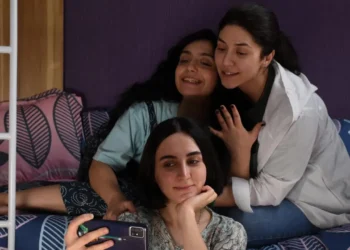



Netflix recently premiered The Museum of Innocence, a highly anticipated limited series adapting Nobel laureate Orhan Pamuk’s renowned novel. Launched February 13, 2026, this Turkish drama immerses viewers in 1970s Istanbul, exploring the intricate social dynamics and obsessive love between affluent heir Kemal and his distant, less privileged relative, Füsun. Across nine visually stunning episodes, the series presents a deep dive into a transforming city and a love that blurs into fixation. Our Museum of Innocence review explores this production’s gleaming surfaces and hollow core.
Story
In the rigid, tradition-bound Istanbul of 1975, Kemal Basmacı (Selahattin Paşalı) is poised for an advantageous marriage to the elegant Sibel. This perfectly arranged life shatters upon a chance encounter with Füsun (Eylül Lize Kandemir), a modest relative. This brief meeting propels Kemal into a private, obsessive pursuit, irrevocably derailing his scripted existence.
The narrative is framed by an older Kemal, whose “Museum of Innocence” houses tangible remnants of his fixation—a poignant archive of memory and obsession. The story highlights the tension between societal expectations and a spiraling internal world, revealing unsettling undercurrents beneath Istanbul’s polished facade.
Performances
Selahattin Paşalı portrays Kemal with unsettling detachment, seamlessly transitioning from sophisticated heir to a man consumed by a singular obsession. He captures a profound self-absorption, navigating his double life with an eerie lack of guilt. Eylül Lize Kandemir infuses Füsun with a quiet strength, preventing her from becoming passive yet conveying the palpable weight of Kemal’s relentless presence.
Oya Unustası delivers a sharp performance as Sibel, the elegant fiancée whose world crumbles, her intellect tragically overlooked. Tilbe Saran shines as Kemal’s mother, Vecihe, offering a clear-eyed view of her son’s true nature. However, a critical flaw emerges in the leads’ chemistry, which often feels manufactured, failing to generate the compelling spark needed to justify the drama’s epic scope.
Behind the Lens
Visually, the series is a standout achievement. Murat Güney’s production design meticulously recreates 1970s Istanbul, from opulent carpets and crystal chandeliers to authentic period details. Cinematography bathes each frame in a rich, “saccharine sheen,” lending a high-end, melancholic soap opera aesthetic. Yet, this visual grandeur often overshadows the narrative.
Pacing is sluggish, cycling through Kemal’s fixations with a repetitive monotony that tests viewer patience. His systematic collection of Füsun’s discarded items—lipstick-stained teacups, lost earrings—initially intriguing, soon becomes clinical and exhaustive. The direction’s choice to cloak these unsettling acts of psychological intrusion in soft, golden hues, accompanied by gentle music, creates a jarring disconnect between beautiful presentation and disturbing reality.
Final Verdict
While The Museum of Innocence is an aesthetic marvel, meticulously capturing 1970s Turkish high society, it ultimately struggles to move beyond its visual splendor. The series frequently confuses toxic obsession with romantic devotion, trapping characters in a slow, circular narrative that prioritizes superficial beauty over profound emotional depth. What unfolds is less a compelling love story and more a gorgeously rendered chronicle of a man’s self-serving fixation—a curated hoard of stolen memories and objects.
It stands as a beautiful, deliberate, yet ultimately hollow monument to a profoundly one-sided and predatory pursuit. Viewers seeking exceptional period design will be impressed, but those anticipating a deeply felt exploration of love’s destructive power may find its exquisite packaging lacks a substantial core.