

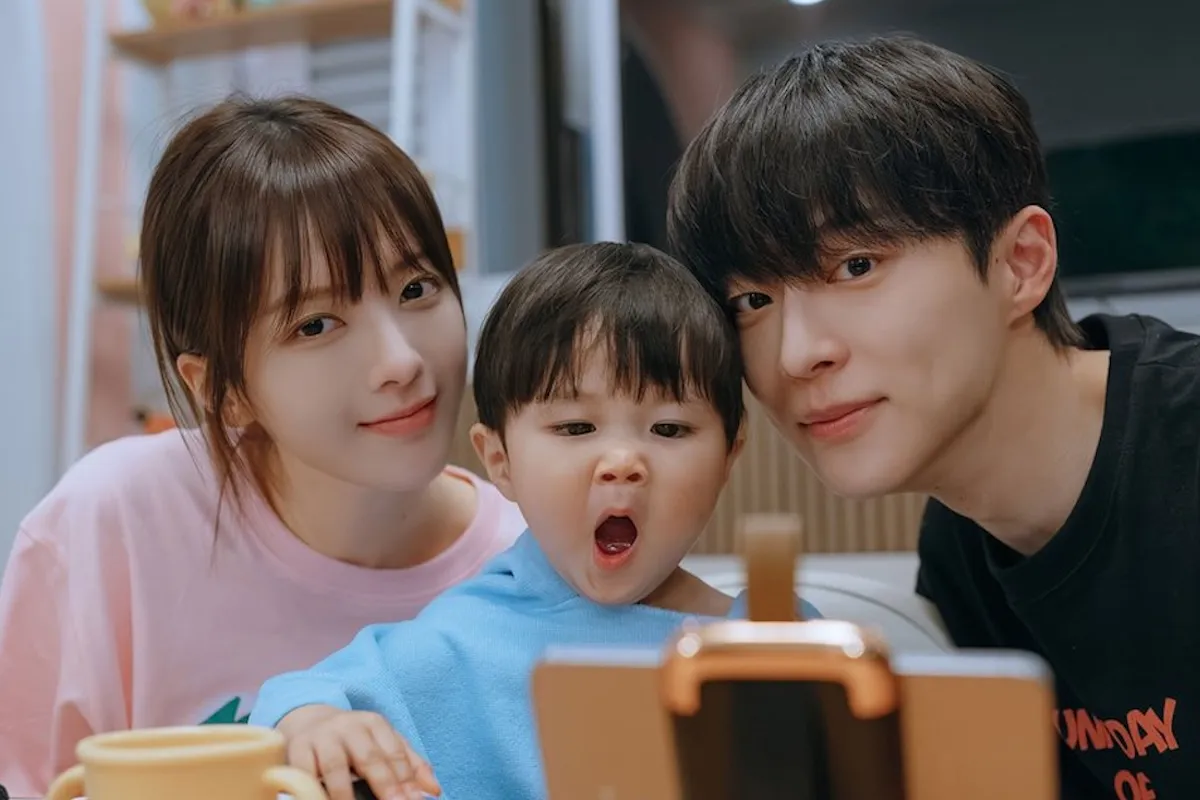
In the landscape of modern Korean storytelling, Our Universe emerges as a profound meditation on kinship forged through catastrophe. This 2026 tvN offering strips away romantic idealism to examine what happens when liability becomes legacy. Following the fatal accident that claims their engaged siblings, corporate strategist Sun Tae-hyung and delivery driver Woo Hyun-jin discover that grief has assigned them joint custody of twenty-month-old Woo-joo, thrusting two incompatible souls into the bewildering trenches of parenthood. What unfolds is not a fairy tale, but a gritty chronicle of improvisation, resentment, and reluctant solidarity.
Story
At its core, Our Universe interrogates the architecture of makeshift families. Tae-hyung, a man who architects his existence around spreadsheets and sovereignty, collides with Hyun-jin, whose worldview is carved from physical endurance and emotional intuition. Their initial dynamic—cemented by a rigid roommate contract after a flood renders Tae-hyung homeless—evolves through the mundane poetry of shared labor: sterilizing bottles, negotiating sleep schedules, and battling housing insecurity.
The narrative masterfully subverts traditional romance tropes; intimacy here germinates not in candlelit confessions but in the quiet solidarity of 3 AM diaper changes and financial survival. When a viral video exposes their private struggles to public scrutiny, the series sharpens its critique of digital spectatorship while testing the durability of their fragile alliance.
Performances
Bae In-hyuk delivers a restrained yet piercing portrayal of Tae-hyung, capturing the suffocation of a man discovering that control is merely an illusion. Opposite him, Roh Jeong-eui imbues Hyun-jin with a fierce, working-class resilience that never veers into caricature. Their antagonistic chemistry crackles with authenticity, making each tentative truce feel earned.
The ensemble, including Park Seo-ham and Ha Jun, constructs a believable ecosystem of judgment and support, while the toddler portraying Woo-joo delivers a performance of disarming naturalism that anchors the emotional stakes. As Tae-hyung reconnects with abandoned photography to document their new reality, the visual metaphor of reframing chaos into art resonates through the cast’s collective vulnerability.
Behind the Lens
Directors Lee Hyun-seok and Jung Yeo-jin orchestrate this emotional symphony with unflinching realism. Cinematographer Kim Sang-moo contrasts the sterility of corporate spaces with the warm, chaotic clutter of domesticity, while editors Lee Ye-ji and Choi Min-young pace the series to mirror the relentless, cyclical nature of caregiving.
The writing team—Soo Jin, Jeon Yu-ri, and Shin Yi-hyun—craft a narrative that treats social systems not as safety nets but as gaps through which families must build their own bridges. Composer Park Se-joon underscores the quiet desperation and small triumphs without overwhelming sentimentality, allowing Studio Dragon’s production values to serve the story’s working-class authenticity rather than glossy escapism.
Final Verdict
Our Universe succeeds as both social commentary and deeply human storytelling. By examining how employment pressures, housing instability, and economic precarity complicate the healing process, the drama speaks to contemporary anxieties while celebrating the stubborn resilience of chosen bonds. Streaming now on Viki for Indian viewers, this twelve-episode journey offers no easy resolutions, only the messy, beautiful truth that family is less about blood than about showing up when it costs everything. For viewers seeking substance over spectacle, this is essential viewing.