

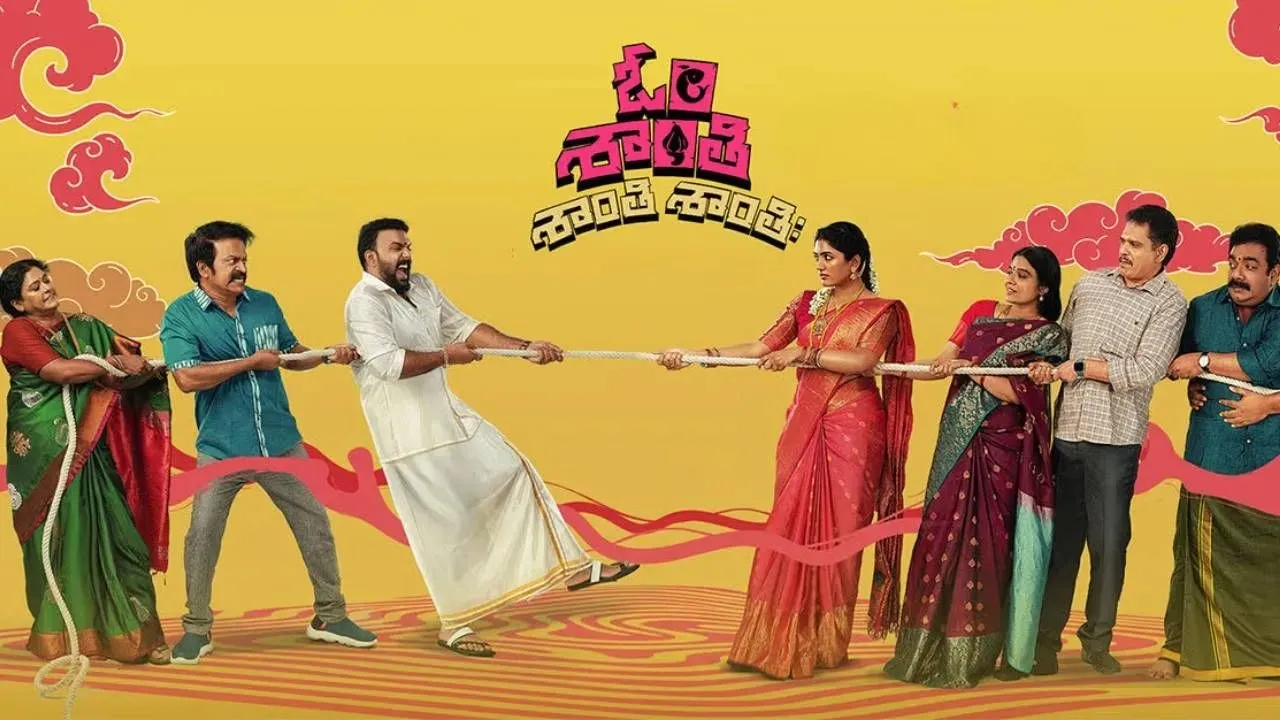
Remaking a beloved regional hit is always a gamble, especially when today’s viewers are glued to OTT platforms and demand fresh storytelling. Yet the Telugu audience has a soft spot for quality Malayalam cinema, often waiting eagerly to see a beloved story re‑imagined in their own tongue. That’s exactly the case with Om Shanti Shanti Shanti, the Telugu rendition of the 2022 Malayalam surprise Jaya Jaya Jaya Jaya He. Starring Tarun Bhascker and Eesha Rebba, the film attempts to preserve the original’s heart while draping it in the rustic flavor of the Godavari belt. In this review we’ll examine how the remake fares in terms of narrative, acting, direction, and overall entertainment value.
Story
The narrative follows Prashanti (Eesha Rebba), a young woman raised under the shadow of a domineering family that never respects her wishes. Tired of being a perpetual “yes‑woman,” she hopes her marriage will finally grant her the freedom she craves. Enter Omkar Naidu (Tarun Bhascker), a fiery, pride‑driven man whose temper is as legendary as his ego. What begins as a hopeful alliance quickly spirals into a battle of wills: Prashanti can no longer tolerate Om’s petty outbursts, while Om struggles to reconcile his machismo with the newfound expectations of a modern marriage.
The film stays true to the core premise of the Malayalam original—an exploration of gender dynamics and ego clashes within a domestic setting—but injects a distinct Telugu flavor. The Godavari dialect, regional idioms, and local customs are woven into every dialogue, giving the story a fresh, localized texture. While the plot points remain largely unchanged, the screenplay adds a few situational jokes and culturally resonant moments that make the tale feel less like a copy and more like a home‑grown comedy.
Performances
Tarun Bhascker as Omkar Naidu
Tarun makes a daring transition from director‑actor to lead protagonist. His portrayal of Omkar oscillates between swaggering aggression and vulnerable insecurity, delivering comedy with impeccable timing. The most striking aspect of his performance is the seamless adoption of the Godavari accent, which feels authentic rather than forced. Even in the film’s more serious beats, his facial expressions convey the underlying turmoil without slipping into melodrama.
Eesha Rebba as Prashanti
After a string of underutilized roles, Eesha finally gets a part that showcases her range. She balances the character’s simmering frustration with moments of playful defiance, especially during the film’s second‑half pivot where she takes charge of the narrative. Her chemistry with Tarun evolves from palpable tension to a nuanced partnership, making the couple’s journey believable.
Supporting Cast
Brahmaji shines as the hero’s maternal uncle, delivering a relentless stream of comic relief that feels both nostalgic and fresh. Brahmanandam’s cameo in the climax adds a final burst of hilarity, while the secondary characters—particularly the in‑law family—offer enough quirk to keep the audience engaged without overcrowding the story.
Overall, the leads’ performances elevate the material, allowing the remake to stand on its own merit.
Behind the Scenes
Director A.R. Sajeev, known for his deft handling of cultural nuances, makes a concerted effort to prevent the film from feeling like a simple copy. He re‑writes many dialogues to incorporate Godavari slang, ensuring that jokes land with the regional audience. The cinematography captures the lush riverbanks and bustling villages, giving the film a visual identity distinct from its Malayalam counterpart.
Music composer S. K. Raghavan provides a sprightly background score that feels contemporary while honoring the original’s melodic spirit. Two standout songs—“Nadi Vennela” and “Oka Saari”—have already begun trending on streaming platforms, further cementing the film’s local appeal.
The editing maintains a crisp runtime of 115 minutes, trimming unnecessary subplots that slowed the original’s pacing. This tighter structure helps the first half maintain a lively rhythm, though the second half loses some momentum—a point we’ll revisit in the final verdict.
Final Verdict
Om Shanti Shanti Shanti succeeds where many remakes stumble: it respects the source material while injecting enough regional color to feel original. Tarun Bhascker’s bold decision to embody the volatile Omkar pays off, and Eesha Rebba finally gets a platform to display her latent talent. The comedy lands effectively in the first half, powered by sharp dialogues and authentic dialect work. However, the second half suffers from a rushed emotional arc and a courtroom comedy that feels out of place, preventing the film from reaching true greatness.
Rating: (3.5/5) – A solid, entertaining Telugu remake that shines thanks to its lead performances and authentic cultural adaptation.