

Rahi Anil Barve, the visionary behind the mythic horror Tumbbad (2018), returns not with spectacle, but with a scalpel. Mayasabha – The Hall of Illusion (2026) strips away mythic layers to expose raw human avarice, trapping its characters—and viewers—within the rotting walls of a forgotten film studio. Where Tumbbad explored greed across generations in a cursed haveli, Mayasabha turns the camera inward, transforming a crumbling production house into a psychological battleground. This is not just a story about wealth or power—it’s about legacy, illusion, and the silent collapse of creative dreams.
Barve offers a tight, claustrophobic narrative that feels less like fiction and more like a confession. Every corridor of the studio whispers betrayal. Every shadow holds a motive. The air is thick with decay—of ambition, relationships, and truth. This isn’t just a film; it’s an immersive experience in moral ambiguity, where dialogue becomes weaponry and silence, threat.
Story
On a storm-wracked evening, siblings Zeenat (Veena Jamkar) and Ravrana (Deepak Damle) enter the dilapidated Mayasabha Studios, drawn by whispers of hidden fortune. Their arrival coincides with Vasusen (Mohammad Samad), the anxious, haunted son of once-mighty producer Parmeshwar Khanna (Jaaved Jaaferi). When a careless revelation tips the balance, a tense game of psychological brinkmanship begins.
What unfolds is a single-night duel of intellects, set against the backdrop of ruined sets and flickering lights. Parmeshwar, once a titan of Indian cinema, now roams his crumbling empire like a ghost, his mind fractured by trauma, loss, and the ghosts of unfinished films. As memories bleed into reality, the line between performance and truth blurs.
Performances
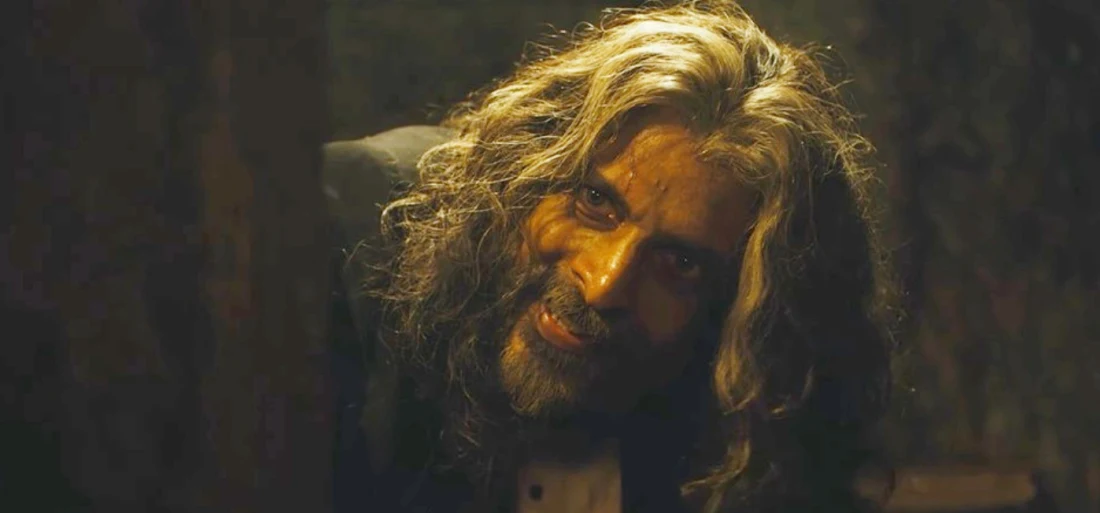
Jaaved Jaaferi delivers a career-defining performance as Parmeshwar Khanna—a man undone by his own genius. His descent into erratic nostalgia and paranoid rage is both tragic and terrifying. He commands the screen with a theatrical flair that never veers into melodrama, grounding the film’s surreal tension in raw human emotion.
Mohammad Samad, reprising his lineage of familial burden from Tumbbad, brings a quiet intensity to Vasusen. He’s caught between filial duty and self-preservation, embodying the emotional cost of living in a parent’s shadow.
Veena Jamkar is mesmerizing as Zeenat, a woman whose charm masks a razor-sharp intelligence. Her manipulation feels organic, even empathetic. Deepak Damle, though quieter, is the perfect foil—loyal, observant, and increasingly wary.
Together, the quartet creates a pressure-cooker of conflicting motives, each performance crackling with unspoken history and simmering tension.
Behind the Scenes
Barve’s frustration as a filmmaker leaks through every frame. Mayasabha feels like a metatextual critique of Indian independent cinema—its neglect, its broken promises, its ghosts. The decaying studio becomes a metaphor: a once-glorious dream now abandoned, much like many of Barve’s own unrealized projects (such as the shelved Gulkanda Tales).
Barve dismantles the myth of artistic grandeur, replacing it with the reality of creative exhaustion. The narrative is deliberately paced, yet relentless—each conversation a calculated move in a chess game where the stakes are identity, control, and survival. The film refuses easy answers, instead rewarding viewers who are willing to sit with discomfort, decode subtext, and embrace ambiguity.
Cinematographers Kuldeep Mamania and Nuthan Nagaraj paint the film in smoky reds and ashen grays. Light fractures through broken studio windows, casting jagged shadows that mirror the fractured psyches. The production design is a character in itself—dusty reels, forgotten scripts, and eerie stage sets where silent dramas still echo.
The film’s soundscape—minimal, punctuated by distant creaks and sudden silences—amplifies the unease. Barve doesn’t just tell a story; he builds a world that breathes deception.
Final Verdict
Mayasabha – The Hall of Illusion is not easy cinema. It demands attention, rewards rewatching, and challenges the audience to think beyond plot. But for those willing to engage, it offers a rare cinematic feast—intelligent, atmospheric, and emotionally devastating.
It’s a film that trusts its audience. That respects silence. That sees storytelling not as escapism, but as confrontation. In an era of loud spectacles, Mayasabha dares to whisper—and in doing so, screams volumes.
Rating: 3.5 / 5 – A haunting, cerebral triumph that cements Barve as one of Indian cinema’s most fearless storytellers.
Also Read:
“Mayasabha” Trailer Unveils a Haunting Tale of Greed, Gold, and Deception