

Overview: A True-Crime Story Wrapped in Sequins
HBO’s two-part documentary Murder in Glitterball City arrives as a haunting examination of a real-life tragedy that shook Louisville, Kentucky. Produced by World of Wonder and directed by Fenton Bailey and Randy Barbato, the series revisits the 2010 killing of drag performer James “Jamie” Carroll. With episodes running roughly 80–90 minutes, the documentary blends meticulous investigation with a strong sense of place, turning a local crime into a broader meditation on identity, intimacy, and violence.
A Disturbing Opening That Sets the Tone
The series begins with an unsettling webcam video featuring Joey Banis, who reads what appears to be a suicide note while his partner, Jeffrey Mundt, sleeps nearby. Banis admits to involvement in a death, immediately drawing the audience into a story defined by uncertainty. As accusations expand to include Mundt, the documentary establishes its central tension: two men, one body, and competing versions of the truth.
Glitter, History, and a House of Horrors
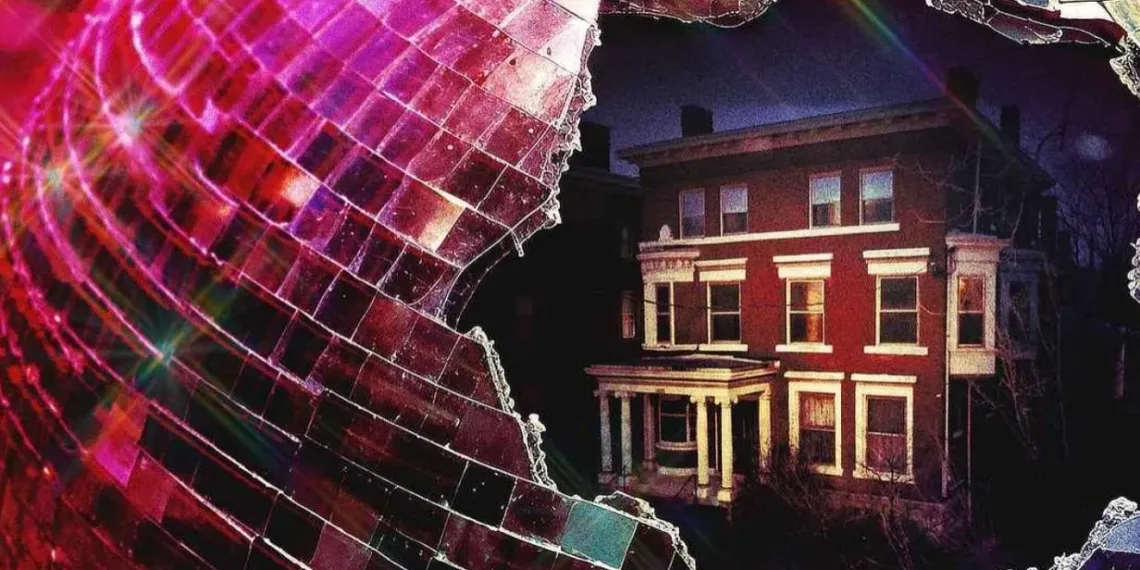
Adapted from David Dominé’s book A Dark Room in Glitter Ball City, the series explores the discovery of Carroll’s body inside a stately Victorian home on Belgravia Court. The neighborhood, celebrated as a historic LGBTQ+ enclave and known for disco ball manufacturing, is portrayed as both vibrant and deeply unsettling. Cinematographer Huy Truong captures this contrast, lingering on elegant architecture while interviews reveal the darkness hidden behind closed doors.
Conflicting Testimonies and Shifting Perceptions
At the heart of the narrative lies the volatile relationship between Banis and Mundt. The documentary carefully juxtaposes their courtroom testimonies, revealing how similar their stories sound despite pointing blame at each other. Editing choices reinforce ambiguity, forcing viewers to confront how appearance, demeanor, and social roles influence judgment. The result is less a whodunit and more a study of perception and power within intimate relationships.
Community Voices and Emotional Weight
Rather than leaning on procedural spectacle, Murder in Glitterball City grounds itself in community voices. Local drag performers, neighbors, and friends speak to the rupture this crime caused in a space once considered safe. Brief moments of levity—such as legal figures reacting to stylized passages from Dominé’s book—humanize the participants without trivializing the loss.
Remembering Jamie Carroll
As the series concludes, the focus returns to Jamie Carroll. Friends reject supernatural explanations and instead point to human choices as the real source of evil. This reframing centers accountability and grief, ensuring that the victim’s life is not overshadowed by unresolved legal battles.
Murder in Glitterball City premiered on HBO on February 19, 2026, and both episodes are now streaming on HBO Max. It stands as a compelling, unsettling true-crime documentary that looks beyond glittering surfaces to confront the cost of deception and silence.