

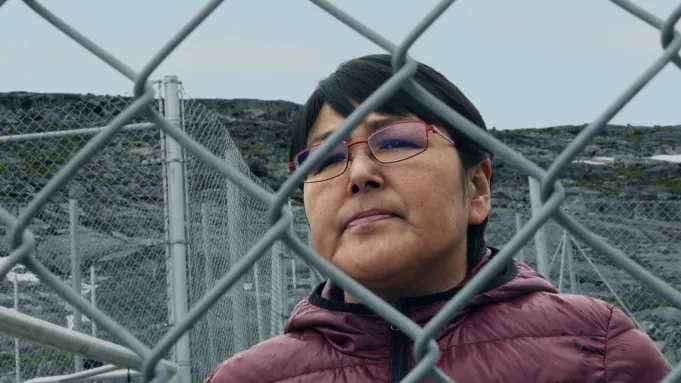
Greenland is often seen through political headlines — such as global debates about ownership of the island — but beneath the surface lies a rich tapestry of human stories. One such story is now heading to the world stage: Walls – Akinni Inuk, Greenland’s official submission for the 2026 Academy Awards in the Best International Feature category. This marks only the third time the nation has entered the prestigious race, following Nuummioq in 2010 and Inuk in 2012.
Directed by Danish filmmaker Sofie Rørdam and Greenlandic director Nina Paninnguaq Skydsbjerg, Walls transcends its prison setting to explore themes of trauma, colonial history, justice, and the transformative power of human connection. The title’s Greenlandic phrase “akinni inuk” translates to “the human being in front of me,” hinting at the film’s deeply personal approach.
The documentary’s roots trace back eight years, beginning with an innovative project where inmates in Nuuk, Greenland’s capital, filmed their own lives. The project evolved into a portrait of Ruth — a woman who has spent over a decade in indefinite detention, caught between Danish and Greenlandic legal systems — and the emotional bond she forms with Skydsbjerg. Initially conceived as an observer behind the camera, Skydsbjerg gradually became part of the narrative, sharing her own personal history alongside Ruth’s.
Rørdam recalls the moment she recognized their evolving relationship as the heart of the film: “I realized that what was unfolding between Ruth and Nina was the actual story — a mirror of each other’s experiences.” Skydsbjerg, for her part, emphasizes the authenticity of their exchanges, which often felt more like intimate conversations between friends than formal interviews.
The filmmakers consciously avoided the tropes of conventional prison documentaries. Instead of relying on suspense or sensationalism, Walls focuses on humanity, empathy, and the everyday realities within Greenland’s correctional system — which emphasizes rehabilitation over punishment but still faces systemic challenges.
Beyond its exploration of incarceration, Walls reflects on broader notions of freedom — from physical imprisonment to liberation from historical colonial structures. At its core, it’s also a testament to the healing power of friendship, showing how shared vulnerability can forge resilience.
For Skydsbjerg, the experience transformed not just her perspective as a filmmaker but her understanding of what it means to tell stories in front of the camera. She speaks with deep respect for Ruth and others willing to reveal painful truths in a documentary setting. Their collaboration, she says, erased the sense of camera intrusion, allowing genuine human connection to take center stage.
As Walls enters Oscar contention, Skydsbjerg hopes it will shine a spotlight on Greenland’s people and culture beyond political soundbites — and inspire young Greenlanders to dream big. “Even small countries can have big dreams,” she affirms. If the film’s journey is any indication, those dreams can cross oceans, break down walls, and reach all the way to Hollywood.