


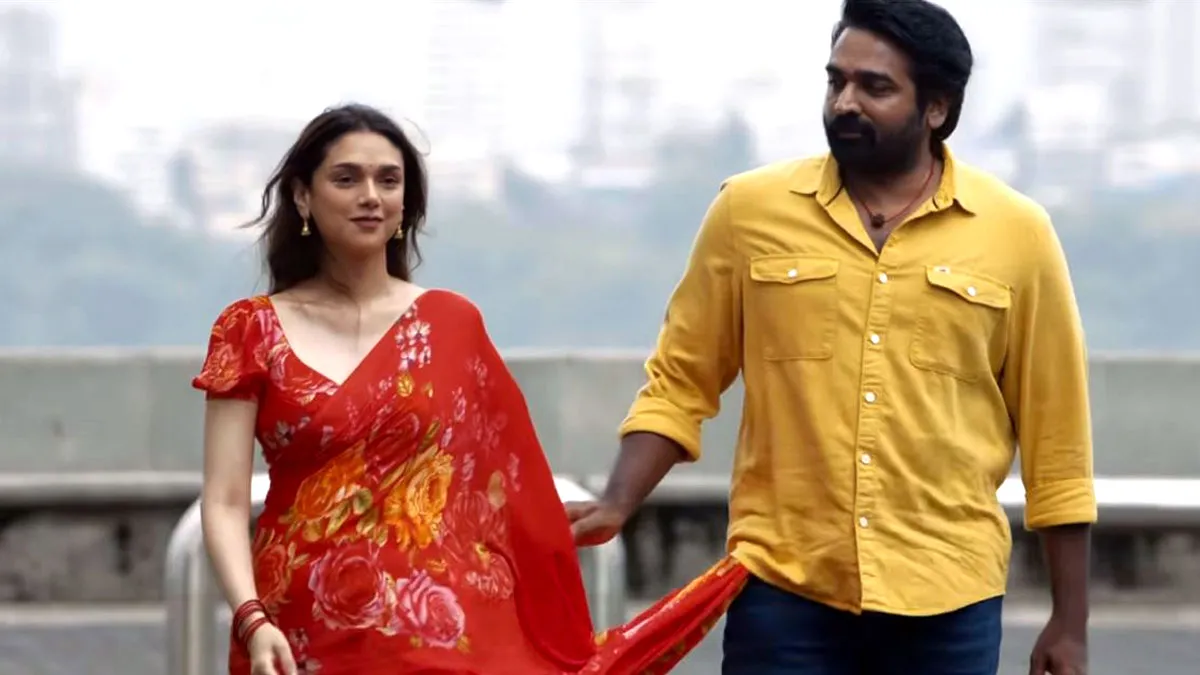
In a cinematic landscape often dominated by dialogue-heavy narratives, Gandhi Talks emerges as a refreshing breath of creativity. This silent film, featuring the remarkable talents of Vijay Sethupathi and Arvind Swami, delves into the intricate relationship between money and human values. Directed by Kishor Belekar, the movie challenges audiences to ponder the moral dilemmas people face amidst financial chaos.
Story
Set against the backdrop of bustling Mumbai, Gandhi Talks revolves around the lives of its three central characters, all of whom are intertwined by the omnipresent influence of “Gandhi”—a colloquial term for rupee notes adorned with Mahatma Gandhi’s image. The film starkly contrasts the integrity Gandhi symbolized with the rampant corruption that has overtaken society.
The narrative centers on Mahadev (Vijay Sethupathi), an unemployed individual grappling with despair and searching for work, and Bosman (Arvind Swami), a once-prosperous businessman whose empire is crumbling. Their paths cross in a moment that sparks an idea with the potential to alter their destinies. Additionally, a small-time pickpocket, portrayed by Siddharth Jadhav, weaves in and out of their lives, adding depth to the storyline.
Performances
Vijay Sethupathi delivers a compelling and authentic portrayal of desperation as Mahadev, effortlessly drawing viewers into his character’s plight. Siddharth Jadhav’s performance as the petty thief is equally commendable, providing a touch of levity in a film steeped in serious themes. Arvind Swami convincingly captures the essence of a businessman watching his world unravel, while Aditi Rao Hydari gracefully contributes to the emotional tapestry of the film.
Behind the Scenes
A.R. Rahman’s evocative score plays a crucial role in the film, acting almost as a voice that guides the audience through the silent narrative. Initially, adapting to a story told through visuals and sound can be a challenge, but as the film progresses, the music becomes an emotional anchor. While the songs blend seamlessly into the film, they may not stand out as memorable hits.
Director Kishor Pandurang Belekar employs a unique storytelling method, suggesting that in today’s world, financial power often overshadows the significance of words. The title Gandhi Talks carries an ironic weight; although Gandhi’s visage is ubiquitous on currency notes, his values rarely resonate in genuine discourse. The film’s communication is primarily visual, relying on expressions and the musical score, which might leave some viewers puzzled, particularly with rapid WhatsApp text exchanges that flash briefly on screen.
While the climax stretches out and a drawn-out sequence within Bosman’s opulent home could benefit from tighter editing, the film beautifully illustrates how disparate lives can be impacted by the same currency. It poignantly reveals that even the noblest intentions can falter under the pressure of desperation, highlighting the complex dynamics between morality and money.
Final Verdict
Gandhi Talks is a film that may not resonate with everyone, particularly those seeking conventional storytelling. However, for those open to experimental cinema and rich, symbolic narratives, it presents a thought-provoking experience worth exploring. The film’s commitment to pushing boundaries and encouraging its actors to explore new performance styles is admirable, yet it occasionally lacks the crispness and engaging cinematography needed for a consistently captivating experience.
In a world filled with noisy distractions, Gandhi Talks stands out as a radical choice, offering a soothing auditory and emotional experience. It is a testament to the filmmakers’ courage to create something distinct. While it may cater to a niche audience, films like this are essential for inspiring future writers and directors to embrace originality.