

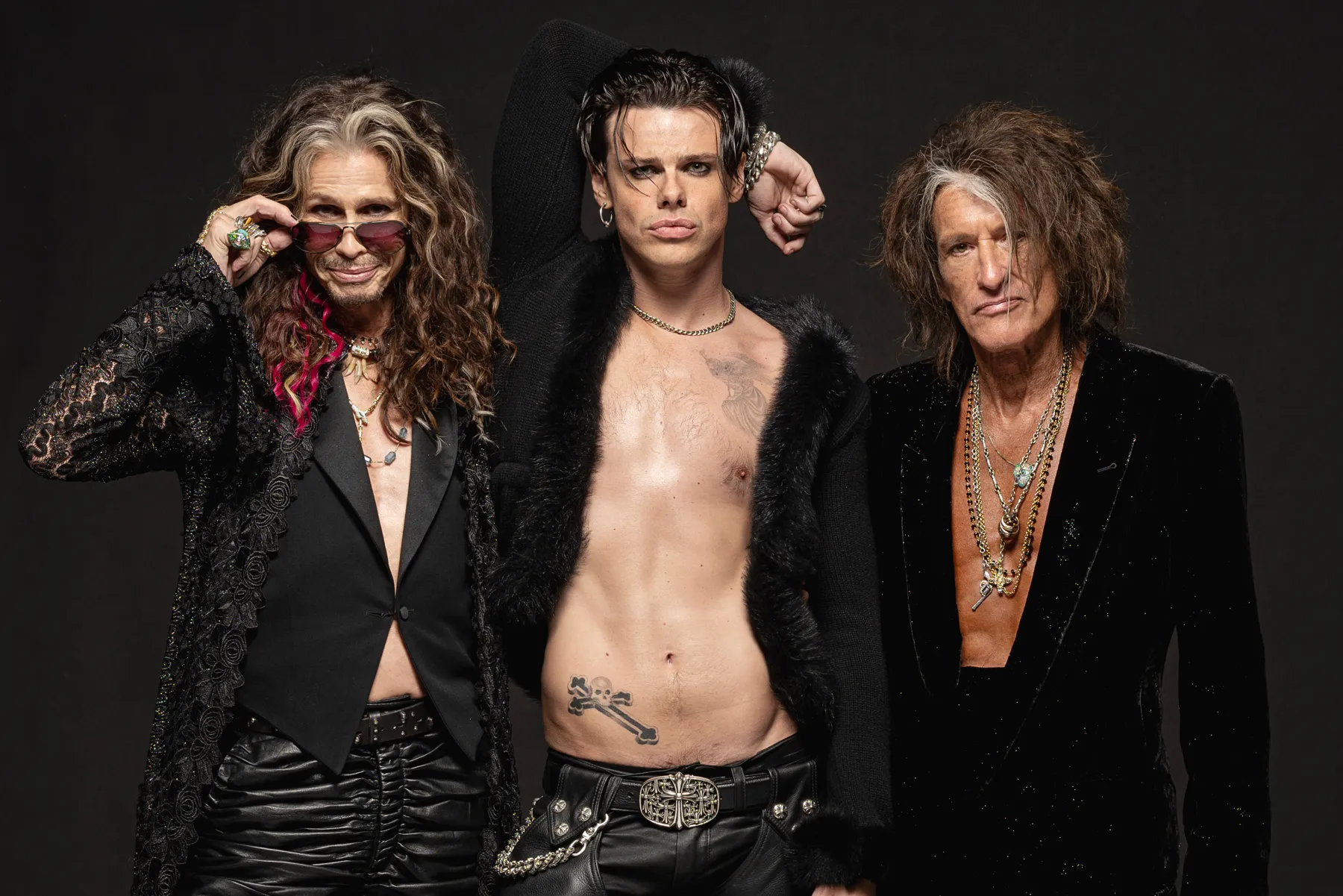
Legendary rock veterans Aerosmith and British alt-rock star Yungblud have joined forces for a surprising new EP, One More Time. Spanning six tracks, this collaboration blends Aerosmith’s iconic rock swagger with Yungblud’s youthful edge, creating a cohesive yet familiar listening experience.
The release marks a big moment for Aerosmith—it’s their first new material in over 12 years. Four of the songs are fresh co-writes between the band and Yungblud, accompanied by a modern reworking of Aerosmith’s classic hit Back In The Saddle and an alternate version of one track featuring country sensation Lainey Wilson.
The EP kicks off with “My Only Angel”, opening on layered, reverb-laden vocals and a clean, classic rock riff. The production is tight, with an accessible melody and a tasteful arpeggiated guitar solo. While well-produced, the track plays it safe and doesn’t push stylistic boundaries.
“Problems” follows, beginning with a live-recorded atmosphere enhanced by crowd noise, though the heavy vocal tuning slightly detracts from its authenticity. Its breakdown section invites headbanging, and the ending finally lets the band cut loose instrumentally—yet it feels sonically similar to the opener.
“Wild Woman” reintroduces stacked reverb vocals but adds acoustic guitar for a touch of country-rock flavor. The stripped-back verses contrast with fuller choruses that round out the arrangement. “A Thousand Days” also starts acoustically but leans into a slow rock vibe, with rawer, less processed vocals that pair with heartfelt, pleading lyrics and subtle orchestral flourishes.
One of the highlights is the 2025 mix of “Back In The Saddle”, where Yungblud’s contribution breathes fresh energy into one of Aerosmith’s signature tracks. It stands out as the EP’s clear high point despite being a reimagining of an older hit. The closer, a Lainey Wilson-led version of “Wild Woman,” adds a distinct country flavor that gives the song a new personality.
Final Verdict:
One More Time is crisp, well-produced, and demonstrates genuine chemistry between Aerosmith and Yungblud. While it may not break new creative ground, its appeal lies in bridging generations—bringing classic rock’s legacy to younger audiences while keeping the sound relevant. For fans of either artist, it’s a satisfying listen, even if it plays more to safe familiarity than innovation.