

Sri Lankan Film Triumphs with Golden Cyclo Award
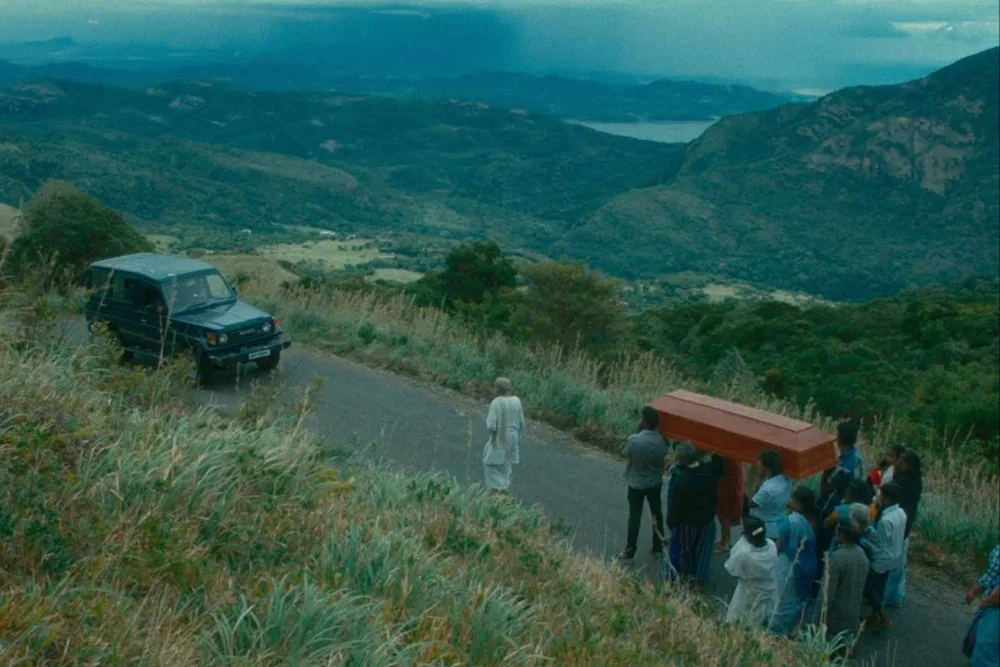
In a remarkable achievement for Sri Lankan cinema, director Lalith Rathnayake’s film Riverstone secured the prestigious Golden Cyclo, the highest accolade at the 32nd Vesoul International Film Festival of Asian Cinema, which wrapped up on February 3 after an exhilarating week showcasing Asian filmmaking in the charming French town of Vesoul.
A Critical Lens on Political Turmoil
The film was honored by an esteemed international jury chaired by celebrated Chinese director Wang Bing, alongside prominent figures such as Korean director Shin Su-won, Iranian producer Katayoon Shahabi, and French filmmaker Joël Farges. The jury highlighted Riverstone for its poignant exploration of political crises in Asia and their repercussions on everyday lives. Their citation emphasized that the drama effectively illustrates how “the grave political power struggle in Asia jeopardizes the fundamental existence of ordinary individuals,” resonating with the current realities faced on the continent.
The jury commended Rathnayake for his ability to “fully articulate the humanistic ethos” embedded in the adapted narrative, recognizing the film for its incisive critique of contemporary political landscapes, which significantly contributed to its triumph. Notably, Riverstone has previously garnered top awards at prestigious film festivals in Shanghai and Singapore.
Honoring Artistic Excellence
In a separate recognition, Wang Bing was awarded the Honorary Golden Cyclo by the Vesoul Urban Community and the City of Vesoul, underscoring his significant contributions to cinema.
Kyrgyzstan’s Kurak, co-directed by Erke Dzhumakmatova and Emil Atageldiev, was awarded the Grand Prize of the Jury for its impactful subject matter and universal themes. The jury praised the film as “exemplary in every cinematic dimension,” celebrating its performances and direction. Tragically, Atageldiev passed away in 2024, but Kurak had already triumphed at the Busan Film Festival the previous year.
Intriguing Narratives Take Center Stage
The Jury Prize was awarded to Taiwanese filmmaker Tsao Shih-han’s Before the Bright Day, which also received the Netpac Jury Prize. The narrative revolves around a boy grappling with the fears of war and violence while growing up in a turbulent home, alongside the challenges of school life within a middle-class Taiwanese family facing financial struggles. The jury lauded the director’s adept juxtaposition of stillness and movement, with the protagonist appearing “frozen” within the conflict of home yet “constantly in motion” outside, symbolizing a quest for escape from a war-torn environment.
The Netpac jury, led by Indian festival programmer Raman Chawla, praised the film’s intricate balance of historical context and personal drama, effectively navigating the intersection of national turmoil and individual growth with cinematic grace and emotional depth.
Special Mentions and New Discoveries
The international jury also granted two special mentions: the first to Iranian filmmaker Abbas Nezamdoost for Duality for its innovative cinematic voice, and the second to Thai director Nawapol Thamrongrattanarit for Human Resource, a Venice prizewinning film lauded for its direction.
Human Resource later won the Marc Haaz Jury Prize, with the unanimous jury recognition underscoring its profound investigation of pregnancy and bodily autonomy. The jury highlighted its “subtle storytelling, nuanced performances, and meticulous visual and sound design,” raising critical questions about how “an ordinary woman” experiencing pregnancy transforms her body into a societal entity, subject to external scrutiny and control.
The Critics’ Jury Prize was awarded to Kurak, with panel members acknowledging the filmmakers’ bravery in addressing a pressing and painful topic with thoughtful direction. Riverstone also received special mention for its psychological exploration of justice and conscience, showcasing commendable performances and cinematography.
Celebrating Diverse Voices in Film
The Prize of the Friends of Émile Guimet went to Riverstone, recognized as a road film that explores the interplay between an empathetic prisoner and three police officers, reflecting a “reversed duality of good and evil.” The jury praised its unexpected pacing and striking cinematography. Indian director Tannishtha Chatterjee’s Full Plate received a special mention for its portrayal of women’s lives across various social and religious landscapes in India, focusing on themes of sisterhood and hope.
Full Plate garnered the Public’s Choice Award for Feature Film, while the documentary award was presented to Bernard Louargant’s French work Li Chevalier, Encre et Âme.
In youth categories, Kurak secured the High School Jury Prize, and Palestinian filmmaker Alaa damo’s Hassan was awarded the Youth Jury Prize.
The 33rd iteration of the festival is set to take place from February 2 to 9, 2027.