

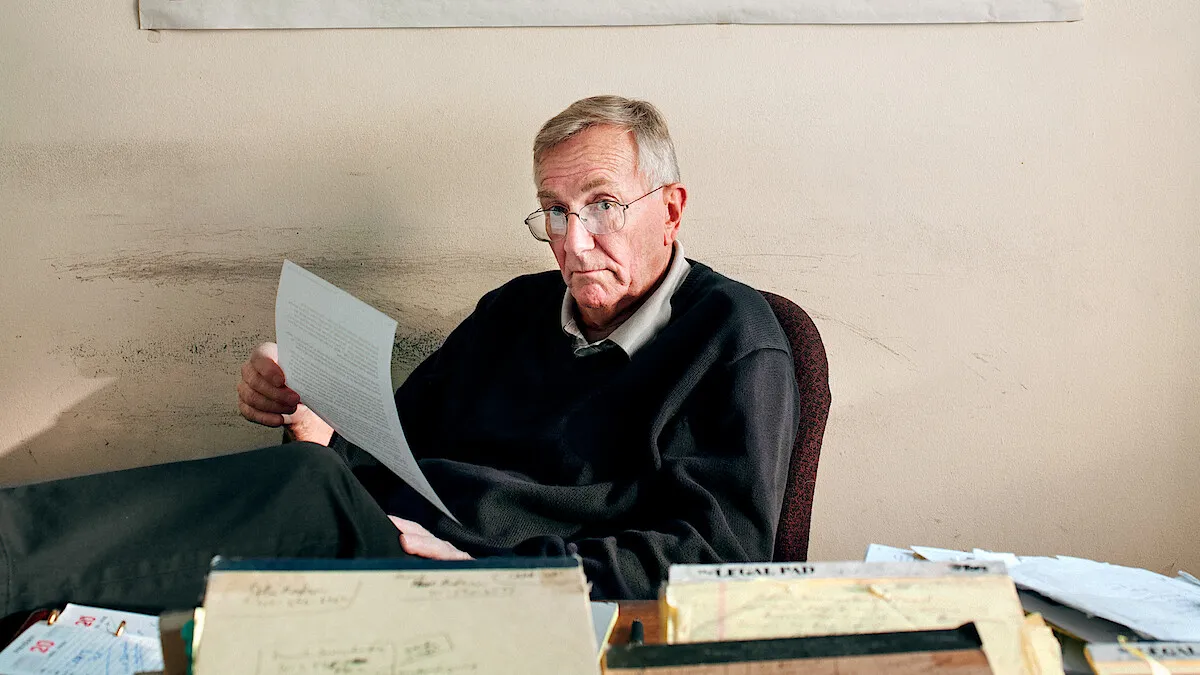
Netflix’s Cover-Up is an intimate yet expansive portrait of Seymour Hersh, one of America’s most influential investigative journalists. Co-directed by Laura Poitras — the Oscar-winning filmmaker behind Citizenfour — and Mark Obenhaus, the documentary examines how Hersh, over six decades, consistently unearthed uncomfortable truths that those in power sought to keep hidden.
The film’s structure mirrors the complexity of Hersh’s career, moving through landmark investigations that shaped public understanding of government accountability. It begins with his groundbreaking report on the My Lai massacre during the Vietnam War, where Hersh followed a tip to uncover the killing of hundreds of civilians by U.S. soldiers. From there, it dives into his 1970s exposés on illegal CIA operations, including domestic surveillance and ethically dubious experiments, stories that rattled Washington and made Hersh a target for political backlash.
Later chapters revisit his 2004 investigation into prisoner abuse at Abu Ghraib in Iraq. Once again, Hersh relied on insider tips to bring disturbing evidence — images the government wanted suppressed — into public view. Through archival footage of press briefings, protests, and interviews, Cover-Up illustrates a recurring cycle in American power: denial, reluctant admission, and eventual hostility toward truth-tellers.
Poitras and Obenhaus avoid turning Hersh into a mythic hero. Instead, they present him as a complex figure — sharp, uncompromising, and sometimes impatient. He is candid about his frustrations, and moments where he contemplates ending an interview reveal both his fatigue and his refusal to soften his stance. The film doesn’t shy away from questioning his reliance on anonymous sources, adding nuance to his portrayal.
Visually, Cover-Up is rich in atmosphere. Scenes of Hersh at his desk, surrounded by stacks of notebooks and files, are juxtaposed with footage of presidents and generals defending official narratives. The message is clear: serious journalism requires persistence, patience, and the courage to stand alone. While the sheer scope of Hersh’s work occasionally makes the pacing feel rushed — particularly around corporate scandals — the film’s central argument remains powerful.
Ultimately, Cover-Up is less about celebrating Hersh than it is about reminding viewers why investigative voices like his are vital. It’s a thought-provoking exploration of what it takes to challenge entrenched power, and a subtle warning about what could be lost if journalism abandons risk and rigor. At just under two hours, the film leaves you with the sense that Hersh’s story could easily fill a series — and perhaps it should.